 Historical Figure MBTI
#1140 · 8-23-26 · The Fall of the Han
Tian Feng
The Advisor Who Was Right About Guandu · Executed for It
d. 200 CE
4 min read
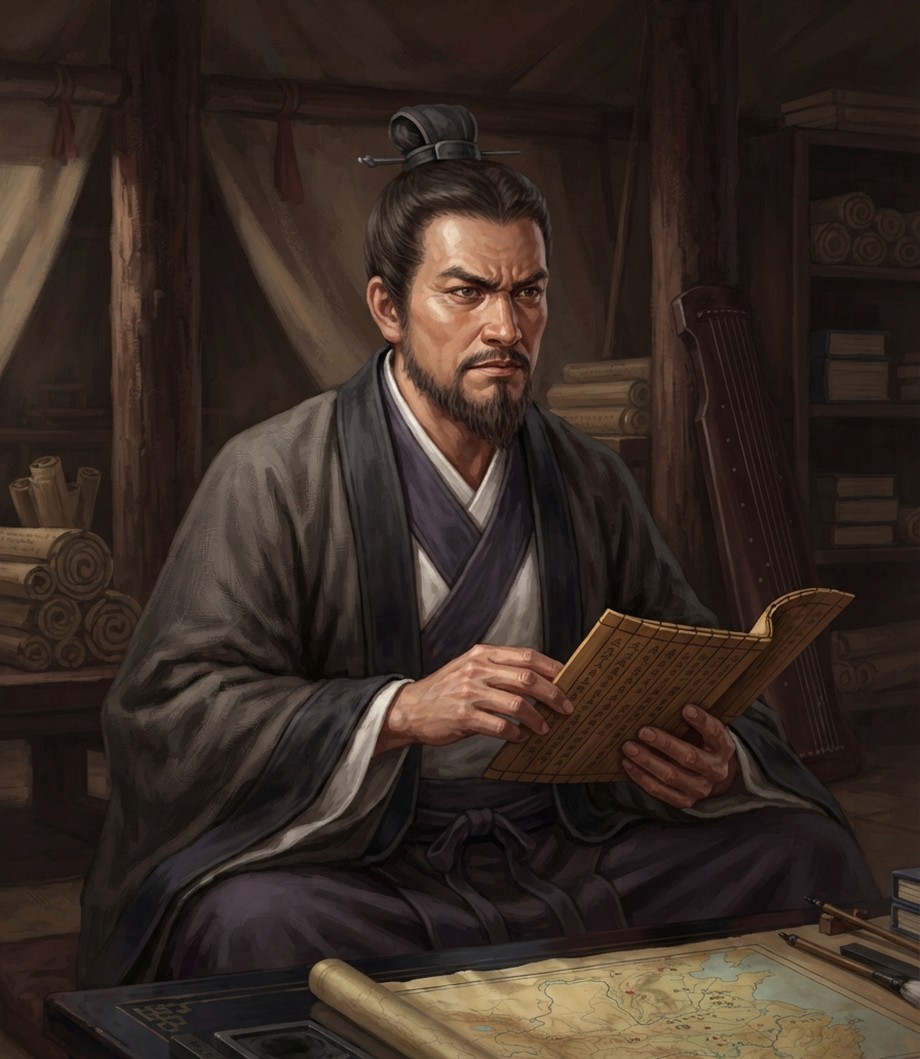
AI-assisted Portrait of Tian Feng
Correct Twice, Rewarded Never
Tian Feng served Yuan Shao as a senior strategist during the last years of the Han, and he earned a reputation in council for a particular kind of honesty — the blunt, undiplomatic kind that tells a lord what he needs to hear rather than what he wants to. It was not a talent for winning arguments so much as a refusal to lose them quietly. Tian Feng did not soften his advice to make it easier to swallow, and over years of service that habit accumulated a cost that had nothing to do with whether he was right.
In 200 CE, as Yuan Shao prepared to march against Cao Cao, Tian Feng argued against seeking a decisive battle at all. Yuan Shao held the greater territory, the greater resources, the longer runway — the sane play, Tian Feng insisted, was patience: a war of attrition that let those advantages compound rather than a single throw of the dice at Guandu. Yuan Shao, who had heard this kind of insistence from Tian Feng before and disliked it no less for the repetition, had him thrown in prison rather than simply overrule him and move on. He then marched to Guandu, and Cao Cao burned his grain stores at Wuchao, and the campaign that was supposed to end the war ended Yuan Shao's chances of ever winning it.
He was right about the battle, and right about what being right would cost him — the second call was the harder one to make.
Word of the defeat reached the prison, and Tian Feng's colleagues told him he would surely be freed now and honored for having called it. Tian Feng said the opposite would happen: Yuan Shao, humiliated by a failure he had been warned against in the clearest possible terms, would not want to face the man who had warned him — he would rather erase the reminder than live with it. Yuan Shao returned from Guandu and ordered his execution shortly after. Tian Feng had read the military odds correctly at the start of the campaign and his own lord's psychology correctly at the end of it, and neither piece of foresight saved him.
Psychological Verdict
What stands out about Tian Feng is not that he was right about Guandu — plenty of advisors get one call correct and are forgotten anyway — but that he kept being right in a way that cost him more each time rather than less. He consistently placed being correct above being diplomatic, and above being safe, which made him most valuable to Yuan Shao exactly when Yuan Shao least wanted to hear from him. That is a narrow, thankless kind of usefulness, and Tian Feng seems to have understood it and pursued it anyway.
The sharper evidence of the pattern is the second prediction, not the first. Imprisoned and stripped of any power to affect the outcome, Tian Feng still read Yuan Shao's psychology as precisely as he had read the campaign — he understood that shame does not reliably produce gratitude toward the person who saw it coming, and that a humiliated lord was more likely to eliminate the evidence of his own error than to reward it. That is not the reasoning of a man caught off guard by his own execution. It is the reasoning of a man who had already worked out the ending and said so out loud.
Two correct calls, delivered with the same unsparing honesty, and both of them cost him everything instead of saving him — the record of Tian Feng is less a tragedy of bad luck than a case study in what happens to foresight when it arrives without the tact to disguise itself.
Connected Figures
Further Reading
- A Biographical Dictionary of the Later Han to the Three Kingdoms — Rafe de CrespignyEntry on Tian Feng
- Sanguozhi (Records of the Three Kingdoms) — Chen ShouThe primary source biography
