 Historical Figure MBTI
#1141 · 8-23-26 · The Fall of the Han
Ju Shou
The Strategist Who Refused to Defect · Loyalty Past the Point of Use
d. 200 CE
3 min read
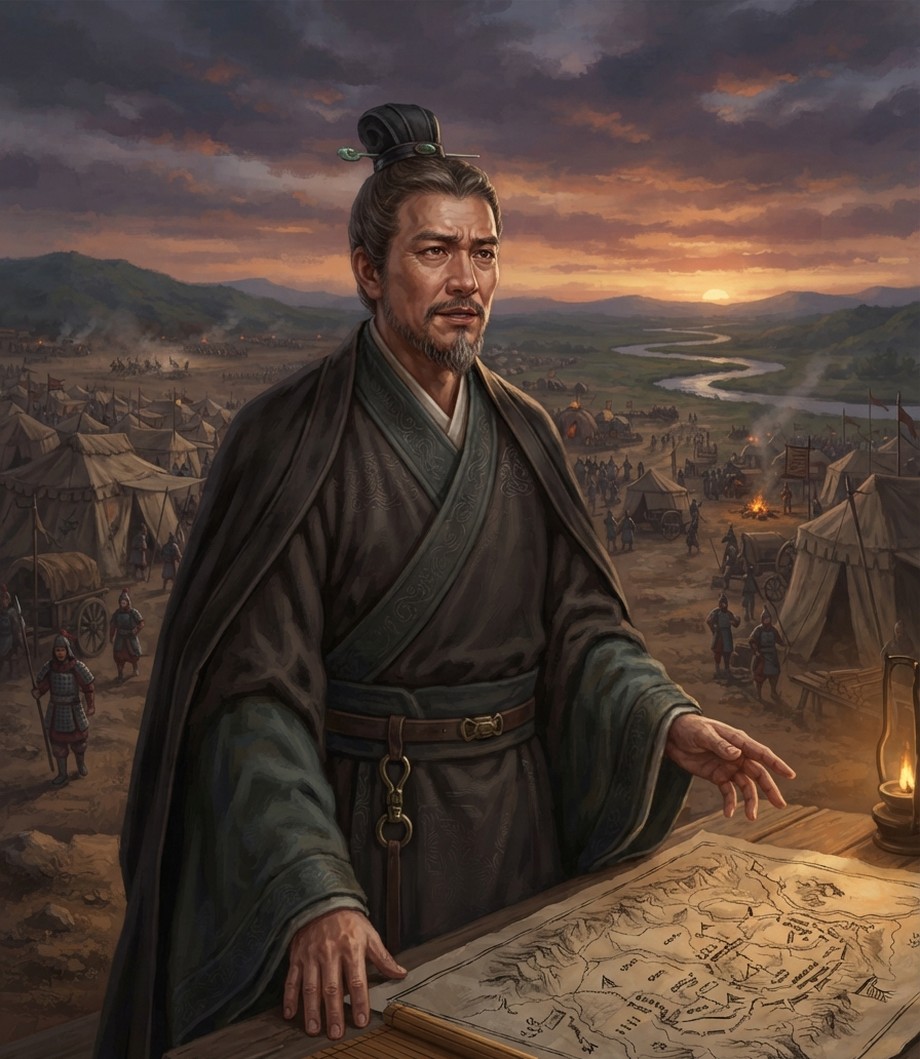
AI-assisted Portrait of Ju Shou
The Advisor Who Was Right Twice
Ju Shou served Yuan Shao for years as his chief strategist, and the verdict on his record was written twice over by other men's hands. It was Ju Shou who first proposed the move that would decide the fate of northern China: secure Emperor Xian, and with him the unmatched legitimacy of speaking for the Han court itself. Yuan Shao waved the plan away. Cao Cao did not — he took the emperor into his own camp and built an empire on the authority Yuan Shao had let slip past him.
Ju Shou's second warning fared no better. As the two lords converged on Guandu in 200 CE, he argued against a decisive pitched battle, insisting Yuan Shao's real advantage was patience — his deeper reserves, his wider territory, his capacity to wait Cao Cao out. He named, specifically, the army's grain convoys as the single point a smaller, hungrier enemy would be forced to strike. Yuan Shao overruled him again. Cao Cao's night raid on the supply depot at Wuchao burned the campaign to the ground exactly as predicted.
What happened after the defeat is the part that outlasts the battle. Captured by Cao Cao's forces, Ju Shou was offered everything a defeated strategist could want — recognition from the very man whose judgment had been vindicated over his own lord's, a place of honor in the winning camp. He refused it, tried instead to slip back to Yuan Shao's side, and was executed for it.
Ju Shou's foresight was proven right twice over, yet he chose a beaten lord over the man who had actually listened to him — the mark of an INFJ whose sense of obligation outweighed both his own survival and the vindication he'd earned.
Psychological Verdict
What marks Ju Shou is not simply that his counsel was good — plenty of advisors get one call right and are forgotten for the rest. It is that his foresight held across two entirely different kinds of judgment, one political and patient, one tactical and urgent, and that neither vindication moved him an inch when it finally arrived. An INFJ's dominant Ni is built for exactly this: reading the shape a situation will take before anyone else commits to a read at all, holding that conviction quietly, and rarely needing to be loud about it, because the conclusion was never in doubt in the first place.
The refusal of Cao Cao's offer is where the type shows most plainly. This was not a man too proud to serve a former enemy, or too naive to see the offer was genuine — Cao Cao's respect for him was real, and Ju Shou knew it. He turned it down anyway, citing his family's continued standing under Yuan Shao and his own prior loyalty, and then tried to walk back into a lost cause rather than sit inside a won one. That is auxiliary Fe at its most exacting: an obligation, once given, that does not renegotiate itself against changed circumstances, even catastrophically changed ones.
It is tempting to call this stubbornness, but the shape of it is sharper than that. A stubborn man clings to being right. Ju Shou had already been proven right, twice, and it changed nothing about where he believed he belonged. The obligation was to the cause and the people he had committed to, not to the argument he had won — and he paid for that distinction with his life.
Connected Figures
Further Reading
- A Biographical Dictionary of the Later Han to the Three Kingdoms — Rafe de CrespignyEntry on Ju Shou
- Imperial Warlord: A Biography of Cao Cao — Rafe de CrespignyCovers the Guandu campaign and Ju Shou's capture from Cao Cao's side
