 Historical Figure MBTI
#1138 · 8-23-26 · The Fall of the Han
Yuan Shu
The Forged Omen · Self-Declared Emperor · A Title With No Army Behind It
d. 199 CE
7 min read
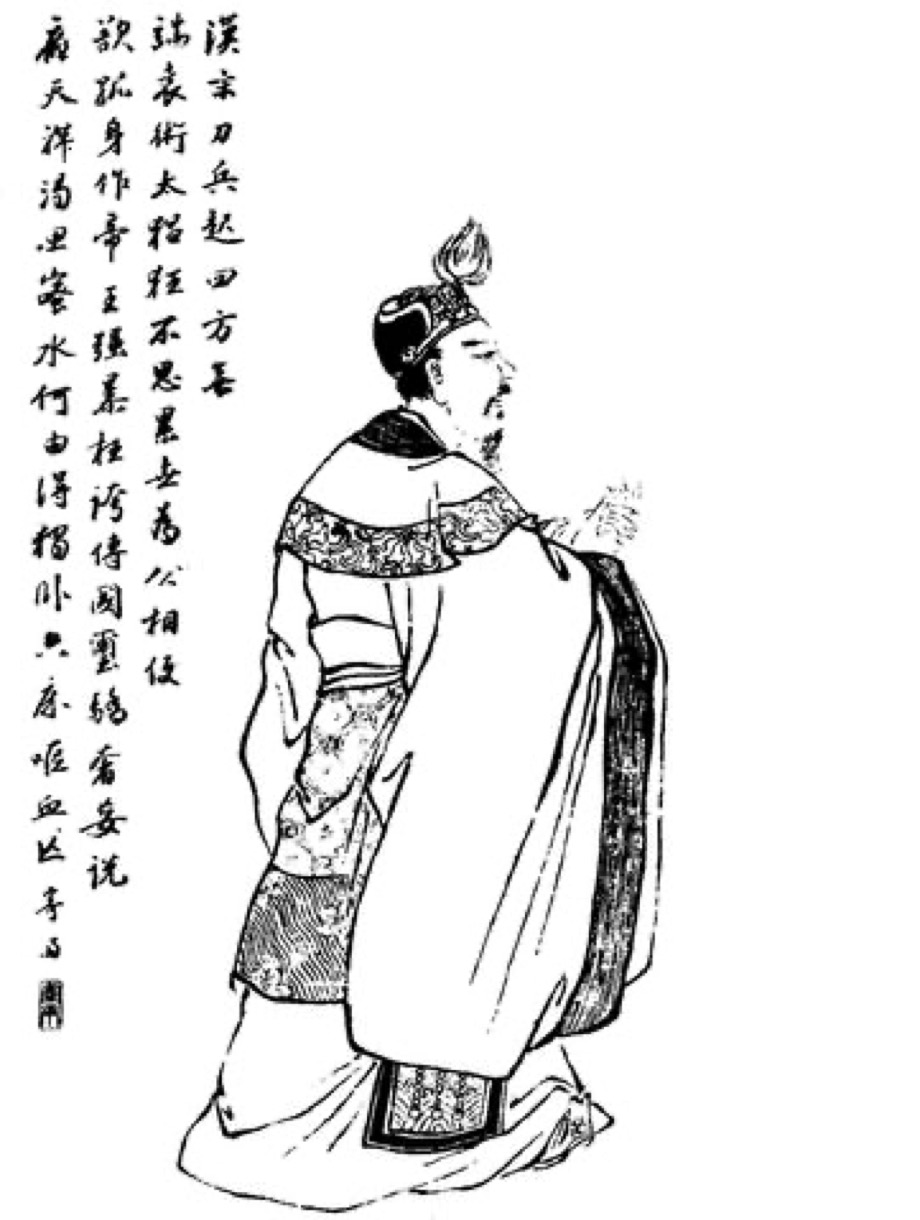
Portrait of Yuan Shu
A Seal, a Prophecy, and Nothing Else
Yuan Shu had one genuine grievance and it never left him. He was the son of his father’s principal wife — the more “legitimate” heir by the letter of the law — while his half-brother Yuan Shao, born to a concubine but raised in the primary household, inherited the family’s prestige and eventually the largest army in northern China. The inversion sat in him for years: correct on paper, overruled in practice. He built his own base in the Huai river valley south of his brother’s territory, and the rivalry between the two Yuans hardened into one of the defining feuds of the Han collapse.
Then, around 196, an object fell into his hands that seemed to settle the argument for good. Sun Jian’s soldiers had pulled the Han imperial seal from a well in the ashes of Luoyang, and by one route or another it ended up with Yuan Shu. He also had, or claimed to have, a prophecy — a text pointing, if you read the characters his way, to a name very like his own. To Yuan Shu these were not omens to be weighed; they were credentials, complete and self-executing. In 197 he declared himself emperor of a new dynasty, the only major warlord of the age to make the claim openly rather than ruling, as Cao Cao did, through the Han emperor’s still-breathing name. It was, almost everyone agreed instantly, absurd — and the men who agreed included his own former allies. He was isolated within months, at war on every front, and dead within two years, reduced in his final illness to begging for honeyed water and being handed a bowl of plain water instead.
Yuan Shu is ESTJ, Te dominant — a man who treated a seal and a sentence as sufficient authority to command an empire, and moved to formalize that authority before he had built anything to back it.
The Throne as a Procedural Matter
What separates Yuan Shu from the dozen other warlords carving up the Han is not ambition — everyone in this period wanted more than they had — but the blunt shape his ambition took. Where Cao Cao spent years accumulating real leverage, Yuan Shu treated acquiring a symbol as functionally equivalent to acquiring power. Hold the seal, cite the prophecy, issue the proclamation: three administrative steps, executed in sequence, and the matter should be settled. That is Te at its most literal — command exercised as an organizational act, divorced from the slower work of persuading anyone the command deserves obeying.
He did not sit on his claim quietly, letting the rumor of legitimacy accumulate before cashing it in. He moved immediately to formalize it — a new reign title, a new court, the trappings of a dynasty stood up within what reads like weeks. That speed is the tell: dominant Te does not deliberate over whether the ground is ready; it looks at the checklist, sees it complete, and executes. It is only when the object of command became an empire, rather than a river valley, that the gap between paperwork and reality turned fatal.
Reading the Letter, Missing the Room
Auxiliary Si is what turned the seal and the prophecy from ordinary warlord bluster into a formal declaration of dynasty. Yuan Shu did not treat the omen as a loose metaphor to be interpreted however served him best — he treated it as a text with a correct reading, and once he had arrived at that reading he trusted it the way a bureaucrat trusts a filed precedent. The imperial seal was not a trophy to him; it was documentation, carrying the same evidentiary force as a signed decree.
This is also why the status inversion with Yuan Shao gnawed at him for years rather than fading. Si does not let go of a settled fact just because circumstances have moved past it — he was the legitimate son by the letter of clan law, and that his half-brother held the greater army read to him as an injustice against the record. The 197 declaration reads, in part, as an attempt to force reality to match the record at last, and once made he could not walk it back without conceding the whole premise, so he held the position long after it was costing him allies, territory, and eventually food.
The One Bold Improvisation
Tertiary Ne shows up in Yuan Shu not as a habit but as a single, uncharacteristic swing: the attempt to marry his son into Lü Bu’s family, binding one of the era’s most unpredictable freelance soldiers to his cause before anyone could see the alliance coming. It was a genuinely clever play — and it collapsed almost immediately when it met resistance. That is the pattern with an underdeveloped Ne serving a Te-Si core: the improvisation arrives late, gets deployed once, and is abandoned rather than iterated on. Yuan Shu had no second alliance plan waiting behind the first; when the marriage fell through, he simply went back to the seal and the prophecy, the two forms of evidence his dominant and auxiliary functions had already certified as sufficient.
A Grievance He Never Examined
Inferior Fi surfaces in Yuan Shu less as feeling expressed than as feeling never interrogated. The resentment toward Yuan Shao — over birthright, over the army his father’s legacy should by rights have handed him — never resolved into a value he could articulate and act from. It stayed a wound, cited implicitly in the decision to crown himself but never examined for what it was: envy of a brother, dressed up as cosmic legitimacy. A man with a more developed Fi facing total collapse might have found some private reckoning. Yuan Shu, by every account, went to his death fixated on the concrete instead — asking, in his final illness, for honeyed water, and receiving none.
Why ESTJ Over ENTJ
Why not ENTJ?
An ENTJ reading would cast Yuan Shu as a strategic visionary, building step by step toward the throne through calculated alliance. The record doesn’t support it. His declaration was a single overconfident leap, made on a literal reading of an omen and possession of a physical object, without first securing the alliances that might have let him survive the backlash. That is Te paired with Si taken too literally and too fast — rule-following mistaken for strategy — not the long-range, possibility-driven vision of a Ni-Te operator building the ground before he stands on it.
The distinction matters because Yuan Shu is easy to mistake for a schemer. He wasn’t. Schemers hedge; they abandon a failing position before it costs them everything. Yuan Shu did the opposite — he treated his claim as settled fact the moment the paperwork existed, and defended it past the point of any strategic sense, because for a Te-Si mind, once the record says a thing is so, un-saying it is not really an option.
Connected Figures
Further Reading
- A Biographical Dictionary of the Later Han to the Three Kingdoms — Rafe de CrespignyEntry on Yuan Shu
- Sanguozhi (Records of the Three Kingdoms), Book of Wei — Chen ShouThe primary source biography
- Fire over Luoyang: A History of the Later Han Dynasty — Rafe de CrespignyBrill — on the Yuan clan rivalry
