 Historical Figure MBTI
#1267 · 9-19-26 · The Carolingian World
Harun al-Rashid
Abbasid Caliph · Ruler Beyond the Legendary Court
c. 763–809
6 min read
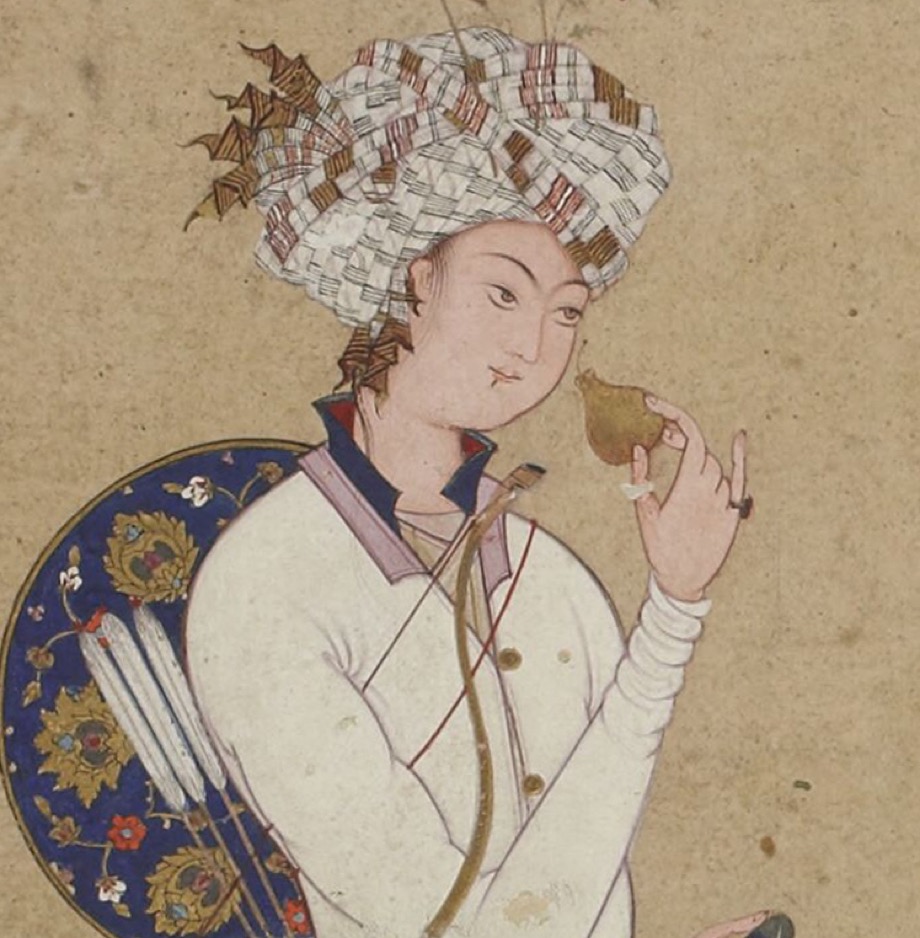
Portrait of Harun al-Rashid — late 16th century (later depiction)
The caliph behind the famous name
An elephant reached Charlemagne’s court in 802, after a journey whose winter halt and surviving escort the Frankish annals took care to record. Its name was Abul-Abbas. It had come from Harun al-Rashid, a ruler whose court could send an animal across seas and mountains to make a distant relationship visible. The gift survives as a vivid trace of diplomacy. It does not bring the sender’s private character within reach.
Harun remains Untyped. The caliph of the Thousand and One Nights, walking through Baghdad in disguise and judging the fortunes of his subjects, is a literary figure shaped over generations. The historical ruler appears through chronicles, religious memory, court anecdotes, and the interested accounts of foreigners. Those sources can establish actions without giving a sufficiently independent and consistent picture of his personal habits of thought.
Born at Ray around the middle of the 760s, with the precise year disputed, Harun ruled the Abbasid caliphate from 786 to 809. His position joined a dynasty’s inheritance to claims of religious leadership and command over a vast, unevenly governed empire. Baghdad was its great center of wealth and learning. Maintaining that world involved more than presiding over its brilliance.
A court held together by people
Harun succeeded his brother al-Hadi in 786. The circumstances were entangled with competition over succession and with the influence of their mother, al-Khayzuran. Later accounts do not permit every dramatic story about that transition to be treated as fact. What is clear is that Harun’s accession belonged to a struggle within an established imperial household, rather than the uncomplicated elevation of a prince admired by everyone.
The Barmakid family was central to the new government. Yahya ibn Khalid and his sons al-Fadl and Ja‘far held immense administrative and political influence. Personal ties, patronage, and responsibility for provinces connected them to the caliph. Such a court was an arrangement of relationships as well as offices; the same proximity that made officials useful could also make their authority threatening.
In 803 Harun abruptly destroyed the Barmakids’ position. Ja‘far was executed, relatives were imprisoned, and property was confiscated. Explanations multiplied, including stories about forbidden intimacy within the royal household. Their narrative appeal does not establish their truth. Rivalry, accumulated influence, and disputes over policy remain part of the historical discussion. We know the rupture more securely than a single inward reason for it.
War, pilgrimage, and the work of rule
Harun had already been associated with campaigns against Byzantium before he became caliph. During his reign, expeditions across the frontier and pilgrimages to Mecca helped express his religious and political standing. The practices were public claims to leadership. They also required resources, military cooperation, and the management of routes across territories that were not uniformly obedient.
His principal residence shifted from Baghdad to Raqqa on the Euphrates in 796. The move brought him closer to the Byzantine frontier and to the affairs of Syria. It complicates the familiar picture of a ruler inseparable from an enchanted Baghdad. A capital’s cultural reputation and the location from which a caliph attended to immediate pressures were different things.
The provinces imposed limits on any image of effortless control. Revolts and fiscal grievances disturbed several regions, while distant North Africa increasingly required accommodation through a locally rooted ruling house. An imperial government could collect tribute, recognize a governor, punish resistance, or negotiate an arrangement without possessing equal authority everywhere. Harun’s reign was powerful, but its strength was repeatedly tested.
A ruler in another ruler’s biography
Einhard describes Harun as an exceptionally devoted friend of Charlemagne. That formulation belongs to a biography intended to magnify the Frankish ruler. It presents the distant caliph’s generosity as evidence of Charles’s standing in the world. Harun’s own priorities and the expectations of his court are much less visible in that account.
The Royal Frankish Annals offer a more concrete itinerary for the elephant. Charlemagne had sent an embassy in 797. Isaac, a Jewish member of the mission, returned after his two companions had died; the annals describe the arrangements for transporting the animal and its winter stay in Italy before it reached Aachen. These details reveal the labor and uncertainty beneath the display of magnificent friendship.
Further gifts recorded in 807 included textiles, perfumes, and a mechanically elaborate water clock. The annalist admired its striking balls and figures emerging at the hours. The description is evidence of an impressive object and of the Frankish response to it. It does not show that Harun personally designed the device or that technological fascination was the governing trait of his personality.
Jerusalem and the limits of an alliance
Einhard also claims that Harun granted Charlemagne possession of the holy place in Jerusalem. The assertion requires caution. A distant ruler’s support for Christian pilgrims and establishments cannot simply be converted into a modern transfer of sovereignty. Frankish patronage, Abbasid permission, the activities of local Christian authorities, and the language of imperial prestige need to be distinguished.
Harun’s relations with Byzantium provide a different setting for the exchange. Irene of Athens faced the military pressure of the Abbasid state, while Charlemagne’s growing authority in Italy affected Byzantine interests from another direction. These overlapping pressures make diplomacy intelligible. They do not prove that the caliph and the Frankish king constructed a comprehensive military alliance with a shared program.
The distance mattered. Neither ruler met the other. Envoys, gifts, reports, and the ability to protect travelers made the connection real, but left room for misunderstanding and selective presentation. The historical bridge is remarkable precisely because it crossed different political and religious worlds through intermediaries. It should not be made into a personal friendship whose emotional texture the record cannot supply.
An inheritance prepared, then contested
Harun attempted to regulate the future through arrangements for his sons al-Amin and al-Ma‘mun. The agreements associated with the pilgrimage of 802 assigned succession and substantial authority in the eastern provinces, backed by solemn undertakings. Their purpose was to constrain rivalry through promises and a distribution of power. The existence of such elaborate provisions shows how consequential the problem already was.
After Harun died at Tus in 809, the settlement did not prevent civil war. That result does not mean he knowingly designed a disaster, nor does it prove that one personality defect explains the conflict. The rights assigned to the princes, the resources supporting them, and the interests of their followers could make obedience difficult even when an agreement had been formally witnessed.
His last journey east belonged to an empire troubled by rebellion and grievances against provincial government. The ruler celebrated in distant courts had to confront resistance within his own lands. His death left a rich inheritance and a dangerous competition over its command. Both belong to his reign; neither the brilliance nor the fracture should erase the other.
Connected Figures
Further Reading
- Hārun al-Rašid — Clifford Edmund BosworthThe Encyclopaedia Iranica article separates imperial government and provincial unrest from the legendary golden age.
- The Court of the Caliphs: When Baghdad Ruled the Muslim World — Hugh KennedyReconstructs the political households and cultural life of the early Abbasid court.
- Life of Charlemagne — Einhard; translated by Samuel Epes TurnerA courtier’s biography whose personal observation and dynastic loyalties must both be considered.
- Carolingian Chronicles: Royal Frankish Annals and Nithard’s Histories — Translated by Bernhard Walter Scholz with Barbara RogersThe dynasty’s narrative of its rise and rule, to be read as a politically interested account.
