 Historical Figure MBTI
#1268 · 9-19-26 · The Carolingian World
Irene of Athens
Byzantine Empress · Imperial Power and Religious Images
c. 752–803
6 min read
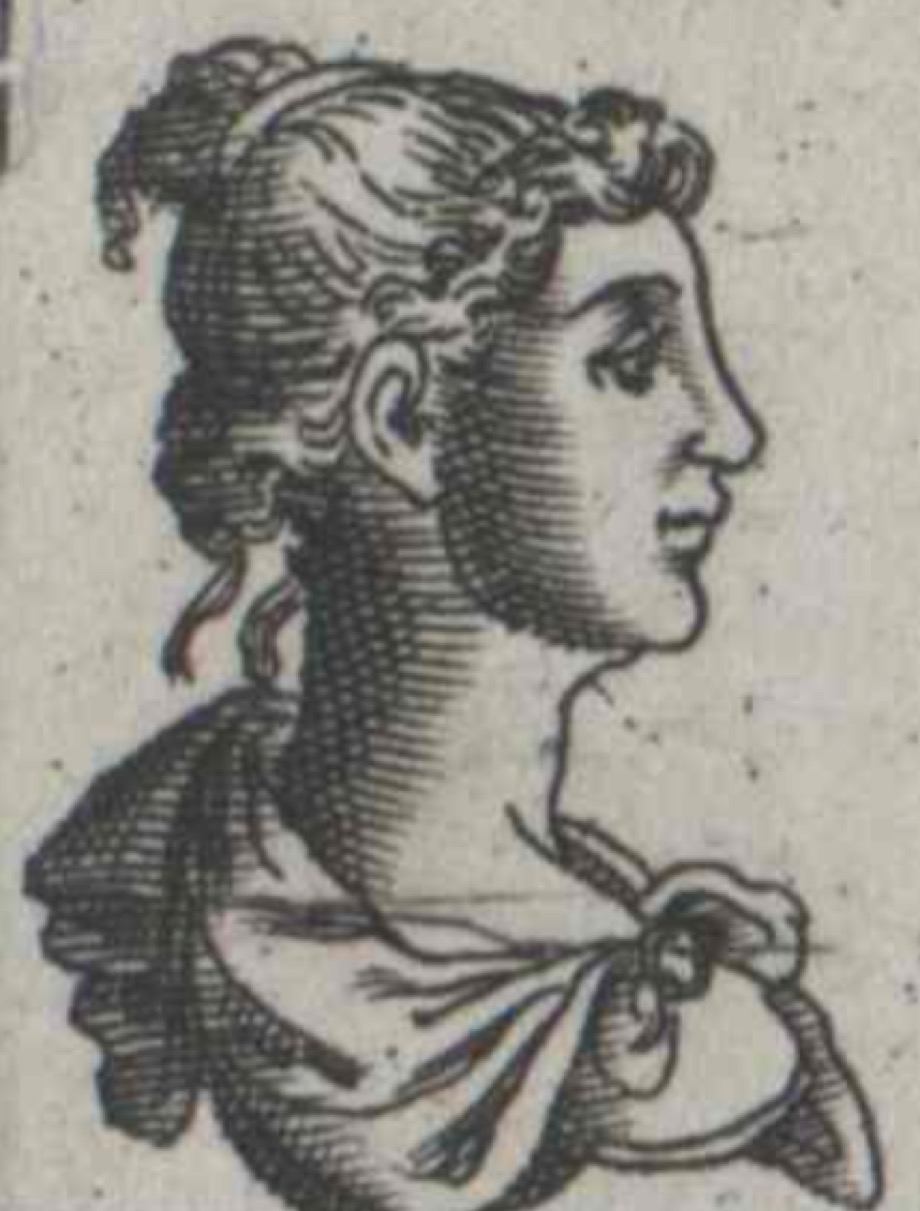
Portrait of Irene of Athens — 1587 (later depiction)
An emperor whose images survived her
On the gold coins of her sole reign, Irene appeared on both sides. There was no adult son on the reverse to qualify her position. The image made a political fact visible: the woman who had arrived in Constantinople as an imperial bride now exercised the empire’s authority in her own name. Five years later, men who had served that government removed her from it.
Irene of Athens remains Untyped. Her religious policy, her struggle with her son, and the violence that secured her sole rule are documented through sources with powerful commitments of their own. Neither devotion to images nor ruthless survival identifies a personality. A defensible account must preserve her agency while admitting how little access those narratives give to her private deliberation.
Born around 752, she married the future Leo IV in 769 and became the mother of Constantine VI. Leo’s death in 780 left their young son emperor and Irene at the center of government as regent. The position carried an immediate contradiction: she had to preserve the dynasty and govern for a child whose adulthood would eventually challenge her authority.
Regency was an active government
The first years were not merely a waiting room for Constantine. Irene worked through officials, military commands, religious appointments, and the management of potential rivals. The court included powerful eunuchs, among them Stauracius, whose careers depended on the political arrangement they helped sustain. Their influence is part of the structure of her government, rather than proof that she was simply governed by favorites.
The frontier also required action. Abbasid forces associated with the young Harun al-Rashid threatened the empire, and negotiations produced a costly settlement. Relations with the Franks offered another possible resource. Constantine was betrothed to Rotrude, a daughter of Charlemagne, in 781, connecting the regency to a household whose authority was expanding in Italy.
The betrothal was eventually abandoned. It would be tempting to make it a neat story of a protective mother rejecting a foreign bride, but dynastic marriages also carried strategic obligations and competing political expectations. The reversal belongs to a changing relationship between governments. The emotional explanation cannot be recovered merely from the result.
Restoring images took preparation
Irene’s support for the veneration of icons became her best-known religious achievement. The policy challenged the iconoclast tradition of preceding emperors and required more than an announcement of belief. Tarasius became patriarch of Constantinople in 784, and arrangements for a council had to address ecclesiastical legitimacy, Rome’s participation, and opponents within the imperial army.
An attempted council in Constantinople in 786 was disrupted by troops hostile to the restoration. The successful gathering took place at Nicaea in 787 after changes in the military setting. The sequence shows that a theological settlement depended on who could assemble, speak, and remain protected long enough to issue a decision.
The council’s definition distinguished the reverence given to sacred images from the worship owed to God. It defended images through the incarnation, inherited teaching, and the relationship between an image and the person represented. Calling the outcome simply permission to worship pictures loses the distinction the bishops themselves insisted upon. Irene’s sponsorship helped make that doctrine an imperial settlement.
Agreement in the East, argument in the West
The restoration did not produce a single response throughout Christian Europe. The Frankish court’s critique, associated especially with Theodulf of Orléans and the work known as the Libri Carolini or Opus Caroli, opposed both the destruction of images and what it understood as excessive honor paid to them. Translation and the interpretation of conciliar language contributed to the disagreement.
This is a real connection between Irene’s government and Carolingian intellectual life, but not evidence of a personal meeting with Theodulf. The dispute concerned the claims of councils, rulers, and churches to define acceptable practice. Rome’s support for the council further complicated a simple division between East and West.
Irene’s role should also be distinguished from the later restoration of icons in 843. The settlement she sponsored was subsequently overturned when iconoclasm returned under another emperor. Its eventual place in Orthodox memory can make her success appear more final than it was within her own lifetime. The council mattered enormously without making religious conflict disappear.
The son who became a rival
Constantine’s adulthood sharpened the instability inherent in the regency. In 790 military opposition to placing Irene before him in oaths and acclamations helped bring him to effective sole rule. She was removed from immediate control, but was recalled as co-ruler in 792. The alternation makes the history harder than a continuous plot proceeding smoothly toward her victory.
Constantine suffered military defeats and damaged his standing through punishments of former supporters and controversy over his divorce and remarriage. Irene’s circle benefited from these failures, though the degree to which she engineered each one cannot be established by repeating a hostile explanation. The emperor still had supporters capable of making his survival politically consequential.
In 797 he was seized by adherents of Irene and blinded in the palace. Theophanes attributes the brutal act to her and her advisers; it ended Constantine’s rule and left her sole sovereign. Whether he died promptly from the injuries is uncertain. The uncertainty about his death does not lessen the violence of the deposition or Irene’s responsibility for the political outcome.
Sovereignty, diplomacy, and removal
As sole ruler from 797 to 802, Irene represented imperial authority without a reigning male colleague. Coinage and official titles show a government claiming continuity, even though her position departed from the usual dynastic pattern. Her charitable and religious foundations also placed her authority within the city’s sacred landscape. Those public expressions should not be mistaken for an intimate self-portrait.
The coronation of Charlemagne by Pope Leo III in 800 created a new difficulty. Western claims that the eastern imperial position could be treated as vacant because a woman occupied it served a political argument; they did not mean Byzantium lacked a functioning government. Irene exchanged embassies with the Franks, and the royal annals record negotiations for peace in 802.
Theophanes also reports a proposed marriage between Irene and Charlemagne. Its seriousness and prospects remain debated, and the Frankish account describes diplomacy without presenting a completed marital settlement. In October 802 officials raised Nikephoros to power and deposed Irene. Exiled first to Prinkipo and then to Lesbos, she died in 803. The government she had assembled could not guarantee her survival within it.
Connected Figures
Further Reading
- The Chronicle of Theophanes Confessor: Byzantine and Near Eastern History, AD 284–813 — Theophanes; translated by Cyril Mango and Roger ScottThe fullest narrative source for the reign, with commentary needed to assess its religious and political judgments.
- Irene, Wife of Leo IV — Lynda GarlandThe scholarly De Imperatoribus Romanis biography follows regency, religious reform, and dynastic conflict.
- The Acts of the Second Council of Nicaea (787) — Translated by Richard PriceThe conciliar proceedings make the doctrine and its disputed language available for close reading.
- The Carolingian World — Marios Costambeys, Matthew Innes, and Simon MacLeanA modern account of how dynastic power, religious reform, and regional societies shaped each other.
