 Historical Figure MBTI
3 min read
#190 · 3-20-26 · Ancient Athens
Herpyllis
The Steady Presence in Aristotle's Later Years
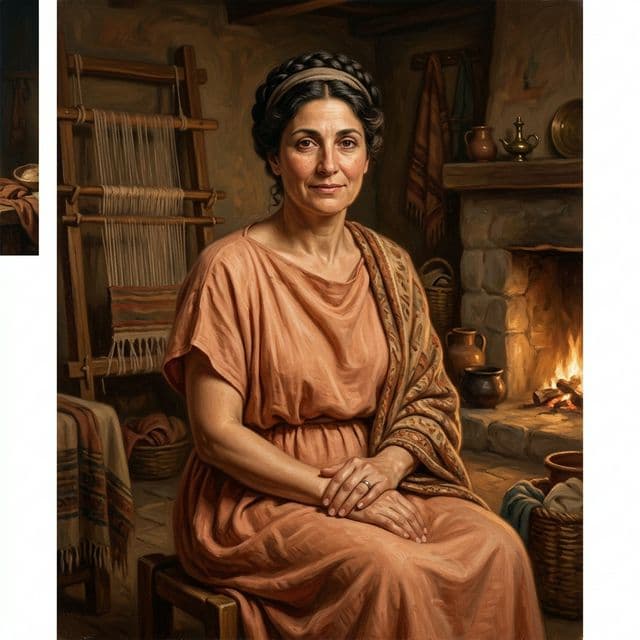
AI-assisted portrait of Herpyllis
The Architecture of Harmony
Herpyllis did not build systems of logic; she built the space where logic could live. As the partner of Aristotle in his final decade, she provided the domestic and emotional stability that allowed the most prolific mind in history to complete his work. Her journey was one of quiet, essential support, navigating the social and financial complexities of life with a world-famous philosopher who was, himself, a "resident alien" in Athens.
She lived as a figure of consistent warmth and practical care, using her personality to stabilize the internal world of the Lyceum. She was the one who translated the abstract ideals of the school into the tangible realities of a functioning home, ensuring that the legacy of the Peripatetics could endure beyond the death of its founder.
Historical Context
Herpyllis hailed from Stagira, Aristotle's own birthplace, and became his companion after the death of his first wife, Pythias. Though not legally recognized as his wife under Athenian law (which forbade marriage to non-citizens), she was the mother of his son Nicomachus and remained his partner until his death in 322 BCE. Aristotle’s will speaks of her with extraordinary gratitude and tenderness, instructing his executors to provide for her generously and to honor her according to the "standard she is used to"—a rare level of concern for a non-citizen partner in the archaic record.
The Psychological Verdict
Herpyllis reads most clearly as ESFJ. She was a woman of high social engagement and practical care (Fe), guided by a sense of stable duty and tangible maintenance (Si) within her chosen community.
What the Will Said
Aristotle’s will — which survives — is unusually specific about Herpyllis. He directs his executors to provide her with a house of her choice in either Stagira or Chalcis, to furnish it well, to give her the household staff she was accustomed to, and in addition to leave her a sum of money and any other gifts she might wish. He adds, simply, that she has been good to him. This is not the language of legal obligation. It reads as gratitude. His first wife Pythias died young; Herpyllis was from his hometown of Stagira and came into his life afterward, bearing him his son Nicomachus. She could not be his legal wife under Athenian law because she was not an Athenian citizen. The will works around that constraint as carefully as possible. She likely reads as ESFJ in tendency — warmth and practical care as primary modes — but what the historical record actually preserves is simpler: a man of extraordinary intellect who, at the end of his life, wanted to make sure she was taken care of. That is its own kind of evidence.
Connected Figures
Further Reading
- Aristotle: His Life and School — Carlo NataliDraws directly on Aristotle's will to reconstruct Herpyllis's place in his household during his final years.
- Lives of the Eminent Philosophers — Diogenes LaertiusPreserves the text of Aristotle's will, the primary evidence for Herpyllis's status and provisions.
- The Cambridge Companion to Aristotle — Jonathan Barnes (ed.)Provides the context of the Lyceum's daily life that Herpyllis's domestic stability made possible.
