 Historical Figure MBTI
3 min read
#191 · 3-20-26 · Ancient Athens
Nicomachus
The Receiver of the Legacy
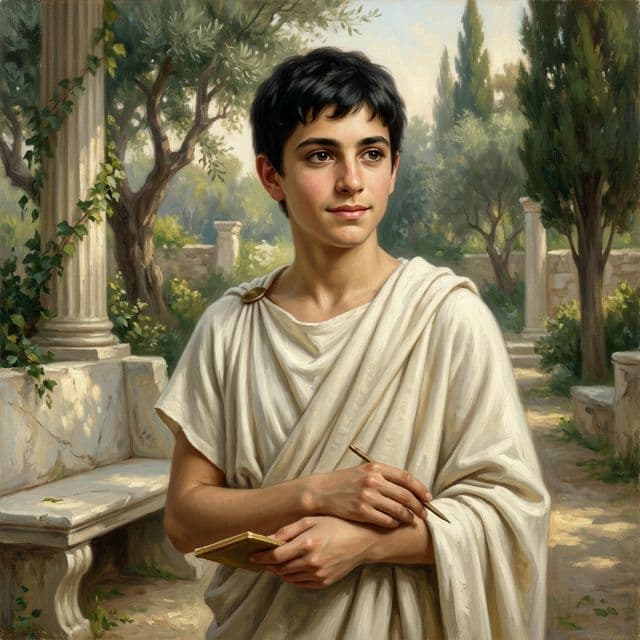
AI-assisted portrait of Nicomachus
The Architecture of Association
Nicomachus did not choose his station; he was born into the center of a philosophical storm. As the son of Aristotle and Herpyllis, his early life was defined by the shadow of his father's massive intellectual project. He was the child whose name would eventually become synonymous with the foundational document of Western ethics—a legacy he was destined to carry before he could even understand it.
His story is one of existing as a symbol rather than a fully realized historical actor. He lived in the orbit of the Lyceum, navigating a world where his primary value to the historical record was his connection to the "Architecture of Knowledge" that his father built.
Historical Context
Nicomachus was Born in Stagira or Athens, the son of Aristotle's second partner, Herpyllis. He died young, reportedly in battle, but his name survives as the dedicatee (or perhaps editor) of the Nicomachean Ethics. His life was governed by Aristotle’s will, which provided for his education and ensured he was raised by guardians like Antipater. He represents the intimate, human side of the Peripatetic legacy—the family that continued in the cracks of the philosophy.
The Psychological Verdict
Due to the absolute sparsity of records detailing his personal choices, temperament, or independent actions, Nicomachus remains Untyped. He survives in the historical record as a recipient of legacy rather than a participant whose internal cognitive patterns can be mapped with any degree of certainty. He is the "silent son," his personality dissolved into the fame of the Ethics that bear his name.
The Ethics That Bear His Name
Nicomachus was the son of Aristotle and Herpyllis, born in Athens while his father was running the Lyceum. He died young — reportedly at war — before leaving any documentary trace of his own thinking. What survived is his name on the most influential work of moral philosophy in the Western tradition: the Nicomachean Ethics. Whether the work was dedicated to him, edited by him, or simply named after him by later tradition is disputed; the text itself doesn’t explain the title. Theophrastus, who succeeded Aristotle as head of the Lyceum, would have known Nicomachus. The school continued; Nicomachus did not. He remains the most famous name attached to the least-known person in the philosophical tradition — which is its own kind of philosophical problem about how we know what we think we know.
Connected Figures
Further Reading
- The Nicomachean Ethics — AristotleThe work that made his name permanent, whether it was dedicated to him, edited by him, or simply named after him by later tradition.
- Aristotle: His Life and School — Carlo NataliDraws on Aristotle's will to reconstruct the guardianship arrangements that governed Nicomachus's upbringing.
- The Cambridge Companion to Aristotle — Jonathan Barnes (ed.)Surveys the scholarly dispute over how the Ethics came to carry Nicomachus's name.
