 Historical Figure MBTI
#506 · 4-19-26 · The Hundred Years' War
Humphrey, Duke of Gloucester
'Good Duke Humphrey' · Patron of Learning, Quarrelsome Prince
1390 — 1447
7 min read
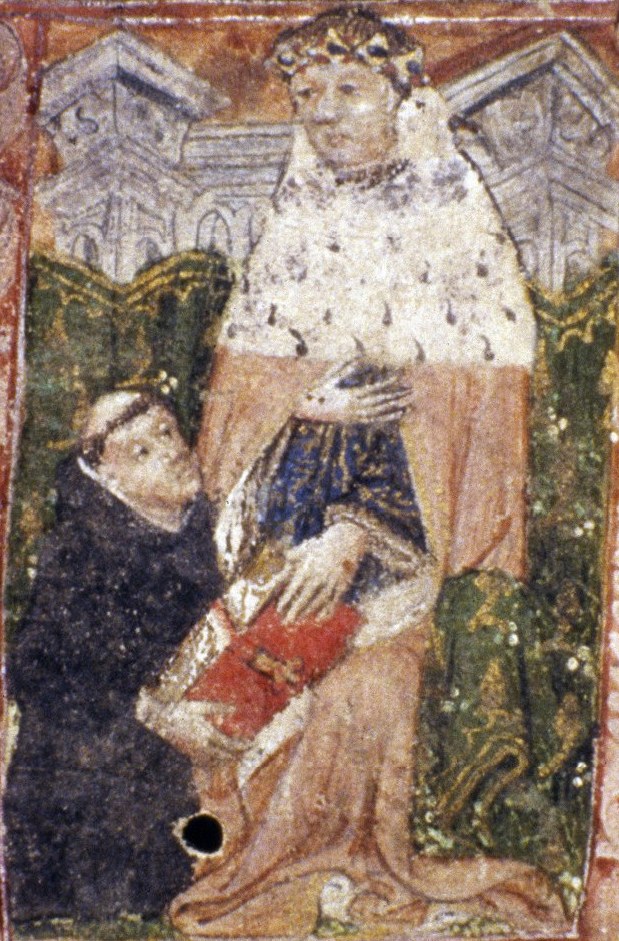
AI-assisted Portrait of Humphrey, Duke of Gloucester
Dazzling of Mind, Disastrous of Judgment
Contemporaries called him “Good Duke Humphrey,” and the name stuck—a tribute less to his virtue than to his glamour. The youngest of the four sons of Henry IV, brother to the conquering Henry V, Humphrey was the cleverest and least governable man of his generation of the House of Lancaster: brilliant, restless, quarrelsome, and cultivated to a degree no English prince had been before him. He read voraciously, collected manuscripts with the appetite of an addict, and corresponded with the humanists of Italy while his peers were content to hunt and joust. He was also the most reckless politician of his age, a man who could not sit in a room without picking a fight.
When Henry V died in 1422 and left an infant on the throne, Humphrey was made Protector of England during the minority of his nephew Henry VI. It should have been the making of him. Instead it exposed everything that was wrong with him. He feuded without rest against his rich and patient uncle, Cardinal Beaufort; he undercut his abler brother, the regent of France; and he wrecked the crucial Burgundian alliance by marrying Jacqueline of Hainault and launching a private war to claim her lands. The mind that could embrace the whole of the new learning could not master the small disciplines of patience and timing.
Humphrey was the ENTP as a Renaissance prince born a generation too early in England—Ne’s omnivorous curiosity wedded to Ti’s combative cleverness, undone by an inferior Si that never learned caution, follow-through, or when to stop quarreling.
The Omnivorous Collector
Ne — dominant
Dominant Ne is an appetite for the new, and Humphrey’s appetite was insatiable. Decades before humanism took root in England, he was buying its products wholesale—commissioning translations of Aristotle and Plato, importing the latest works out of Italy, and paying Italian scholars to feed his curiosity. He did not study one thing deeply; he reached for everything at once, treating the entire revival of classical learning as a landscape to be explored rather than a discipline to be mastered. The collector’s restlessness was the same energy that drove his politics: a mind that could not encounter a possibility without wanting to chase it.
The library was the purest expression of it. Humphrey amassed one of the greatest private collections in northern Europe and gave the bulk of it to Oxford—manuscripts so magnificent that the room built to hold them still bears his name, “Duke Humfrey’s Library,” the founding nucleus of what would become the Bodleian. It is the one unambiguous good he did, and it is characteristically Ne: not a system he built, not an institution he ran, but a scattering of seeds, a quality of intellectual air he introduced into a country that had none. The same instinct that made him a connoisseur made him a schemer—forever improvising new ventures, new claims, new alliances, never content with the position he held.
The Argumentative Prince
Ti — auxiliary
Beneath the charm ran a sharp, contrarian cleverness—the auxiliary Ti that gave Humphrey’s Ne its edge. He was a formidable debater and a relentless one, the kind of man who would rather be right and isolated than agreeable and ignored. His long war with Cardinal Beaufort was not merely a clash of ambitions but a clash of arguments, conducted in council and parliament and pamphlet, each side marshalling its case against the other for the better part of two decades. Humphrey treated politics as a debate to be won by force of cleverness, not a coalition to be built by force of accommodation.
That was the flaw inside the gift. Ti hunts for the flaw in the opponent’s position and presses it without mercy, and it is poorly suited to the patient, face-saving compromises by which factions are actually managed. Humphrey could win the argument and lose the room. While Beaufort accumulated money, offices, and quiet allies, Humphrey accumulated grievances and the reputation of a brilliant troublemaker. He mistook being right for being powerful—a confusion the cleverest contrarians make most easily.
The Popular Duke
Fe — tertiary
Tertiary Fe gave Humphrey a genuine instinct for the public mood, and he played to it. He cultivated a reputation as the patriotic prince, the champion of war against France and the people’s friend against the cautious, money-minded clergy who surrounded the throne. In London especially he was loved—“Good Duke Humphrey” was a popular epithet long before it was a historical verdict—and he knew how to use that affection as a counterweight to the institutional power Beaufort commanded. The performance of the large-hearted, open-handed nobleman was real enough, and it was also a tool.
But tertiary Fe is the third function, not the first: it served his causes and his image more reliably than it served any person. The warmth that won over a crowd did not extend to the discipline of holding a faction together or the generosity of letting an opponent save face. He could read a room full of citizens far better than he could manage a council of his peers, and in the end the popular love that flattered him could not protect him from the colder arithmetic of power.
The Want of Steadiness
Si — inferior
Inferior Si is the ENTP’s blind spot: the missing capacity for caution, consolidation, and patient follow-through, and in Humphrey it was fatal. Every disaster of his career traces to it. His marriage to Jacqueline of Hainault was an impulse dressed as a strategy—a grab at a continental inheritance that ignored every prudential consideration and detonated the Burgundian alliance on which the English war effort depended. His freelance campaign in the Low Countries collapsed; the marriage was annulled; he had spent his brother’s goodwill and the crown’s diplomacy on a venture he had not thought through.
The pattern repeated to the end. A steadier man would have made peace with Beaufort and banked his popularity into durable power; Humphrey kept quarreling until his enemies had outlasted and surrounded him. His second wife, Eleanor Cobham, was convicted of treasonable sorcery against the king in 1441—a charge his rivals used to gut his standing—and from there his ruin was only a matter of time. In 1447 he was arrested and died days later in custody, widely whispered to have been murdered. The most brilliant prince of his line was destroyed not by any deficiency of intellect but by the one faculty his intellect could never supply: the slow, unglamorous wisdom of knowing when to stop.
Why ENTP Over ENFP
Why not ENFP?
An ENFP shares Humphrey’s dominant Ne—the same restless, idea-loving curiosity—but channels it through Fi, a warm, values-led idealism that seeks harmony and conviction. Humphrey’s energy was nothing of the kind. It was clever, contrarian, and debate-driven: a provocative intellect forever at odds with its rivals and improvising the next scheme. His patronage was the appetite of a restless mind rather than a moral crusade, and his politics were combative to the last, not harmonizing.
The deciding axis is Ti versus Fi. Humphrey did not quarrel in defense of a cause he held sacred; he quarrelled because he was sharper than the room and could not resist proving it. He collected manuscripts the way he collected fights—out of an omnivorous, ungoverned curiosity, not a settled inner conviction. That is the Ne–Ti signature of the ENTP: the clever provocateur, dazzling and combative, undone by the steadiness he never possessed.
Connected Figures
Further Reading
- Humphrey, Duke of Gloucester: A Biography — K. H. VickersThe standard full-length life — still the fullest account of Humphrey's politics, feuds, and patronage.
- Humanism in Fifteenth-Century England — Studies in the early English RenaissanceSituates Humphrey as the first great English patron of the new learning and traces his manuscripts into Oxford's collections.
- The Lancastrian Minority and the Reign of Henry VI — Histories of the Lancastrian governmentReconstructs the faction-ridden minority council in which Humphrey contested power with Cardinal Beaufort and lost.
