 Historical Figure MBTI
#502 · 4-19-26 · The Hundred Years' War
Henry V
King of England · The Victor of Agincourt, Heir to France
1386 — 1422
10 min read
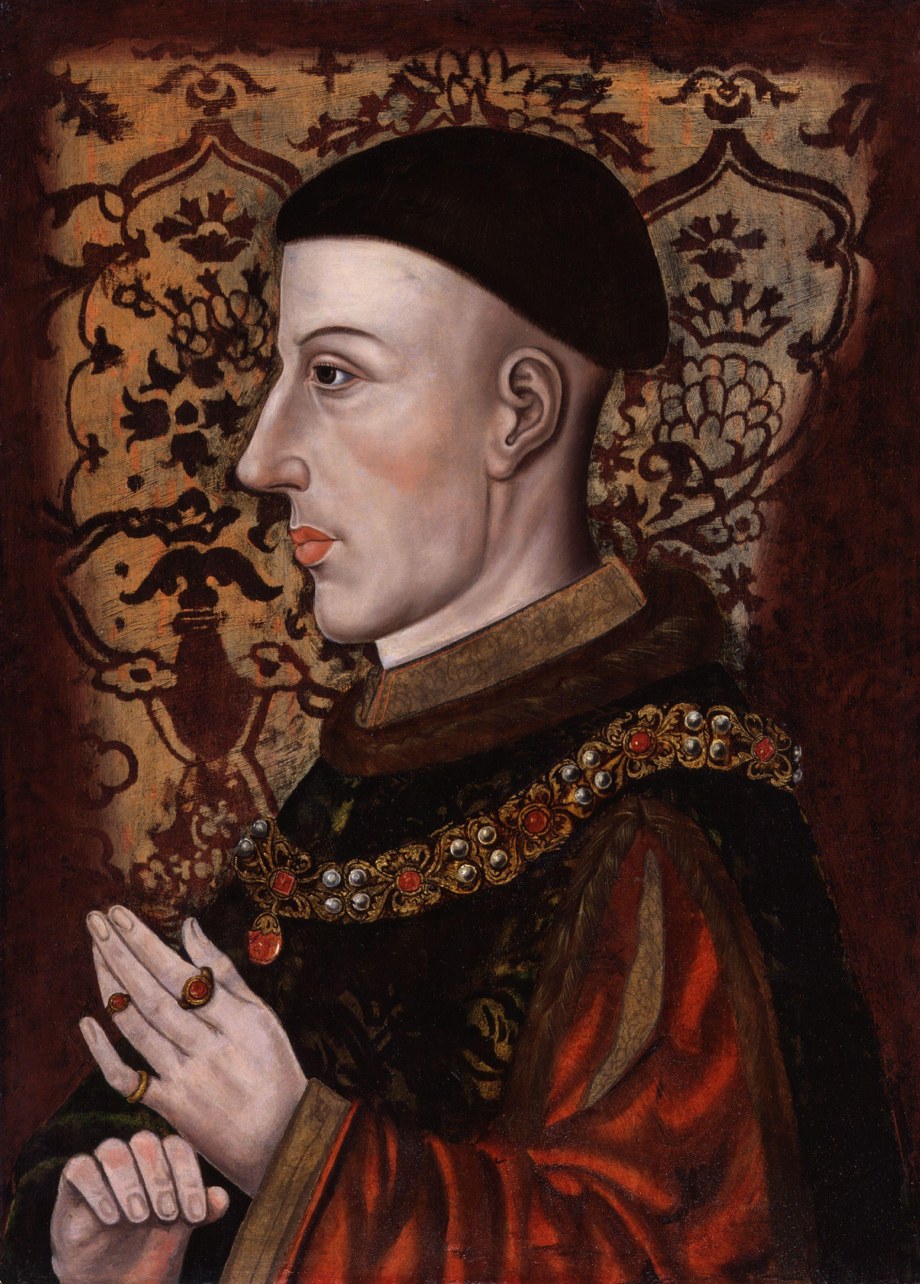
AI-assisted Portrait of Henry V
The Reformation of a King
He was, by reputation, a wastrel prince. The young man who became Henry V was remembered in tavern and rumor as Prince Hal — dissolute, carousing, keeping low company, the heir who seemed to squander his inheritance before he held it. Shakespeare would immortalize that legend, giving him Falstaff and the Eastcheap tavern and a youth spent in deliberate disgrace. Then his father died, the crown descended, and the wastrel vanished overnight. In his place stood one of the most disciplined, austere, and ruthlessly effective monarchs England ever produced — “God's soldier,” cold, pious, and terrifyingly capable.
Whether the wild youth was ever real hardly matters; the transformation was. From the moment he took the throne in 1413, Henry governed with a singularity of purpose that bordered on the inhuman. He revived the Hundred Years' War, invaded France, broke the walls of Harfleur by siege, and then — with a small, starving, dysentery-ridden army — destroyed the flower of French chivalry in the mud at Agincourt. He conquered Normandy by methodical, grinding siege warfare, and at the Treaty of Troyes in 1420 he achieved what no English king had ever come close to: recognition as heir to the throne of France itself, married to the French king's daughter, the Dauphin disinherited at a stroke. He was thirty-four years old and the master of two kingdoms. Two years later he was dead.
Henry V was the ENTJ as conqueror — a dominant Te that organized armies, sieges, and a whole kingdom toward a single grand Ni design, executed with iron will and total suppression of personal feeling. He did not rule England. He commanded it toward an objective.
The Will That Bent a Kingdom
Te — dominant
Dominant Te is the function of command — the drive to impose order on the external world, to organize people and resources toward a stated objective and measure everything by whether it works. Henry V is one of history's purest specimens. His warfare was not the reckless gallantry of the chivalric ideal he destroyed; it was logistics, engineering, discipline, and administration. He understood that a campaign was won in the supply train and the siege line as much as on the field. At Harfleur he reduced the town by methodical bombardment and mining. At Rouen, the key to Normandy, he sat down and starved the city into surrender over months, unmoved by the suffering inside the walls. He conquered a province the way an engineer demolishes a structure — one calculated stage at a time.
The same Te governed the kingdom behind him. Henry was a relentless administrator who tightened royal finance, enforced the law with severity, and demanded competence from every officer who served him. He projected control so total that the chronic disorder of his father's reign simply stopped. Where Henry IV had spent his reign fighting off rebellion and clinging to a usurped crown, his son inherited that instability and crushed it — partly by giving the fractious nobility of England a foreign war to unite behind. That, too, was Te: a structural solution to a structural problem. Channel the kingdom's violence outward and bind its quarreling magnates to a single enterprise that only the king could lead.
Agincourt itself was Te under maximum pressure. Outnumbered perhaps four or five to one, his army wet, sick, and exhausted from the long march from Harfleur, Henry chose his ground with cold precision — a narrow field flanked by woods that funneled the French knights into a killing channel of mud where his longbowmen could destroy them. When a French force threatened his lightly guarded prisoners and baggage mid-battle, he gave the order to kill the prisoners — thousands of ransomable nobles — rather than risk them rising at his rear. It was a decision of breathtaking ruthlessness and flawless tactical logic. The objective was victory; everything else, including the chivalric code and a fortune in ransom, was subordinate to it.
The Design of Two Crowns
Ni — auxiliary
Te commands in the present; auxiliary Ni supplies the long, single vision that the commanding gives shape to. What separates Henry from a merely competent warlord is that his campaigns were not a series of opportunistic raids but stages in one coherent, far-reaching design: the conquest and dynastic union of the crowns of England and France in a single person — himself, and then his line. Every move bent toward that end. Harfleur secured a foothold. Agincourt shattered French military prestige and proved the project viable. The systematic conquest of Normandy converted prestige into territory. And the whole arc converged on Troyes.
The Treaty of Troyes in 1420 was Ni made flesh. Henry did not simply defeat the French; he married Catherine of Valois, daughter of the mad king Charles VI, and had himself recognized as regent of France and heir to its throne — disinheriting the Dauphin, the future Charles VII, by treaty rather than mere force. It was the union of two kingdoms engineered through marriage, war, and law at once. A king with only Se would have been content to plunder and withdraw; a king with only Te would have governed his conquests as occupied territory. Henry was building something meant to last beyond his own reign — a dual monarchy descending through his bloodline. The design assumed it would have time. It was the one thing he could not command.
The King in the Field
Se — tertiary
For all his strategic patience, Henry was no remote planner moving counters on a map. He fought. Tertiary Se gave him a physical courage and a decisiveness in the moment that made him a leader of men rather than merely of armies. At the Battle of Shrewsbury, years before he was king, he took an arrow in the face and refused to leave the field while the surgeon dug the head from his skull. As king he led from the front, sharing the privations of the march from Harfleur, present in the press at Agincourt where his own crown was said to have been struck and dented in the fighting.
Se in the tertiary position is not the impulsive thrill-seeking of a dominant sensor; it is reserved and harnessed, called up in service of the larger Te-Ni purpose. Henry could read terrain, weather, and the temper of his troops with a soldier's eye, and he acted on that reading without hesitation when the moment demanded it. The choice of ground at Agincourt, the timing of the advance, the steel to give a monstrous order in the middle of a battle — these required not just calculation but the nerve to commit, instantly and totally, in the chaos of the field. The vision was Ni's; the will was Te's; but the man who stood in the mud and made it happen was drawing on Se.
The Feeling He Buried
Fi — inferior
The most revealing thing about Henry V is what he did to his own heart. Inferior Fi in an ENTJ is a buried, mistrusted thing — personal feeling treated as a weakness to be mastered rather than a guide to be followed. Henry mastered it with a severity that still unsettles. The legend of Prince Hal's reformation, whatever its truth, captures something real: on taking the crown he is said to have coldly broken with the companions of his youth, putting away affection and indulgence the way a man removes a coat. Shakespeare dramatized it as the rejection of Falstaff — the warm, riotous old knight cast off without mercy by the new king. Sentiment was incompatible with the design, so the sentiment was cut out.
The killing of the prisoners at Agincourt is the same suppression on the battlefield. No king bound by ordinary feeling could have given that order; Henry gave it because the objective required it and his own revulsion did not count. His intense, austere piety belongs here too. He did not feel his way toward God through warm devotion; he submitted to a stern moral order he believed himself the instrument of, executing it with the same discipline he brought to a siege. “God's soldier” is exactly right — feeling channeled into duty, conviction made cold.
What an ENTJ buries in the inferior function does not disappear — it hardens into principle. Henry felt deeply, but only ever toward the cause: England, the crown, the judgment of God. Toward the human beings in front of him, he could be as merciless as the logic of his design demanded.
Why ENTJ Over ESTJ or INTJ
Why not ESTJ?
The ESTJ is the supremely capable administrator of an inherited order — the dutiful executor who runs the office he is given with discipline and rigor. Henry was more than that. He was a strategic visionary pursuing a vast, far-reaching design that no precedent demanded and no duty required: the conquest and dynastic union of two kingdoms. Troyes was not the competent management of an established office; it was the fruit of ambition and a single long vision — Te in the service of Ni, not Te in the service of Si and inherited convention.
Why not INTJ?
The INTJ shares the grand strategic vision but withdraws to direct it from a distance, preferring the architecture of the plan to the heat of the arena. Henry was an outward, commanding leader of men — he led from the front, stood in the press at Agincourt, and bent a quarrelsome kingdom to his will by sheer presence. His Te faced outward at full force, organizing and commanding in the open field, not refining a private blueprint. The extraverted command is decisive.
The distinction that matters is between management and design. An ESTJ would have defended England's borders, enforced its laws, and administered its revenues with formidable competence — and stopped there, because the office did not ask for more. Henry asked for more. He saw a future in which the two crowns were one and his own line wore them, and he organized armies, sieges, treaties, and a marriage toward making that future real. The vision came first; the iron competence was its instrument. That ordering — Ni supplying the objective, Te executing it without mercy — is the ENTJ, and Henry V is its conqueror archetype.
Connected Figures
Further Reading
- Henry V — Christopher AllmandThe standard scholarly biography in the Yale English Monarchs series — definitive on Henry's governance, war, and the machinery of the dual monarchy.
- Agincourt: A New History — Anne CurryThe leading modern reassessment of the battle, drawing on the muster rolls to revise the numbers and reconstruct what actually happened in the mud.
- 1415: Henry V's Year of Glory — Ian MortimerA vivid, near day-by-day narrative of the Agincourt campaign that captures the man and the machine behind the legend.
- Henry V — William ShakespeareThe play that made Henry England's hero-king — the warm-voiced legend that the colder historical record only partly supports.
