 Historical Figure MBTI
#496 · 4-18-26 · Plantagenet England
Henry IV
King of England · Bolingbroke, the Usurper Who Founded Lancaster
1367 — 1413
10 min read
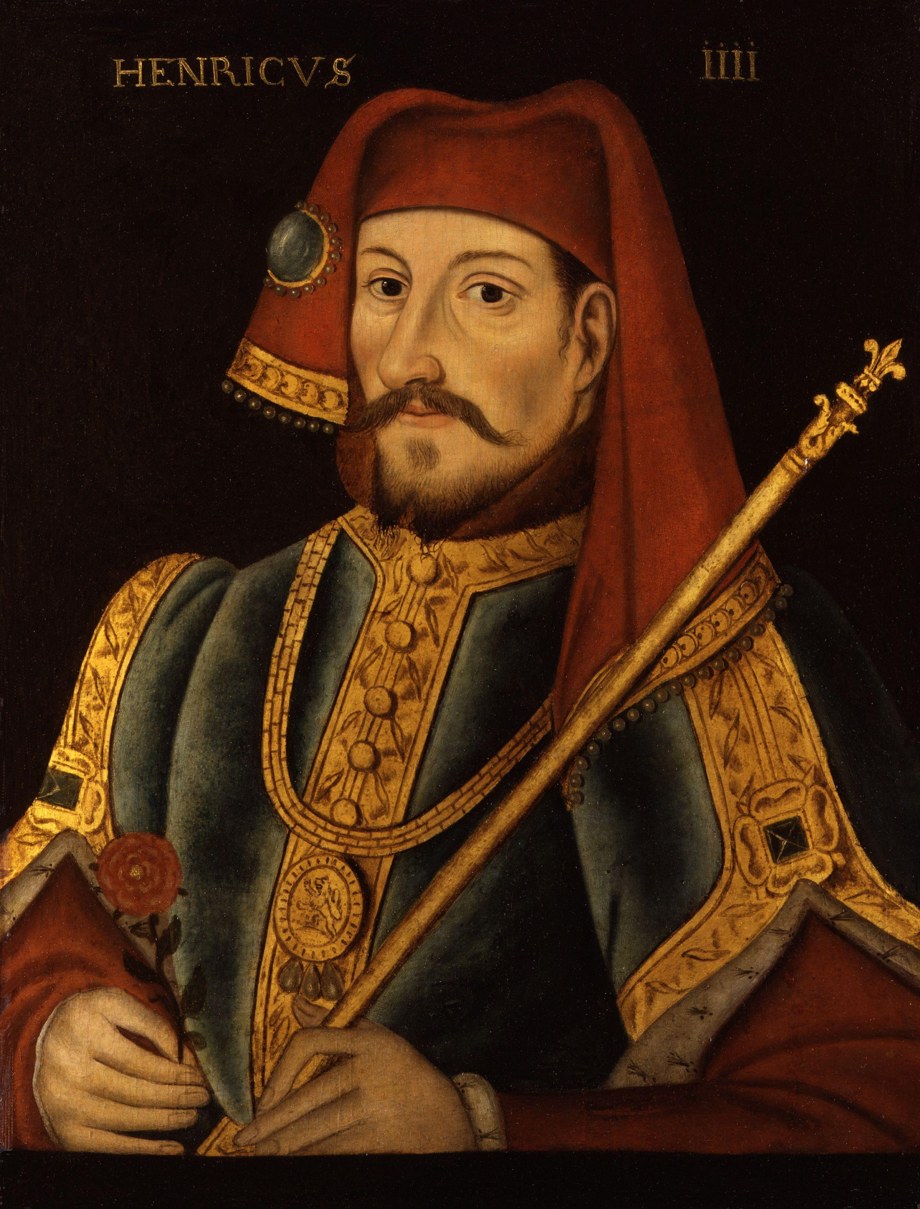
AI-assisted Portrait of Henry IV
The Man Who Took the Crown
Henry Bolingbroke wanted, by his own telling, only what was his: the vast Lancastrian inheritance that his father John of Gaunt had built into the richest patrimony in England. When his cousin, King Richard II, seized that inheritance in 1399 rather than let an exiled duke claim it, Henry landed at Ravenspur with a handful of men, and within ten weeks he had something far larger than a duchy. He had the realm. The barons came to him, the king's support evaporated, and the man who set out to recover an estate ended by deposing an anointed monarch and seating himself on the throne as Henry IV — the first king of the House of Lancaster.
He was made for the work and haunted by it in equal measure. A celebrated jouster who had crusaded with the Teutonic Knights in Lithuania and ridden as a pilgrim to Jerusalem, he was a capable, martial, relentlessly competent magnate — one of the Lords Appellant who had checked Richard's favorites in 1388, and the only one of that faction to survive Richard's long revenge. Once crowned, he held the throne the only way it could be held: by sheer force of will against a decade of rebellion — the Percys and their glittering son Hotspur, Owain Glyndŵr's Welsh rising, the Scots, and the chronic, grinding shortage of money that nearly broke his government. And he held it while broken himself, by a disfiguring illness and by guilt over a usurpation that would, three generations later, detonate into the Wars of the Roses.
Henry IV is the ENTJ usurper: a commanding, capable operator who read the decisive moment, struck for the crown itself, and then held it against everything by competence and will — the cold pragmatist to his cousin's dreaming idealist.
The Crown Held by Will
Te — dominant
Dominant Te is the drive to impose order on the external world — to take a situation, assess what power it actually contains, and organize men and resources to a concrete end. Henry's entire career is a study in it. The 1399 invasion was not a gamble of passion but a swift, accurate audit of where power had drained: Richard was in Ireland, the realm was alienated, the magnates were waiting for a candidate. Henry supplied himself, gathered the great lords as he marched, and converted a private grievance into a national movement before his cousin could return. He did not theorize about whether the crown should be his. He saw that it could be taken, and he took it.
Holding it demanded the harder, grinding form of the same function. Henry's reign was one long emergency of rebellion and insolvency, and he met it as a manager meets a failing enterprise — on the ground, in the field, in the account books. He rode against the Percys and crushed Hotspur at Shrewsbury in 1403, the king fighting in the line. He campaigned year after year against Glyndŵr in the Welsh mountains. He fought Parliament for every grant of taxation and submitted, when he had to, to humiliating oversight of his household spending rather than lose the supply that kept his armies in being. Where his cousin had ruled by mood and prerogative, Henry ruled by negotiation, calculation, and sheer administrative endurance.
What makes it specifically Te — and specifically Henry — is that he never mistook the throne for a possession he could simply enjoy. He treated kingship as a problem to be worked, every day, with the tools at hand: armies, money, the loyalty of men who had to be managed and rewarded. He won no glamorous foreign war; he founded no new order of state. He did something less brilliant and more telling. He took a crown that half the realm thought stolen and, by competence alone, made it stick.
He treated the throne not as a prize to be enjoyed but as an enterprise to be run — and he kept it solvent, defended, and intact by working it harder than any man who wanted it back was willing to.
Reading the Decisive Moment
Ni — auxiliary
Auxiliary Ni gives Te its aim. On its own, dominant Te is only efficiency — the capacity to execute. Paired with Ni, it becomes strategy: the ability to perceive, under the surface of events, the single trajectory along which a situation is bound to move, and to position oneself at its decisive point. This is the faculty that separated Henry from a merely able administrator. He could read a political moment for what it would become, not just what it was.
The years before 1399 show it as patience. Henry had been a Lord Appellant in 1388, and Richard never forgave it; when the king destroyed the senior Appellants in 1397, Henry read the danger and survived by maneuver where others died. His exile in 1398 should have been the end of his ambitions. Instead he waited, watching from France as Richard's rule curdled into arbitrary seizure and alienated the very magnates a king needs. When Richard committed the irrevocable blunder — confiscating the Lancastrian inheritance outright, proving to every great landholder that no title was safe — Henry saw that the king had finally overreached past recovery, and he moved at once. The timing was not luck. It was a man who had been reading the situation for years striking the instant it broke open.
That convergence of foresight and force is the ENTJ's signature: Ni perceives the opening, Te drives through it. Henry did not improvise his way to a throne, nor did he merely seize it on impulse. He recognized the one moment when the whole structure of Richard's power had become a single point of failure, and he put the full weight of his competence behind the strike. The conqueror who took ten weeks to win a kingdom had been preparing to read that moment for a decade.
The Jouster and the Soldier
Se — tertiary
Tertiary Se gives the ENTJ a real appetite for the physical world — for action, spectacle, the test of the body against the moment. In Henry it was vivid and lifelong. He was among the most celebrated knights in Europe before he was a king: a tournament champion who jousted across the courts of the continent, a crusader who campaigned with the Teutonic Knights against pagan Lithuania, a pilgrim who rode the long road to Jerusalem. Where his cousin Richard recoiled from war and dreamed of a sacral, ceremonial kingship, Henry was at home in the saddle and the press of arms.
That physical confidence served him directly when the throne had to be defended by force. At Shrewsbury he did not direct the battle from safety; he fought in it, and his young son — the future Henry V — took an arrow in the face and survived. The instinct to be present at the decisive point, to meet the crisis bodily rather than from a distance, is Se in the service of Te's aims. It is the soldier-king who wins his crown on the field and then keeps riding out to hold it.
But tertiary Se is a younger man's strength, and Henry's tragedy is that it failed him. The vigorous athlete of the 1390s became, in the last years of the reign, a man wrecked by a disfiguring illness — seizures, a wasting, possibly leprous affliction that the chroniclers read as the visible mark of his guilt. The body that had carried him to the throne broke under him while he sat on it. The conqueror ended half-paralyzed, and the physical command that had defined him drained away just as the inferior function rose to take its place.
The Guilt He Could Not Manage
Fi — inferior
Inferior Fi is the ENTJ's shadow — the private, unmanageable inner conscience that the dominant Te can neither negotiate with nor organize away. For most of his life Henry kept it submerged beneath competence and action. But in the means of his rise he created a wound that no amount of administrative skill could close, and it surfaced as the defining torment of his reign: guilt over how he had taken the crown, and over the death of the cousin he had deposed.
Richard II died in captivity at Pontefract early in 1400, almost certainly starved on Henry's account if not his explicit order — the predictable fate of a deposed king left alive, and a thing Henry needed done and could not bear to have done. The deed haunted him. He took the cross more than once, vowing a crusade to Jerusalem that he never made, the penitent's reflex of a man trying to buy back his soul. The chroniclers wrote his disfiguring illness as divine judgment, and Henry seems half to have believed them. The Te operator who could manage rebellion, Parliament, and an empty treasury had no instrument for managing his own conscience, because inferior Fi does not answer to management.
It is what keeps Henry from being a mere cynic. A cold usurper who felt nothing would be a simpler figure and a smaller one. Henry took the throne with both hands and then spent thirteen years unable to enjoy it — secure in power and insecure in spirit, the most capable man in England and the most privately tormented. The crown he held by will, he wore in guilt.
Why ENTJ Over ESTJ
Why not ESTJ?
The ESTJ is the steward of an inherited order: it administers the office it is given, upholds the established structure, and rules by precedent and duty. Henry did the opposite. He did not administer a crown handed to him — he reshaped the succession by force, deposing an anointed king and seizing the throne itself when the moment came. That is a strategic bid, not a stewardship. The ESTJ would have served Richard, or at most defended his own inheritance and stopped. Henry read the larger opening and went for the kingdom — Te in the service of Ni's vision, not Si's precedent.
The distinction is the difference between a manager and a usurper-strategist. An ESTJ of Henry's competence would have been a formidable royal officer — a great steward, constable, or loyal duke who kept the existing machine running. Henry was something rarer and more dangerous: a man who looked at the machine, saw that the king at its center had become its single weakness, and replaced him. He did not want to run the realm for Richard. He wanted the throne, and he had the strategic eye to see when it was within reach and the will to close his hand on it. The steward conserves; the strategist seizes. Henry seized.
Connected Figures
Further Reading
- The Fears of Henry IV: The Life of England's Self-Made King — Ian MortimerThe standard modern biography — vivid on the usurpation, the rebellions, and the guilt and illness that shadowed the reign.
- Henry IV — Chris Given-WilsonThe authoritative scholarly life in the Yale English Monarchs series; definitive on the politics and finances of a beleaguered kingship.
- The Reign of Henry IV: Rebellion and Survival, 1403–1413 — A. L. Brown & Henry Summerson (eds. Dodd & Biggs)Essays on the central crisis of the reign — the Percy and Welsh revolts, the money troubles, and how Henry held on.
