 Historical Figure MBTI
#497 · 4-18-26 · Plantagenet England
Thomas of Woodstock
Duke of Gloucester · Richard II's Uncle, Murdered
1355 — 1397
7 min read
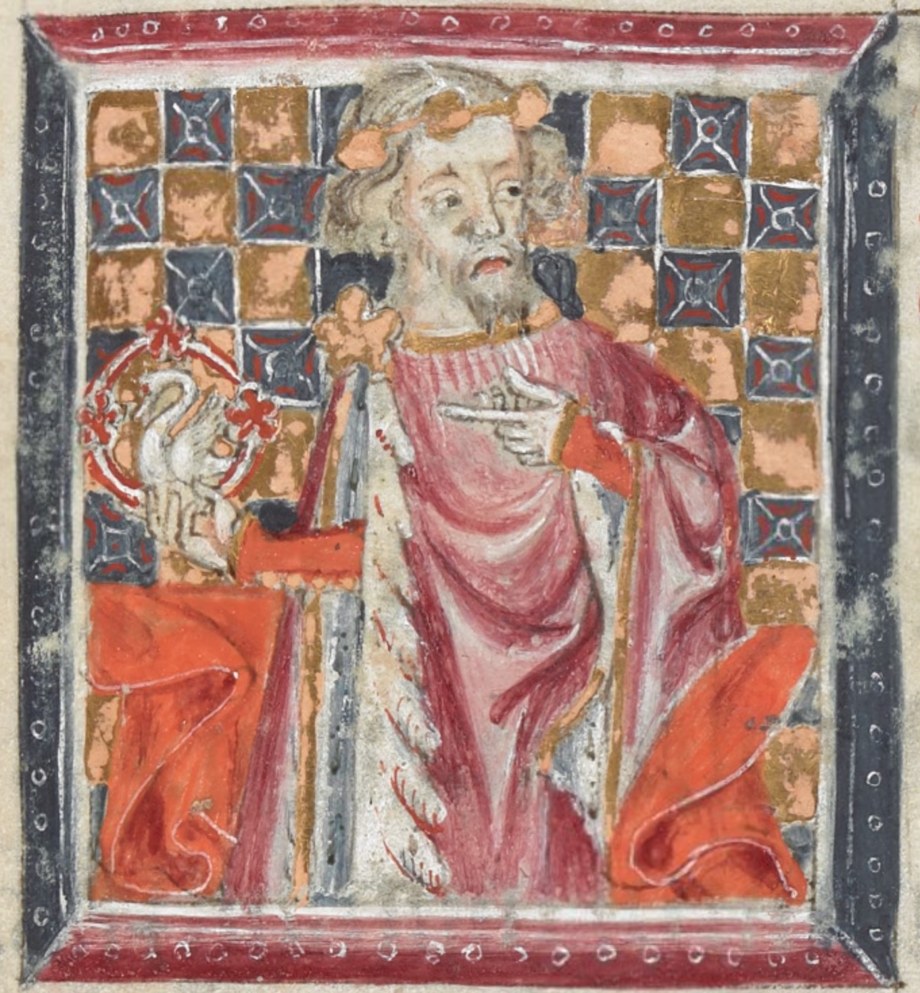
AI-assisted Portrait of Thomas of Woodstock
The Uncle Who Bullied a King
Thomas of Woodstock was the youngest of Edward III's sons, born in 1355 when his father's great war with France was already a generation old, and he grew up believing in that war the way other men believe in God. Made Duke of Gloucester, he became the loudest, hardest voice of the old military aristocracy — a magnate who measured kingship by the readiness to fight and who regarded his nephew, the young Richard II, with open contempt for preferring peace, ceremony, and favorites to the honest business of campaigning.
In 1387 he stopped sneering and seized power outright. As the senior of the Lords Appellant, he led the coalition that crushed Richard's royalist supporters and then convened the “Merciless Parliament” of 1388, which condemned, exiled, and executed the king's friends and councillors with the cold thoroughness of a man balancing a ledger. Richard never forgave it. Nine years later, in 1397, the king took his revenge: Woodstock was arrested, shipped across the Channel to Calais, and there murdered — smothered, the chroniclers say, in his bed.
Woodstock was the ESTJ magnate at his most domineering — commanding Te wedded to a conventional, tradition-bound Si — a man who knew exactly how a king should behave, tried to enforce it by force, and was killed for the presumption.
The Hammer of the Magnates
Te — dominant
Dominant Te wants to command, and Woodstock commanded. Where a subtler man might have worked through the council, flattered the king, or built a faction by patronage, he preferred the direct application of force. In 1387 he did not petition Richard; he raised troops, defeated the royalist army under de Vere at Radcot Bridge, and presented the king with an accomplished fact. The Merciless Parliament that followed was Te legislating: an opposing power structure identified, charged, dismantled, and in several cases sent to the block, with the brisk efficiency of a man clearing an obstruction.
What makes the Te unmistakable is its target. Woodstock turned it not on a foreign enemy but on his own sovereign — he reduced an anointed king to a figurehead and ran the realm through a commission of his own allies. He treated Richard with a contempt that was almost managerial, as if the young man were an incompetent steward to be overruled rather than a monarch to be obeyed. The aggression was structural, not personal pique: an ESTJ convinced that authority belongs to whoever is competent and willing to wield it, and certain that he qualified and his nephew did not.
It was also the Te that killed him. A man who governs by naked dominance leaves no bridge to retreat across, and when the wheel turned in 1397 Woodstock had no reserve of goodwill, no softer relationship with the king to fall back on — only a long record of having humiliated him. He had built his whole career on force, and force was what came for him at Calais.
The War His Father Fought
Si — auxiliary
If Te supplied the will, auxiliary Si supplied the content — and the content was entirely backward-looking. Woodstock's politics were nostalgia hardened into policy. He believed in the war against France the way his father John of Gaunt's generation had waged it: pitched chevauchées, the recovery of lost territory, glory won in the field. To him Richard's pursuit of a negotiated peace was not a rational adjustment to a bankrupt treasury but a kind of betrayal of the established order — an abandonment of the thing the aristocracy was for.
Si in the service of Te makes a man a defender of inherited prerogative, and Woodstock defended the rights of the great nobility with absolute conviction. The magnates had always counselled the crown, restrained bad kings, led the armies; that was how the realm had worked, and to him it was how it should keep working. He read Richard's cult of kingship — the elaborate ceremony, the cultivated favorites, the exalted notion of royal majesty — as a dangerous novelty, an upstart theory threatening the customary balance between king and lords. His response was the response of the traditionalist who feels the ground shifting: dig in, and enforce the old rules.
This is why he reads as ESTJ rather than something more inventive. There is no new vision in Woodstock, no design for a reformed realm — only an insistence that things return to how they used to be, backed by the willingness to fight anyone who disagreed. His Si gave his aggression a deeply conservative grain.
No Plan Beyond Dominance
Ne — tertiary
Tertiary Ne in an ESTJ is thin, and Woodstock's was thin in a way that proved fatal. He could see the immediate move — raise the levies, win the battle, pack the parliament — but he showed almost no capacity to imagine the longer game, to picture how a humiliated king might wait, recover, and strike back. He won 1387 and 1388 decisively, then seems to have assumed the matter settled. He did not consolidate, did not reconcile, did not build the alliances that might have protected him. The possibility that Richard would patiently rebuild his power and take revenge nearly a decade later appears not to have shaped his conduct at all.
What Ne he had came out as suspicion rather than vision. He was forever scenting plots, forever convinced the king and his circle were scheming against the realm — a restless, distrustful imagination that fed his aggression but never matured into strategy. He could project threats; he could not project consequences. It is the tertiary function as a source of anxiety, not insight: enough peripheral vision to feel surrounded, not enough to see the actual trap closing in 1397.
The Grievance He Could Not Govern
Fi — inferior
Inferior Fi gave Woodstock his one ungovernable region. The commanding Te could organize armies and parliaments, but it could not regulate his own resentment, and resentment is what undid him. His contempt for Richard was not policy — it was personal, visceral, and visible to everyone at court. He could not keep it behind his teeth. Where a more controlled man would have masked his disdain and left the king a face-saving exit, Woodstock let it show, and an anointed king does not forget being openly despised by his own uncle.
The inferior function surfaces as crude, all-or-nothing conviction: a rigid sense that he was simply in the right and the king simply in the wrong, with no shading in between. It made him incorruptible in his own eyes and insufferable in everyone else's. He had values — honor, the old war, the dignity of the magnates — but he held them like a cudgel rather than a compass, unable to weigh them against political reality or to feel his way to compromise. That brittleness is the ESTJ's inferior Fi at its least developed: deep enough to drive him, shallow enough to blind him, and ultimately the thing that put him in a bed at Calais with a mattress pressed over his face.
Why ESTJ Over ENTJ
Why not ENTJ?
The ENTJ leads with strategic vision — it seizes power in service of a larger design and plays the long game to get there. Woodstock had no design. He fought to restore an old order and to dominate his nephew, not to build a new one, and his catastrophic failure to anticipate Richard's revenge is exactly the blind spot a genuine ENTJ would not have. His brother John of Gaunt — who maneuvered for the crowns of Castile and England across decades — is the ENTJ in that family. Woodstock was the hammer, not the chess player.
The distinction is between force in the service of vision and force in the service of the established order. Woodstock's entire program was conservative and reactive: defend magnate privilege, revive the old war, put the king back in his customary place. He wielded power magnificently and saw no further than its exercise. That is the ESTJ signature — commanding Te anchored to a backward-looking Si — and it is why, for all his dominance, he ended as a corpse at Calais rather than the architect of a new regime.
Connected Figures
Further Reading
- Richard II — Nigel SaulThe definitive modern biography of Richard; essential on the Appellant crisis and the king's long-delayed revenge on Woodstock.
- The Loyal Conspiracy: The Lords Appellant under Richard II — Anthony GoodmanThe standard study of the faction Woodstock led — who the Appellants were, what they wanted, and how they governed.
- Chronicles of the Revolution, 1397–1400: The Reign of Richard II — Chris Given-WilsonTranslated source narratives of the period, covering the 1397 purge, Woodstock's death, and the fall of Richard.
