 Historical Figure MBTI
#505 · 4-19-26 · The Hundred Years' War
John, Duke of Bedford
Regent of France · Henry V's Capable Brother
1389 — 1435
8 min read
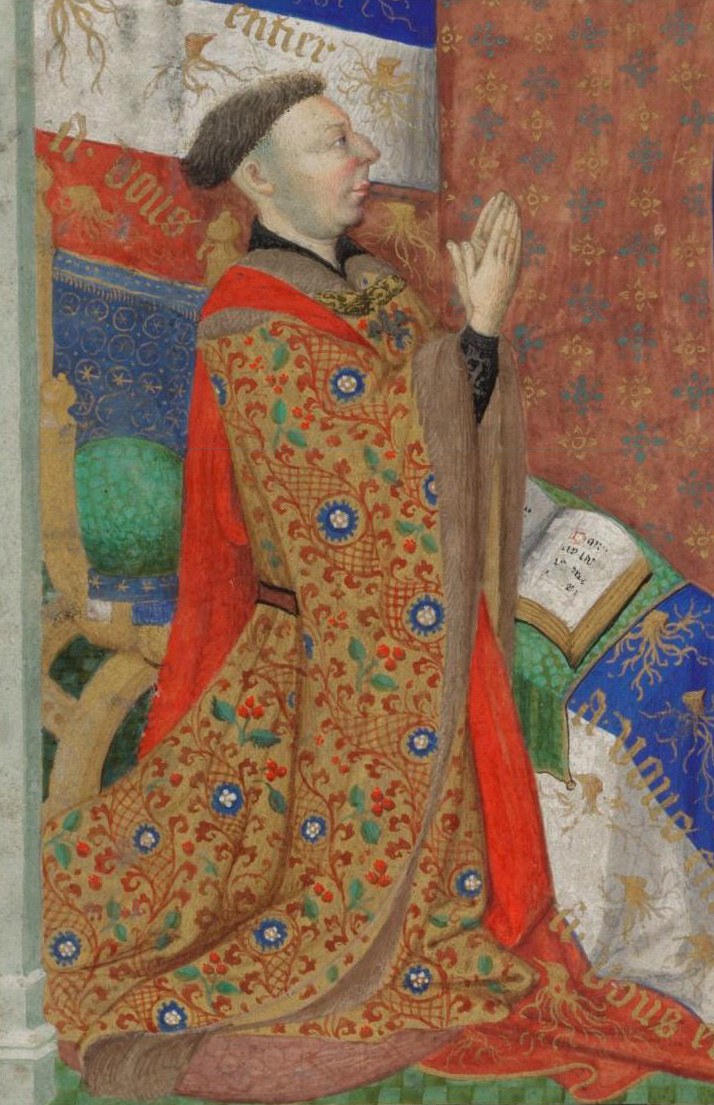
AI-assisted Portrait of John, Duke of Bedford
The Man Who Held the Conquest Together
When Henry V died of dysentery in 1422 at the age of thirty-five, he left behind the most improbable inheritance in medieval Europe: a nine-month-old son who, within weeks, was proclaimed king of both England and France. The dream of a dual monarchy — an England that ruled Paris — rested entirely on the shoulders of the men Henry left to govern in the infant's name. The ablest and most loyal of those men was the dead king's next brother, John, Duke of Bedford, who became regent of France and spent the next thirteen years doing what nearly everyone expected to be impossible: keeping the English conquest of France alive.
Born in 1389, Bedford was a soldier and administrator of the first rank, and the one Lancastrian capable of holding the whole brittle structure upright. From 1422 to 1435 he won battles, governed occupied territory, managed money, and above all kept the Burgundian alliance — the single thread on which the entire English position hung — from snapping. He won a victory at the Battle of Verneuil in 1424 so complete that contemporaries called it a second Agincourt. He was not a man of grand designs or personal ambition. He was something rarer and, in this situation, more valuable: a steward of overwhelming competence, faithfully executing another man's vision long after that man was dead.
Bedford was the ESTJ regent at full stretch: dominant Te organizing an occupied kingdom by sheer administrative and military will, anchored by an Si sense of duty so total that he upheld his dead brother's settlement, year after grinding year, until the day he died.
The Administrator-Soldier
Te — dominant
Dominant Te is the executive function — the drive to impose order on the external world, to organize people, resources, and territory toward a defined end. Bedford's entire regency was an exercise in it. Governing occupied northern France was not a matter of inspiration but of logistics: garrisons to man, taxes to raise from a war-ravaged population, justice to administer, supply lines to keep open, and a constant shortfall of money to manage. Bedford did all of it with a hard, methodical competence that kept the machinery running for over a decade when a less capable man would have let it seize within a year or two.
Verneuil in 1424 is Te in its martial mode. Bedford met a larger Franco-Scottish army and destroyed it through discipline, positioning, and command rather than dash — the same organizing intelligence applied to a battlefield instead of a treasury. The victory was so decisive that it broke Scottish military involvement in France for a generation and stabilized the English position at a stroke. But Bedford understood that battles alone could not hold a kingdom; what held it was the unglamorous, continuous work of administration. He took the governing seriously precisely because he saw, more clearly than the hot-headed men around him, that the conquest would be lost not in a single defeat but in a thousand small failures of management.
This is the Te executive distinguishing itself from mere generalship. Plenty of Lancastrian lords could win a fight. Bedford could win a fight and then govern the ground he had won — raise the revenue, settle the disputes, keep the allies onside, and do it again the following year. The conquest survived as long as it did because one man was capable of running it as a going concern.
The Faithful Steward
Si — auxiliary
If Te supplied Bedford's capability, auxiliary Si supplied his purpose. Si is the function of continuity, duty, and fidelity to an established order — the loyal upholding of a settlement already made. Bedford was not building his own kingdom; he was holding his dead brother's. Henry V had laid out the design — the dual monarchy, the Burgundian alliance, the claim made flesh in the infant Henry VI — and Bedford regarded that design as a trust to be honored, not a starting point to be improved upon. For thirteen years he executed it with a constancy that never wavered, even as the position grew harder.
This is the steady, dutiful temper of the SJ regent. Where another man might have cut a separate deal, seized a crown for himself, or abandoned a sinking cause, Bedford simply kept faith. He maintained the Burgundian alliance through patient, grinding diplomacy — cemented by his own marriage to Anne of Burgundy, the duke's sister, a union of genuine personal regard that did real political work. He kept the occupation administered and the army in the field. The faithful regent upholding the order he inherited, year after year, asking nothing for himself: that is auxiliary Si giving direction to dominant Te's formidable engine.
The Patron and the Diplomat
Ne — tertiary
Tertiary Ne in an ESTJ is a real but supporting capacity — an ability to read possibility, to maneuver among options, and to appreciate the world beyond the ledger. In Bedford it surfaced in two places. The first was diplomacy. Holding the Burgundian alliance together was not a matter of brute administration; it required an ongoing read of an ally's shifting interests and grievances, a flexibility about means in service of a fixed end. Bedford managed Duke Philip of Burgundy — proud, slippery, and indispensable — for over a decade, which took more imaginative footwork than his reputation for plain competence suggests.
The second was patronage. Bedford was a serious collector and patron of the arts, and the exquisite illuminated manuscript known as the Bedford Hours — which bears his own portrait kneeling in devotion — survives as one of the great treasures of late-medieval book production. This is tertiary Ne as cultivated taste: an appreciation of beauty and craft that a purely managerial mind would never have bothered with. It rounds out the portrait of a man who was more than an efficient soldier-bureaucrat, even if competence remained his defining note.
Rouen and the Blind Spot
Fi — inferior
Inferior Fi is the ESTJ's weak point: the underdeveloped sense of private, individual values that can leave a supremely effective operator unable to feel the moral weight of what efficiency demands. Bedford's regency met its defining test in Joan of Arc — the peasant girl whose appearance in 1429 turned the war, broke the siege of Orléans, and put the dauphin on the throne at Reims as Charles VII. To Bedford she was not a religious mystery or a moral question but a political and military problem: a force that was reversing his settlement and had to be neutralized.
When Joan was captured and sold to the English, it was on Bedford's watch, as political head of the regime, that the proceedings unfolded which led to her trial as a heretic and her burning at Rouen in 1431. The trial was a calculated act of policy — discredit the visionary, and you discredit the king she crowned. Bedford pursued it with the same cold competence he brought to everything else, and that is precisely where inferior Fi shows. A man with a stronger inner moral compass might have flinched at burning a teenage girl to make a political point; Bedford saw a threat to the order he was sworn to uphold and removed it. The Te-Si executive, doing its duty, ran straight past the human horror of the thing.
It is the characteristic ESTJ tragedy in miniature: the very competence and fidelity that made Bedford indispensable also made him capable of an act that posterity would judge far more harshly than he ever judged himself.
Why ESTJ Over ENTJ
Why not ENTJ?
The ENTJ is an ambitious visionary who forges a new order of his own; the ESTJ is a dutiful steward who executes and maintains an inherited one, brilliantly. Bedford did the latter. He never reached for a crown, never tried to redesign the dual monarchy, never made the conquest about himself — he upheld his brother's design with a fidelity an ambitious ENTJ would have found constraining. His greatness was competence and loyalty in the service of another man's plan, not the strategic ambition that defines the ENTJ.
The decisive distinction is motivation, not capability — both types could have run an occupied kingdom. The ENTJ runs it as a platform for his own grand design; the ESTJ runs it because it is his duty and the order it serves is one he is sworn to preserve. Bedford's dominant Te was unmistakably real, but it was harnessed to Si fidelity, not Ni vision. He was the supremely capable executor of a settlement he inherited and never sought to own. That is the ESTJ regent, not the ENTJ conqueror.
Connected Figures
Further Reading
- Henry V — Christopher AllmandThe standard scholarly life of the brother whose conquest and settlement defined everything Bedford was left to hold together.
- The Hundred Years War: England and France at War, c.1300–c.1450 — Anne CurryThe clearest modern overview of the war's long arc, including the Lancastrian regime in France and its collapse after 1435.
- John, Duke of Bedford: The Lancastrian Regency in France, 1422–1435 — Studies of the Lancastrian regency (e.g. work building on E. Carleton Williams)Focused scholarship on Bedford's governance of occupied France — the administration, the Burgundian alliance, and the limits of competence.
