 Historical Figure MBTI
4 min read
#290 · 3-25-26 · Catherinian Russia
Prince Ivan Trubetskoy
Prince · General · Man of the Court and the Moment
dates uncertain
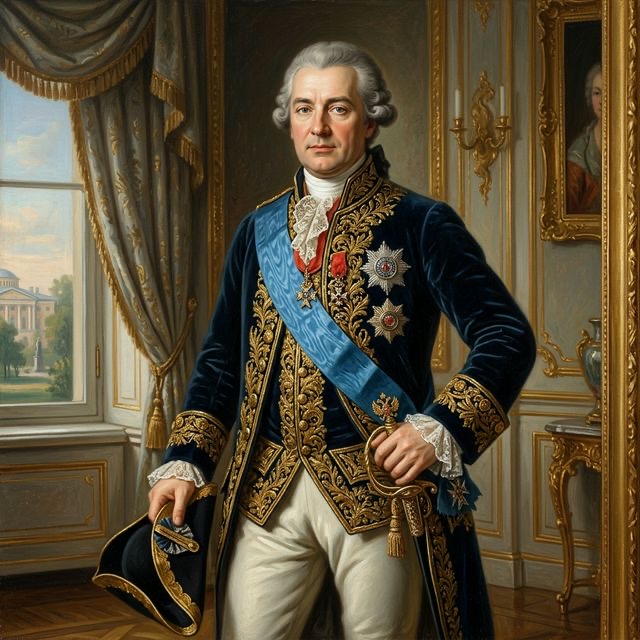
AI-assisted Portrait of Prince Ivan Trubetskoy
The Prince in the Present Tense
The Trubetskoy family was one of the oldest in Russia — a dynasty tracing its roots to the Lithuanian Gediminas line, holding princely rank before Russia was the Russia we recognize. By Catherine II's era, the name carried centuries of accumulated distinction: field marshals, senators, courtiers, generals. Prince Ivan Trubetskoy — whether an immediate court figure of Catherine's reign or a member of the extended clan that surrounded it — inhabited this world of inherited prestige and expected performance. The title was real. The expectations were real. And in the world of Catherinian court culture, so was the pressure to be vivid, charming, present.
The Trubetskoy name connects directly to Ivan Betskoy, Catherine's great educational reformer, whose natural father was the earlier Field Marshal Ivan Trubetskoy — making Betskoy a natural son of that senior line. This Ivan Trubetskoy of the Catherinian cluster likely belongs to a later generation of the same family: a prince living under the shadow of ancestors whose deeds were already legend, navigating the particular pressure of noble birth in an age when merit was beginning to compete with blood. His ESFP character would have been well-suited to that navigation — charm and immediate presence can carry a man very far in a court organized around personality.
The ESFP doesn't live in the family portrait — they live in the room, in the conversation, in the look exchanged across a banquet table.
The Court as Natural Habitat
Catherine II's court was, by any measure, one of the most socially demanding environments in eighteenth-century Europe. The empress herself was intensely attentive to personality — she surrounded herself with people who were quick, charming, intellectually alive, and capable of genuine warmth. Her favorites and advisors, her ladies-in-waiting and military officers, were selected not only for their competence but for their presence. The ESFP thrives in exactly this environment: Se dominant, fully alive to the physical and social texture of the present moment; Fi auxiliary, grounding the charm in something genuine rather than merely performative.
A Trubetskoy prince in this world would have understood the social grammar fluently — the correct posture at the card table, the right tone for a toast to the empress, the timing of a compliment and the restraint of a critique. None of this is cynical in the ESFP. It is simply how the world is most naturally read: through immediate sensory and social data, through the living room rather than the historical record, through the person in front of you rather than the abstract principle behind them. Where the Betskoy circle operated through ideas and institutions, the court world Ivan Trubetskoy inhabited operated through personality and moment. He was native to it.
A Name that Carried Itself
The ESFP's weakness is the inverse of their strength: the same orientation toward the present that makes them vivid company can make them poorly suited to the long game of institutional building or strategic self-positioning. The Trubetskoy family's greatness was already behind them in the sense that their most documented deeds — the field marshals, the senators, the diplomatic architects — belonged to earlier generations. For a later Trubetskoy, the family name was both gift and pressure: a platform on which to be charming, and a standard against which the mere charm of being charming looked insufficient.
History records the Trubetskoys across generations primarily through their public acts and appointments. The more purely social members of the family — those whose distinction was presence rather than policy — tend to fade. This is characteristic. The ESFP leaves an impression on the people who knew them; the archive is slower to capture impressions. Prince Ivan Trubetskoy remains a presence in the Catherinian world, a figure whose warmth and immediacy made him part of the texture of that era even if the texture is now what historians reconstruct rather than directly recover.
Connected Figures
Further Reading
- Russia in the Age of Catherine the Great — Isabel de MadariagaThe standard account of the court world a prince like Trubetskoy was expected to perform in.
- The Romanovs: Autocrats of All the Russias — W. Bruce LincolnTraces the old princely houses, including the Gediminas-descended Trubetskoy line, through their imperial service.
- Catherine the Great and Potemkin: The Imperial Love Affair — Simon Sebag MontefioreBest on the inner circle of courtiers whose charm and presence Trubetskoy's world demanded.
