 Historical Figure MBTI
#519 · 4-21-26 · The Wars of the Roses
Jane Shore
Edward IV's Witty, Beloved Mistress
c. 1445 — c. 1527
7 min read
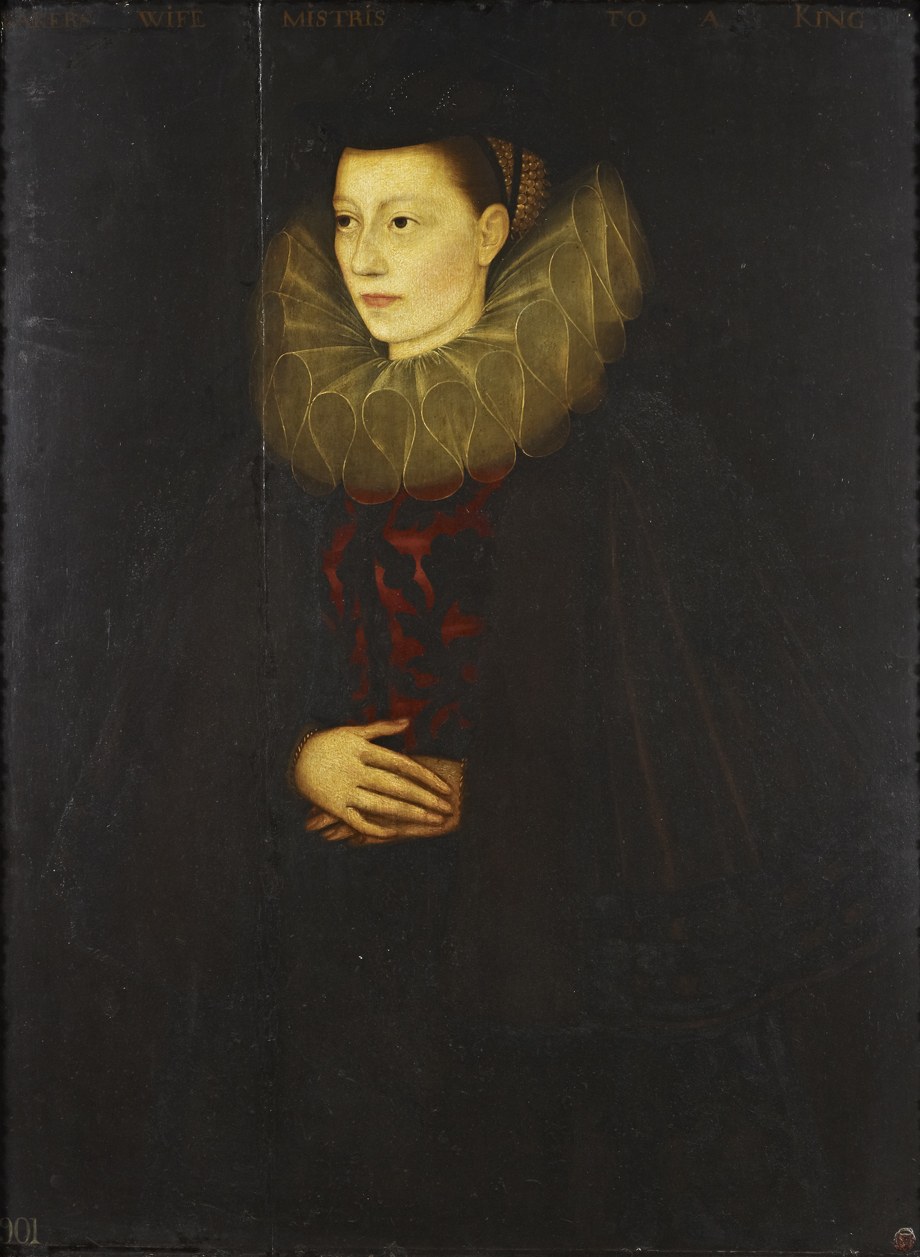
AI-assisted Portrait of Jane Shore
The Merriest of Them All
Edward IV kept many mistresses, but only one of them the whole of London seemed to love. She was the wife of a Lombard Street merchant—born Elizabeth, but remembered by the affectionate diminutive “Jane”—and she was, by every surviving account, witty, warm, and irresistibly good company. The king, who could have anything, reportedly called her the “merriest” of his women: not the most beautiful, not the most highborn, but the one whose presence simply made a room brighter.
What set her apart was rarer than charm. Royal mistresses, as a rule, used proximity to power to enrich themselves or wound their enemies. Jane Shore did neither. The influence she had over Edward she spent softening him toward petitioners, the unlucky, and the ruined—asking favors for other people and almost none for herself. Thomas More, writing a generation later from people who had actually known her, broke from his usual severity to describe her with something close to tenderness: a woman whose goodness was real and whose only fault was her station. She was the warm, generous, present-living charmer—the textbook ESFP.
Jane Shore was an ESFP whose power was warmth itself—Se charm that drew the whole city to her, married to an Fi kindness that spent that charm on other people's troubles rather than her own gain.
The Woman the City Loved
Se — dominant
Dominant Se lives in the immediate—in the warmth of a present moment, the pleasure of company, the spark of a quick reply. Jane Shore had it in abundance. The wit that made Edward call her the merriest of his mistresses was not calculated court polish; it was the effortless vivacity of someone fully alive to the people in front of her. She delighted in others and others delighted in her, and that easy reciprocity is the engine of the Se charmer: not a strategy but a temperament.
The clearest proof came at the lowest moment of her life. When Richard III seized power and decided to destroy her, he sentenced her to public penance—to walk barefoot through the streets of London in her shift, carrying a lighted taper, exposed before the crowds as a punished harlot. It was designed to break her. Instead she carried it off with such composure and grace that the watching Londoners felt pity rather than contempt, and the spectacle curdled into sympathy. That is Se under pressure: a poise rooted in the body and the moment, an instinct for how to carry oneself before an audience that no amount of humiliation could strip away.
Kindness for Its Own Sake
Fi — auxiliary
If Se made Jane beloved, auxiliary Fi made her good. Fi is a private, personal compass—a sense of right that answers to one's own heart rather than to social rules or rewards. What distinguished Jane from every other woman in Edward's bed was the use she made of her position. She had the king's ear and could have turned it to wealth, lands, and the ruin of rivals. She turned it instead to mercy: pleading for petitioners, interceding for the unfortunate, asking that the king be gentler than he meant to be.
More's account insists on this point—that her favors flowed outward, to others, and that she enriched herself remarkably little. That is Fi in its quiet, unspectacular form: a goodness that comes from inside the person and expects nothing back, exercised not as policy but as instinct. It is also why she ended her long life in poverty. A woman who had spent her influence on other people's troubles had built nothing to fall back on when the troubles became her own.
Working the Room She Was Given
Te — tertiary
Tertiary Te in an ESFP is the practical, get-things-done streak that surfaces in the service of warmer aims. Jane was no schemer, but she understood how to actually move a king. Intercession at court is its own small craft—knowing whom to ask, when Edward was receptive, how to frame a plea so it landed. That she repeatedly secured real outcomes for the people she championed shows a competent, results-minded touch beneath the charm. The kindness was Fi; making it work was Te.
But tertiary Te is a supporting player, not a strategist. It let her manage the immediate ask; it never built her a fortress. A more developed Te would have looked past each moment to secure her own future—property, allies, a settlement against the day her protector died. Jane did none of that, and when Edward was gone and Richard turned on her, she had no leverage of her own. Her practicality served others to the end and left her exposed.
No Eye for the Coming Storm
Ni — inferior
Inferior Ni is the ESFP's blind spot: the long view, the sense that today's arrangement carries tomorrow's consequence. Jane lived inside the present so fully that she seems never to have planned for its end. While Edward lived she was safe and beloved; she had no apparent reckoning with how fragile that safety was, how completely it rested on one man's life, or what would become of her when the protection vanished.
When it did vanish, the future arrived all at once. After Edward's death she attached herself to William Hastings, the king's old friend—and Richard III, moving to seize the crown, made her a convenient example, charging her with sorcery and harlotry and condemning her to walk through London in her shift. A more foresighted temperament might have read the danger of the changing court and stepped clear. Jane, living moment to moment, walked straight into it—and then, in the most Se way imaginable, redeemed the moment with grace even as the long game was lost.
Why ESFP Over ESFJ
Why not ESFJ?
The ESFJ reads, too, as warm and beloved—but its warmth runs through Fe: managing group harmony, fulfilling roles, doing what the community expects of a good woman. Jane's warmth was the opposite in texture. It was spontaneous, personal, and pleasure-loving—Se charm with Fi conviction—a merry, individual brightness rather than dutiful social maintenance. Her kindness, too, sprang from her own heart in the moment, not from obligation or the management of a circle, which points to Fi over Fe.
The distinction is the whole of her. An ESFJ in her place would have tended relationships like a garden and cared deeply what people thought of her; Jane simply was who she was, merrily, and let the city love her for it. Her goodness answered to nothing but her own feeling—which is why she gave it away to strangers and kept nothing for herself. That is the ESFP signature: Se in the room, Fi in the heart, and not a thought spared for what either might cost her down the line.
Connected Figures
Further Reading
- The History of King Richard III — Thomas MoreContains the famous, unusually affectionate portrait of Jane Shore — the source of nearly everything later writers knew about her character.
- Edward IV — Charles RossThe standard modern biography of the king, essential for the court and the world in which Jane held her influence.
- The Wars of the Roses — Dan JonesA vivid narrative of the dynastic conflict whose final convulsion — Richard III's seizure of power — swept Jane up and made her an example.
