 Historical Figure MBTI
#1172 · 8-27-26 · The Three Kingdoms
Jiang Wan
The Steady Hand After the Dragon · Zhuge Liang's Chosen Successor · The Administrator Who Held Shu Together
? — 246
4 min read
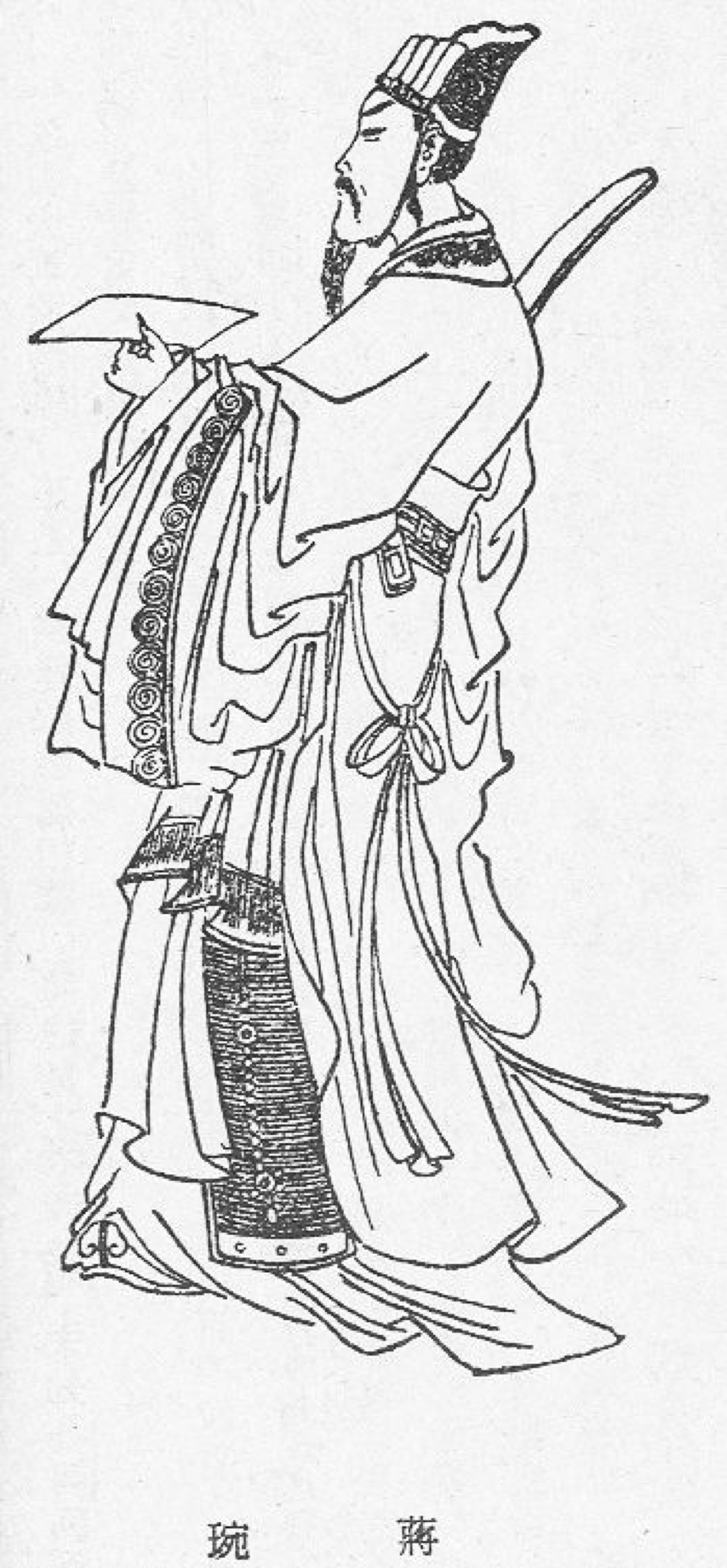
Portrait of Jiang Wan
The Man Who Did Not Try to Be Zhuge Liang
When Zhuge Liang died in camp at Wuzhang Plains in 234, Shu Han lost the one man who had held its impossible ambitions together by sheer force of will — five campaigns north, a state a fraction the size of its rivals run like a household under constant siege. The obvious fear was that everything he had built would go with him. Instead, the transition barely wobbled. Zhuge Liang had already named his successor years before, and the choice was pointedly unglamorous: not a general, not a strategist hungry to inherit the northern campaigns, but Jiang Wan, an administrator known mainly for being unshakeable.
Jiang Wan governed by not overreacting. He inherited a treasury, an army, and a court all still oriented around one man's relentless offense, and rather than continuing it on momentum, he quietly let it go — concluding that Shu simply did not have the resources for what Zhuge Liang had spent himself trying to do, and that keeping the state intact mattered more than keeping the campaign alive. It was a judgment few of Zhuge Liang's other lieutenants could have made without it looking like betrayal. From Jiang Wan it looked like common sense, delivered so evenly that no one thought to argue.
Jiang Wan was an ISFJ down to the anecdote historians kept retelling about him: a subordinate insulted him to his face, and he simply declined to be provoked.
Psychological Verdict
The anecdote that survives him is small and revealing. An official named Yang Min mocked Jiang Wan openly, telling others he was no match for his predecessor. Advisers urged Jiang Wan to have the man punished. He refused — reasoning, by the record, that he genuinely was not Zhuge Liang's equal, that the comparison was fair, and that silencing a man for saying an uncomfortable true thing would cost the state more than the insult itself did. That is not the reasoning of someone protecting an ego. It is the reasoning of someone protecting an institution, which is the whole of Jiang Wan in miniature: steady, self-effacing, oriented outward toward what the office required rather than inward toward what he personally deserved.
It shows in the bigger decision too. Where Zhuge Liang's ambition was future-facing and visionary — one more campaign, one more chance to restore the Han — Jiang Wan's instinct ran the other way, toward what already existed and needed tending: the granaries, the chain of command, the fragile consensus holding Shu's court together after its founding generation had started to die off. He considered continuing the northern campaigns, weighed it seriously, and set it aside, not out of timidity but out of a plain reading of what the state could actually sustain. Zhuge Liang had picked him precisely for this: not the figure who would extend the legend, but the one who would keep the legend's country standing.
He is, in the archive's terms, one of the least dramatic successions in the whole Three Kingdoms story — no purge, no rival claimant, no crisis of legitimacy. That is the point. An ISFJ's dominant introverted sensing holds fast to what has proven to work and what the state actually needs, rather than chasing the next visionary conquest; his auxiliary extraverted feeling shows in how carefully he preserved harmony at court, refusing to let honest criticism curdle into grievance. Shu Han did not collapse in 234. It is largely because the man chosen to follow a legend understood that his job was custodianship, not encore.
Connected Figures
Further Reading
- Records of the Three Kingdoms (Sanguozhi) — Chen ShouThe primary source for Jiang Wan's biography, including the Yang Min anecdote.
- A Biographical Dictionary of Later Han, Three Kingdoms and Jin — Rafe de CrespignyStandard modern reference for Shu Han's court and its administrators after Zhuge Liang.
- Three Kingdoms: A Historical Novel — Luo Guanzhong (trans. Moss Roberts)The classic literary account that shaped Jiang Wan's popular image as Zhuge Liang's chosen heir.
