 Historical Figure MBTI
#1171 · 8-27-26 · The Three Kingdoms
Wei Yan
The General Zhuge Liang Never Trusted · Bold to the Point of Rebellion · Shu's Most Controversial Commander
? — 234
7 min read
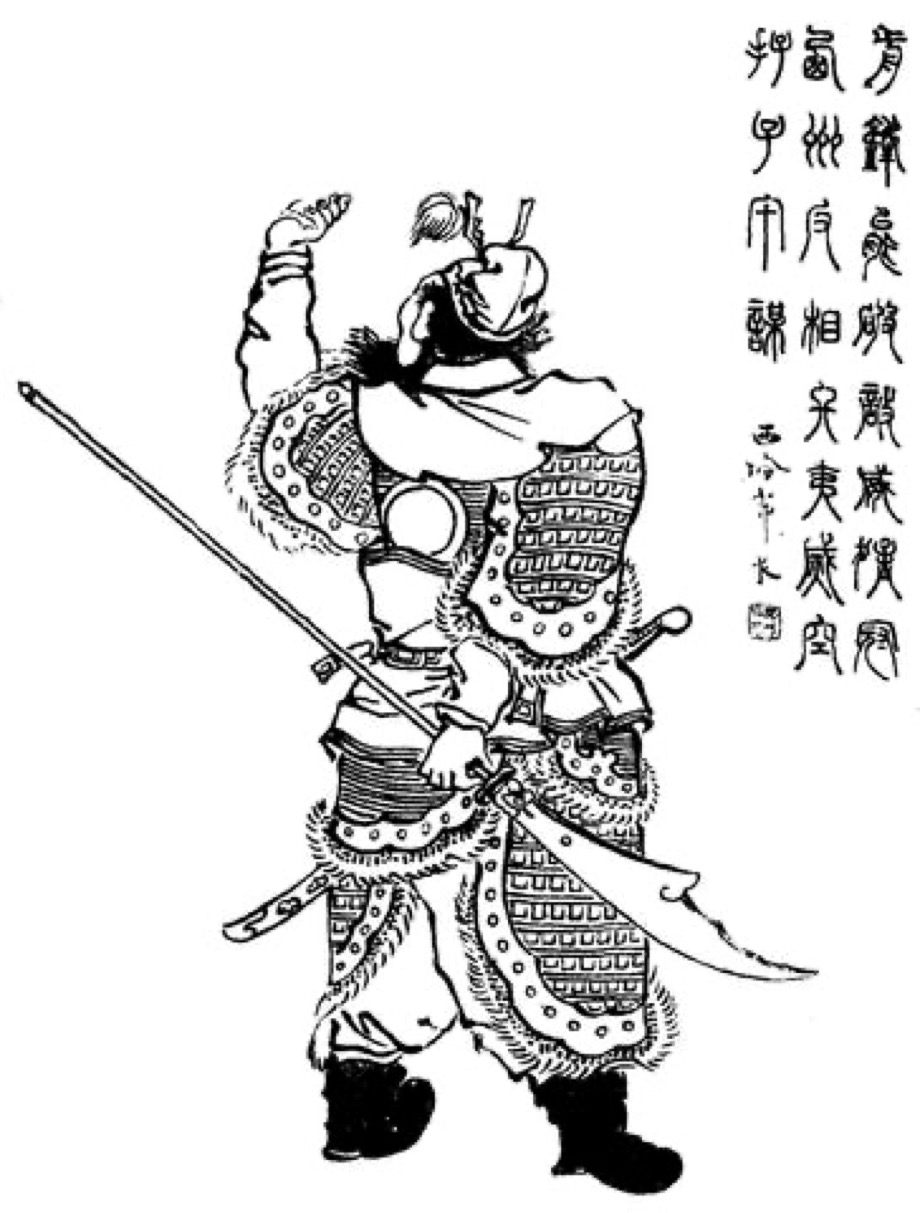
Portrait of Wei Yan
The Valley He Was Never Allowed to Take
In 228, on the eve of the first Northern Expedition, Wei Yan laid a map in front of Zhuge Liang and proposed something audacious: give him ten thousand men, let him slip through the narrow Ziwu Valley, and he would be in Chang'an before Wei's garrison there knew Shu's army had moved at all. It was the kind of plan that lives or dies on nerve — a single elite thrust exploiting a gap nobody had thought to defend, gambling the whole campaign's momentum on a possibility nobody could fully verify in advance. Zhuge Liang said no, and kept saying no, every time Wei Yan raised some variation of it in the years that followed.
That refusal, repeated across a decade of campaigns, is the hinge of Wei Yan's career. He was Shu's most capable frontier commander, entrusted by Liu Bei himself with the defense of Hanzhong over more senior men, a decision that startled the court and that Wei Yan justified by holding the line for years. But under Zhuge Liang he was a brilliant instrument perpetually held at arm's length, a general whose gift for seeing the opening in a situation was never quite trusted by the man who out ranked him. The friction was not incompetence meeting caution — it was one restless, possibility-hunting mind straining against a more deliberate one, and losing, again and again, the argument about what boldness was worth.
Wei Yan was ENTP to the bone — a dominant-Ne general who read a battlefield as a field of live options, and who never learned to make his superiors comfortable with how many of those options he wanted to chase at once.
The Gap Nobody Else Saw
The Ziwu Valley plan is Wei Yan's Ne in its purest form: not a fantasy, but a live reading of a specific, narrow window — a Wei garrison at Chang'an he judged unprepared, a mountain route he judged passable, a moment he judged would not come again. Dominant Ne does not deal in wishful thinking; it deals in the sudden appearance of a possibility that a slower mind hasn't yet metabolized, and the compulsion to seize it before it closes. Wei Yan proposed the strike more than once, refining it each time the Northern Expeditions resumed, because to him the opportunity kept reopening even as Zhuge Liang kept closing the door on it.
This same restlessness showed in how he ran the frontier generally. Given Hanzhong, a province Liu Bei needed held above all else, Wei Yan didn't simply garrison it defensively — he argued for aggressive forward postures, for taking the fight to Wei rather than waiting for Wei to come to Shu. Every campaign season produced a new variant of the same instinct: look for the opening, propose the leap, chafe when told to wait. It made him invaluable as a source of options and maddening as a subordinate, because Ne does not slow down to make its case comfortable — it just keeps generating the next possibility, certain the last one was correct.
The Competence That Earned Hanzhong
What kept Wei Yan in command for as long as it did was not charm — it was that his tactical judgment held up. Liu Bei's choice of him to defend Hanzhong over Zhang Fei, the obvious and more senior candidate, was a genuine surprise at the time, and Wei Yan answered it by holding the frontier securely for years against a stronger neighbor. That is Ti in service of Ne: the leap of possibility tested and validated by a private, internally rigorous logic about terrain, force ratios, and timing, not by any need to explain himself to a room.
It is also why the Ziwu Valley plan was never simply reckless bravado. Wei Yan could and did defend it in tactical terms — line of march, timetable, the specific vulnerability of Chang'an's garrison — even if Zhuge Liang judged the risk of total loss unacceptable. A general with weaker Ti would have proposed the gamble and shrugged off the details; Wei Yan came back to it campaign after campaign with the same structural argument refined, evidence that his confidence in the plan came from analysis he trusted, not just appetite for the dramatic.
The Argument He Lost Off the Battlefield
Wei Yan's tertiary Fe was underdeveloped in exactly the way that gets a brilliant subordinate killed. He never learned to manage how his colleagues perceived him — the resentment at being repeatedly overruled showed plainly, and it curdled his relationships with the men around him, most damagingly with the officer who would command the army's rearguard after Zhuge Liang's death. Wei Yan was not a schemer; by most accounts he simply could not disguise contempt for caution he thought was costing Shu its best chances, and he made enemies of people whose goodwill he would eventually need.
That failure came due in 234. When Zhuge Liang died in camp, the retreat order named the very colleague Wei Yan despised to lead the withdrawal, with Wei Yan's own force ordered to cover the rear. Wei Yan refused to accept a chain of command that placed him under a rival he had spent years alienating, moved to block the retreat, and was quickly branded a traitor and killed. The record most historians now read is not proof of rebellion but the final, fatal cost of years spent winning tactical arguments while losing every political one.
Why ENTP Over ESTP
Why not ESTP?
Wei Yan's boldness was idea-driven, not sensation-driven. The Ziwu Valley gambit was a strategic reading of a possibility others hadn't noticed, argued and re-argued across years, not an impulse toward direct action in the moment. His running conflict with Zhuge Liang was fundamentally a dispute about competing visions of what the campaign could become — Ne against Ni — never a simple preference for kinetic action over planning as such. An ESTP takes the terrain as given and acts inside it; Wei Yan kept trying to redraw the terrain itself.
Set beside Zhuge Liang, the contrast sharpens further. Both men were exceptional strategists, but Zhuge Liang's dominant Ni converged on a single, patiently refined vision and distrusted anything that threatened its control; Wei Yan's dominant Ne kept multiplying live alternatives and grew impatient with a plan that had already been decided. Neither function is wrong. Shu simply had no good mechanism for reconciling them, and the general with less institutional standing paid for that failure with his career, and eventually his life.
Connected Figures
Further Reading
- Records of the Three Kingdoms (Sanguozhi) — Chen ShouThe primary source for Wei Yan's biography, his defense of Hanzhong, and the circumstances of his death.
- A Biographical Dictionary of Later Han, Three Kingdoms and Jin — Rafe de CrespignyReference entries situating Wei Yan among Shu's officer corps and the succession crisis of 234.
- Fire over Luoyang: A History of the Later Han Dynasty — Rafe de CrespignyDiscusses the Northern Expeditions and Zhuge Liang's campaign decisions, including the rejected Ziwu Valley plan.
