 Historical Figure MBTI
#1170 · 8-27-26 · The Three Kingdoms
Huang Zhong
The Old General Who Never Missed · Slayer of Xiahou Yuan · One of the Five Tiger Generals
? — 220
4 min read
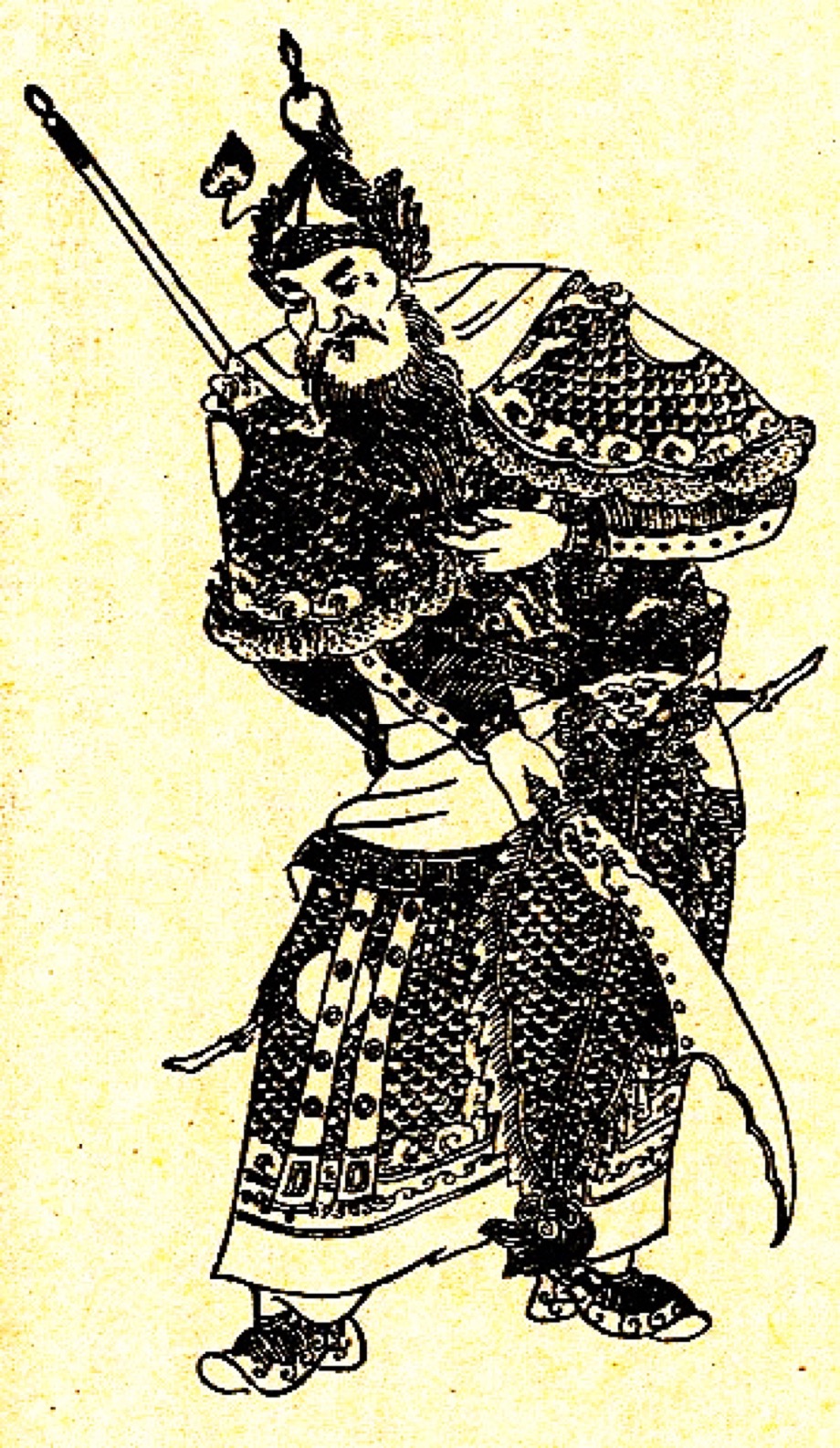
Portrait of Huang Zhong
An Old Soldier's One Perfect Shot
By the time Huang Zhong mattered to anyone, he was already old — old enough that when Liu Bei's court named him one of the Five Tiger Generals in 219, Guan Yu balked at being ranked beside "an old soldier." Before that, there is almost nothing: service under Liu Biao, then under Liu Zhang, in neither case rising above competent obscurity. He joined Liu Bei's cause around 211, an aging archer with a reputation for precision and little else to show for decades in the saddle. Nobody was betting on him.
Then came Mount Dingjun. In 219, executing Fa Zheng's plan against Cao Cao's general Xiahou Yuan, Huang Zhong led a downhill charge that killed Xiahou Yuan outright — the single decisive blow of the entire Hanzhong campaign, delivered by a man old enough to have watched most of his rivals rise and fall around him. It was not a career built in public; it was a career of quiet, exact preparation that produced, at the very end, one unmistakable result. That is the shape of an ISTJ: unglamorous accumulation, then a single act of devastating competence when it counts.
Huang Zhong is Si dominant, Te auxiliary — a man who spent a lifetime perfecting one skill in private and cashed it in, once, at exactly the moment it mattered most.
Decades of Drawing the Same Bow
Huang Zhong's fame rests on archery, and archery of a specific, unglamorous kind — the sort earned by repetition rather than inspiration. He was not a prodigy whose gifts announced themselves early; he was a man who served two lesser warlords across an unremarkable middle age, refining a physical craft that had no stage to prove itself on. That patience is pure Si: trust built through accumulated, embodied experience, not through theory or flair.
It shows in how his one great moment actually worked. Mount Dingjun was not improvisation — it was Fa Zheng's plan, executed by a man whose body already knew, after a lifetime of drawing the same bow and holding the same stance, exactly what a downhill charge at exactly the right range would do. Where a Ne-led general might have hunted for a cleverer opening, Huang Zhong simply did, with total reliability, what he had trained his whole life to do.
It is telling, too, that his reputation survived decades of being overlooked. Si does not need an audience to keep refining itself; it keeps faith with its own internal standard whether or not anyone is watching. Huang Zhong's age, which his peers read as a liability, was in fact the very evidence of how long that internal standard had been quietly compounding.
A Kill, Not a Career of Command
Huang Zhong's Te shows up not as an appetite for organizing men or building institutions, but as blunt, results-oriented execution when the moment finally arrived. At Mount Dingjun he did not merely fight well; he produced the single outcome — Xiahou Yuan's death — that decided who controlled Hanzhong. That is Te in its leanest form: judged entirely by the external result, indifferent to whether the credit was dramatic or whether anyone had expected it from him.
It is also why the honor that followed sat awkwardly. Being named alongside Guan Yu, Zhang Fei, Zhao Yun, and Ma Chao as a Five Tiger General was an external, structural recognition — exactly the kind of thing Te-users register as legitimate proof of worth. Huang Zhong did not need Guan Yu's approval to know what he had done; the field at Dingjun was proof enough. His Te needed only the fact of the kill, not the applause.
Why ISTJ Over ESTJ
Why not ESTJ?
ESTJ's Te is dominant, outward, and organizing — the sort that builds standing commands, manages logistics, and asserts authority continuously over years. Huang Zhong's Te is quiet and reactive: he does not appear in the record as a builder of institutions or a long-term manager of large forces. His profile is inward Si mastery, decades of disciplined, largely unwitnessed archery and soldiering, that produced one decisive, precisely executed strike late in life — not a career of visible command authority. The order runs Si-Te, not Te-Si.
What separates Huang Zhong from an ESTJ commander is exactly what makes his story remarkable: he never sought to run anything. He wanted only to be trusted with the one task his lifetime of practice had prepared him for, and when Fa Zheng's plan finally gave him that task, he executed it without ambiguity. ISTJ captures a man whose authority was entirely earned in the doing, not asserted in the organizing.
Connected Figures
Further Reading
- Records of the Three Kingdoms (Sanguo Zhi) — Chen ShouThe primary biographical source for Huang Zhong's service and death.
- Fire over Luoyang: A History of the Later Han Dynasty 23–220 AD — Rafe de CrespignyContext for the late-Han warlord careers Huang Zhong passed through before Liu Bei.
- A Biographical Dictionary of Later Han, Three Kingdoms and Jin — Rafe de CrespignyReference entries situating Huang Zhong among Shu's Hanzhong campaign figures.
