 Historical Figure MBTI
6 min read
#292 · 3-25-26 · Catherinian Russia
Johanna Elisabeth
Princess of Holstein-Gottorp · Schemer · The Mother Who Made Catherine
1712 — 1760
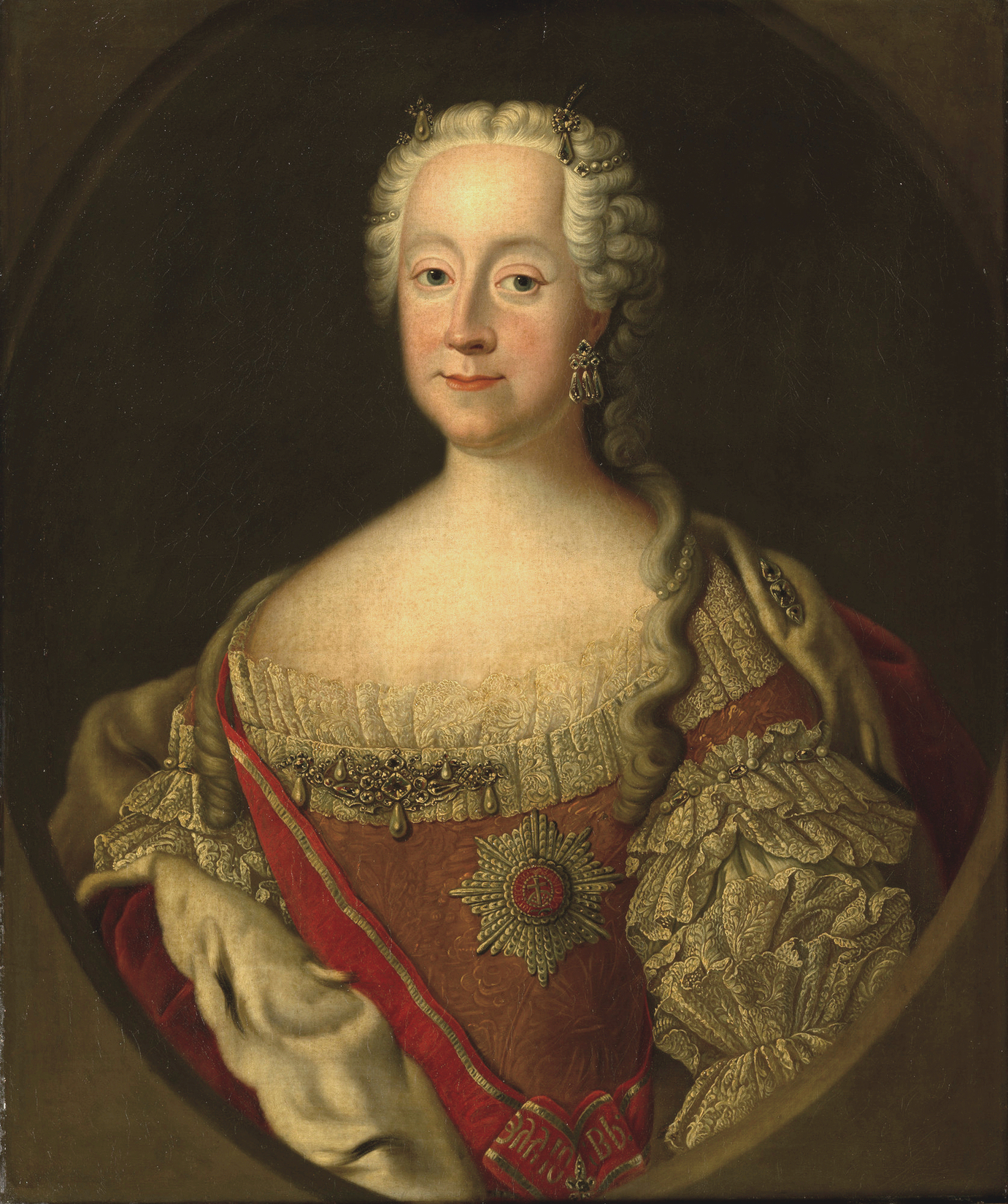
Portrait of Johanna Elisabeth
The Ambition That Bred an Empress
Princess Joanna Elisabeth of Holstein-Gottorp spent her life in pursuit of the social advancement that her minor German princely birth seemed to promise but perpetually withheld. She was charming, energetic, and constitutionally incapable of letting well enough alone. Her greatest achievement came in 1744, when she negotiated the match that would bring her fifteen-year-old daughter Sophia to Russia as the intended bride of the Romanov heir — a German nobody inserting her family into the center of European dynastic politics. It should have secured her influence for decades. Instead, she could not stop scheming long enough to consolidate what she had won.
The daughter she brought to Russia would become Catherine the Great. Johanna's role in that story is the central paradox of her life: she engineered her daughter's entry into Russia, and then Empress Elizabeth expelled Johanna within a year, having discovered she was passing information to Frederick II of Prussia. Catherine remained. Her mother went home. They would never be close again, and Johanna died in Paris in 1760, estranged from the daughter whose destiny she had set in motion.
That's the ESFJ tragedy in concentrated form: Fe so hungry for social approval that it keeps seeking new alliances even after it has won everything it needed — and loses it all in the process.
The Social Hunger That Could Not Be Satisfied
Fe dominant means the ESFJ's world is organized around social relationships and the status they confer. For Johanna, this was an insatiable appetite for connection with people of higher standing — contemporary accounts describe her as witty, vivacious, and socially adept in ways her husband, the tedious Prince Christian August of Anhalt-Zerbst, conspicuously was not. She understood the social grammar of European courts with the fluency of someone for whom it was instinctive, not studied.
But Fe dominant without adequate Si or Ti discipline has a structural weakness: it optimizes for the immediate social relationship at the expense of the longer strategic picture. Johanna passed information to Frederick II because Frederick was attentive and flattering — exactly the high-status attention her Fe craved. The risk assessment that being caught as a Prussian spy in Empress Elizabeth's Russophobic court would be catastrophic did not register strongly enough to override the social pleasure of being useful to a king. This is Fe at its most self-defeating: so oriented toward the approval of the people in front of it that it cannot weigh what it will lose elsewhere.
The Careful Manager of Protocol and Precedent
Si auxiliary means the ESFJ knows exactly how things are supposed to go. Johanna knew the dynastic map of Europe with extraordinary precision: who was related to whom, which alliances were ascendant, what a minor German princess needed to bring in manner and family connections to impress Empress Elizabeth's court. Her campaign to secure the Russian match was not lucky — it was carefully researched and expertly executed.
The problem was the Ne tertiary: restless scheme-generation that kept producing new maneuvers even after the correct position had been secured. The Prussian information-passing was exactly this — exciting, transgressive, a clever new angle in a court game she was already winning. Si told her what the rules were. Ne told her she could bend them. Fe told her Frederick would be pleased. The combination was fatal to her interests.
The Daughter She Could Not Keep
Catherine's memoirs are the primary source through which we know Johanna — which means we know her through the eyes of a woman with complex reasons to see her mother in a particular way. Catherine describes a mother who preferred the social world to the nursery, who neglected her daughter's emotional needs while working obsessively to advance the family's fortunes, who treated the daughter's success as a reflection of the mother's achievement. The portrait is psychologically consistent with Fe dominant behavior: Johanna invested in Catherine as a social project rather than as a person.
Johanna almost certainly felt genuine love for her daughter — Fe dominant people do feel deeply. But the love was organized around what Catherine could become rather than who she was. And when Catherine became something extraordinary, she became it outside the frame Johanna had designed — in Russia, under the tutelage of Empress Elizabeth. The daughter escaped the mother's project by becoming more than it.
Why ESFJ Over ESTJ or ENFJ
Why not ESTJ?
The ESTJ manages through systems and organized execution. Johanna was not a system-builder; she was a relationship-manager. Her maneuvering was always personal, operating through social connection rather than institutional authority. An ESTJ might have built an enduring network of reliable allies; Johanna built connections that were charming but fragile because they depended on her continued social performance. Te organizations outlast their founders; Fe networks collapse when the charmer leaves.
Why not ENFJ?
The ENFJ is driven by a vision of what the group could become — Fe in service of a Ni-informed purpose. Johanna had no such vision. Her scheming was not in service of a coherent long-term goal; it was in service of the next social opportunity. ENFJ would have used Frederick's attention to advance a plan. Johanna used it because it felt good to have a king's attention. The distinction is Fe with Si auxiliary versus Fe with Ni auxiliary — the same surface warmth, very different architecture underneath.
Johanna Elisabeth is ESFJ in the way that makes the type's pathology most visible: Fe that needs approval so urgently it overrides Si caution, Si that understands the rules but cannot stop the Ne tertiary from generating clever moves that violate them, and a Ti inferior that never organized her schemes into a coherent strategy. She knew how to play the game; she could not stop playing it even when she had won.
Connected Figures
Further Reading
- Catherine the Great: Portrait of a Woman — Robert K. MassieThe definitive modern biography — opens with Catherine's childhood under Johanna and traces the mother-daughter dynamic in full.
- The Memoirs of Catherine the Great — Catherine II (ed. Markus Cruse & Hilde Hoogenboom)Catherine's own account of her childhood and her mother's ambitions; the primary source for Johanna's character and behavior at the Russian court.
- Catherine the Great: Love, Sex and Power — Virginia RoundingCovers Johanna's role in brokering the Russian marriage and her expulsion by Empress Elizabeth.
