 Historical Figure MBTI
#538 · 4-24-26 · Plantagenet England
John Gower
'Moral Gower' · Chaucer's Friend and Fellow Poet
c. 1330 — 1408
7 min read
AI-assisted Portrait of John Gower
The Poet With a Thesis
Posterity gave him a single adjective, and it has stuck for six centuries: he is “moral Gower.” Chaucer himself dedicated Troilus and Criseyde to him with that very phrase, and the epithet captures the man exactly. Where his great friend was tolerant, ironic, and inexhaustibly many-voiced, John Gower was earnest, didactic, and possessed by a clear ethical vision of what society was and what its sins had made it. He did not contain multitudes; he judged them.
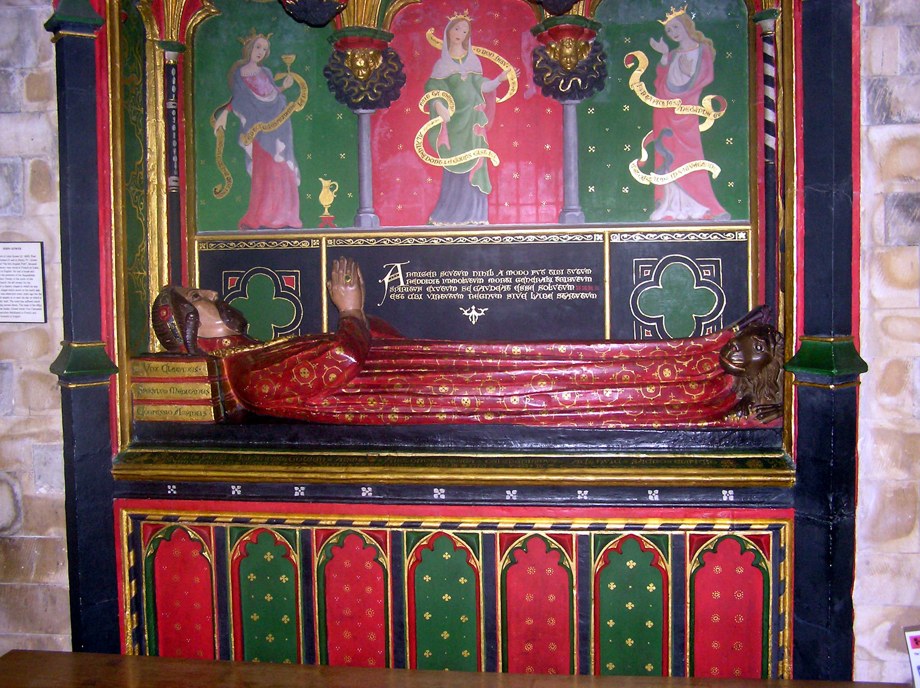
Born around 1330 and dying in 1408, he wrote masterworks in all three languages of his England—the French Mirour de l'Omme on the vices and virtues, the Latin Vox Clamantis lamenting the corruption of every order of society, and his English masterpiece, the Confessio Amantis, a vast collection of moral tales framed as a lover's confession to a priest of Venus. Three tongues, one purpose. The trilingual range was not restlessness but reach: the same reforming sermon, pressed on every audience that mattered. Blind in his last years, he was buried in Southwark with his three great books beneath his head—an emblem of a life lived as a single argument.
Gower is the INFJ of Ricardian poetry—Ni's one organizing moral vision married to Fe's care for the soul of a society he believed had gone badly wrong, and meant to set right.
The Single Organizing Vision
Ni — dominant
Dominant Ni is the faculty that collapses a chaos of particulars into one underlying pattern—and Gower's pattern was moral. He looked at the England of his day, with its venal clergy, grasping merchants, idle knights, and rebellious commons, and he did not see a tangle of separate problems. He saw a single thing: a body of society falling out of its God-ordained order, each estate failing the duty proper to it. TheMirour de l'Omme anatomizes the vices and their daughters with almost architectural completeness; the Vox Clamantis indicts every order from king to peasant against that same fixed standard. Three works, three languages, one thesis.
This is the quasi-prophetic seriousness that runs through everything he wrote. The voice of the Vox Clamantis—the title means “the voice of one crying out”—is consciously that of a seer warning his age. When the Peasants' Revolt erupted in 1381, Gower recorded it not as a political event to be analyzed but as a horror to be read symbolically, the commons transformed into beasts, a sign of a moral order coming apart. Ni does not report; it interprets, and it interprets everything toward one meaning. Even the Confessio Amantis, ostensibly a charming book of love-tales, is a moral education in disguise: every story bends toward instruction, the lover's confession a frame for teaching the soul its sins.
The Care for the Common Soul
Fe — auxiliary
If Ni gave Gower his thesis, auxiliary Fe gave him his motive. He did not write to display his learning or to win arguments; he wrote because he genuinely cared about the moral health of the community and felt responsible for it. The didacticism that can read as stern is, underneath, a form of tenderness—the concern of a man who wants his readers' souls to be well and his society to hold together. The Confessio Amantis is the clearest proof: its whole apparatus, a penitent lover confessing to a priest of Venus and being gently instructed tale by tale, is built to teach without bludgeoning, to lead the reader toward virtue by pleasure rather than by fear.
Fe orients toward shared values and the bonds that knit a people together, and Gower's entire diagnosis is communal rather than private. His subject is never one man's isolated salvation; it is the order of the whole—king toward subjects, estate toward estate, Christian toward Christian. The horror with which he met the Peasants' Revolt was not aristocratic contempt but Fe's genuine distress at a society tearing its own fabric. He addressed his English masterpiece, in its first version, to Richard II, hoping to school the young king toward good rule—the moralist's care turned upward toward the man whose conduct would shape every soul beneath him.
The Systematizing Architect
Ti — tertiary
Tertiary Ti shows in Gower's love of structure—his instinct to organize a moral world into clean categories and lay it out with rigorous completeness. The Mirour de l'Omme is essentially a taxonomy: the seven deadly sins, each given its offspring, marched against the answering virtues in orderly procession. The Confessio Amantis is likewise built on a frame of remarkable architectural tidiness, the lover's confession proceeding sin by sin, each vice illustrated by its appointed tales. This is the analytical mind serving the moral vision, giving Ni's intuition a hard scaffolding to hang on.
But in an INFJ, Ti is the helper, not the master. Gower's categories exist to deliver a verdict, never to be examined for their own sake; he does not pause to interrogate his own moral premises the way a thinker led by judgment would. The framework is firm precisely because the conviction beneath it is firm. Ti supplies the order; Ni and Fe decide what the order is for.
The World Read as Sign
Se — inferior
Inferior Se appears in how Gower treats the physical, present world: never quite for itself, always as a sign of something behind it. The INFJ does not live easily in raw sensory immediacy, and Gower's response to the most vivid public event of his lifetime is telling. The Peasants' Revolt was, by any account, a torrent of concrete violence in the streets of London—and Gower meets it by translating it instantly into allegory, the rebels become braying animals, the riot a moral portent. The thing before his eyes is absorbed at once into the meaning behind it.
The same distance shows at the end of his life, when blindness took the sensory world away entirely and left him, fittingly, with only the inward vision and the books he had written. Where a sensing temperament might have prized the living surface of his age—its faces, its textures, its accidents—Gower prized the pattern those things revealed. The world was a text to be read, and he never doubted what it said.
Why INFJ Over INFP
Why not INFP?
The gentle, bookish moralism can read as INFP — the tender Fi conscience wounded by a fallen world. But Gower's morality is never private. It is public, prescriptive, addressed to kings and commons alike: a single ethical order he asks the whole of society to adopt. That is Ni-Fe reaching outward to set the common standard, not the INFP's Fi guarding an inner truth and declining to impose it. And it serves one fixed vision of how the world should be, rather than the many-angled exploration of how it merely feels. Gower does not hold his values in suspension; he holds one, and presses it insistently on his age.
The contrast with his own friend Chaucer is the sharpest illustration — not of a divide between types, for both men were INFJs, but of how far one type can travel. Both were gentle, learned, deeply moral men writing the same English at the same moment; both had grasped their whole society and set out to render it. But Chaucer let his vision out through his characters and vanished into them, judging no one; Gower kept his vision as a standard and pressed it, judging all against it. One is the dramatist who dissolves into the crowd, the other the moralist who stands and preaches to it. “Moral Gower” is, in the end, just the medieval name for the second kind of INFJ — the seer who keeps the vision and will not let it go.
Connected Figures
Further Reading
- John Gower: Moral Philosopher and Friend of Chaucer — John H. FisherThe foundational modern study — establishes Gower's intellectual program and the realities of his friendship with Chaucer.
- Confessio Amantis — John Gower (ed. Russell A. Peck)The essential edition of Gower's English masterpiece — the moral tales framed as a lover's confession, with full apparatus.
- A Companion to Gower — ed. Siân EchardA wide-ranging scholarly survey of Ricardian poetry and Gower's trilingual achievement across French, Latin, and English.
