 Historical Figure MBTI
#871 · 6-22-26 · The American Civil War
Judson Kilpatrick
Cavalry General · 'Kill-Cavalry' · Reckless Raider
1836 — 1881
6 min read
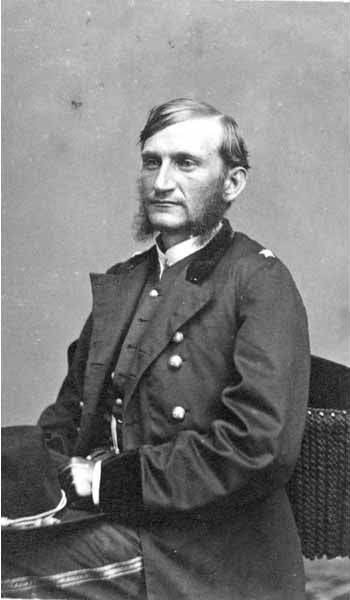
Portrait of Judson Kilpatrick
The General Who Mistook Speed for Strategy
They called him Kill-Cavalry, and the men who rode under him meant it two ways — as a boast about his killer instinct, and as a grim joke about who, exactly, got killed. Judson Kilpatrick graduated fifth in his West Point class, took a leg wound at Big Bethel in the war's first skirmish, and spent the next four years proving that nothing, not even a bullet, could slow him down. He wanted glory the way other men wanted rank or pay, and he chased it the only way he knew how: at a gallop, saber out, into whatever stood in front of him.
That instinct made him a natural cavalry raider and an unreliable one in the same breath. Kilpatrick could move a column fast, hit hard, and improvise under fire — and he did all three on the Richmond raid of February 1864, a plan so aggressive it collapsed into disaster, cost Ulric Dahlgren his life, and left behind captured papers that seemed to implicate the Union in a plot to assassinate Jefferson Davis and his cabinet. Whether the documents were genuine or planted, the raid itself was pure Kilpatrick: bold in conception, thin on contingency, willing to spend other men's lives on a bet he was sure he'd win.
Kilpatrick is ESTP stripped of its restraint — a dominant Se that reads the battlefield brilliantly in the instant and forgets, almost willfully, that there will be an afterward.
Se — The Charge, Always the Charge
Kilpatrick's whole military signature was velocity. Where a more cautious commander probed and waited, he committed — sabers drawn, columns at the gallop, decisions made in the two or three seconds a cavalry engagement actually allows. It made him useful in exactly the role Sherman needed on the March to the Sea and through the Carolinas: a screen that could range far ahead of the infantry, tear up rail lines, feint toward Augusta while the army marched on Savannah, and generally make Confederate cavalry guess wrong about where the real blow was landing. That is Se doing what Se does best — reading terrain, tempo, and enemy movement in real time and acting on it before the picture fully resolves.
But the same appetite that made him a superb raider made him a dangerous one. His troopers joked bitterly that Kilpatrick would rather lose a hundred men in a spectacular charge than fifty in a competent retreat, and the Dahlgren raid bore that out — a strike on Richmond launched with more nerve than reconnaissance, executed at a pace that outran its own supply and its own judgment. Se dominant without enough governing structure behind it doesn't become cautious with experience; it just gets faster and more confident, which in Kilpatrick's case meant more men paid for his certainty.
A Real Tactician, Badly Calibrated
It is easy to read Kilpatrick as a mere adrenaline case, a man who fought by instinct alone — but that undersells him, and misreads the type. His raids were not random violence; they were built on real cavalry doctrine, on an understanding of how a mounted column could screen an army, sever a rail line, or draw off enemy attention that a screaming-and-charging showman would never have grasped. The Richmond raid had an actual operational logic behind it — free the Union prisoners at Belle Isle, strike at the Confederate capital while Lee was pinned down — even if the execution and the intelligence behind it were badly wanting.
That is the auxiliary Ti at work: a functioning internal logic for how cavalry should be used, subordinate to and constantly overridden by the Se hunger to act now. Kilpatrick reasoned like a tactician but decided like a gambler, and the gap between the two is exactly what separates him from a purely instinctive type — he had a system, he just trusted his nerve over it every time the two disagreed.
Glory as an Audience Sport
Kilpatrick did not merely seek victories; he needed them witnessed. He courted newspapermen, staged his headquarters for visitors, and cultivated a reputation for dash that outran, at almost every point, the actual record of his results. This was tertiary Fe in its least flattering register — not the warm, group-sustaining harmony Fe can offer at its best, but a hunger for approval and attention that shaded into self-promotion, and that made him prickly and score-settling whenever a superior questioned his judgment.
It also explains why his losses stung him less than they should have. A man more attuned to the long-term cost of his choices — the inferior function he simply didn't have much of — might have let the Dahlgren disaster chasten him. Instead Kilpatrick moved on to Georgia and the Carolinas with the same appetite intact, because the applause of the moment, for him, always outweighed the accounting to come.
Why ESTP Over ESFP
Why not ESFP?
An ESFP's boldness runs on charm and the pleasure of the present moment — it performs for an audience without much underlying tactical scaffolding. Kilpatrick's recklessness was never that shallow. He operated inside real cavalry doctrine, weighed actual military objectives, and made command decisions with a coherent (if badly calibrated) logic behind them — Ti, not mere sensation-seeking. He was a flawed tactician who trusted his nerve too far, not a showman who never had a plan.
The distinction matters because it is the whole story of the man. Strip the Ti out and Kilpatrick is just a reckless glory-hound who got lucky under Sherman. Leave it in, and he becomes something more specific and more damning: a general who could reason his way to a sound plan and then, every time, override it with his own appetite for speed.
Connected Figures
Further Reading
- Kill-Cavalry: Sherman's Merchant of Terror — Samuel J. MartinThe standard modern biography of Kilpatrick's Civil War career
- Battle Cry of Freedom — James M. McPhersonContext for the Dahlgren Affair and the 1864 Richmond raid
- The Civil War: A Narrative — Shelby FooteNarrative account of Kilpatrick's cavalry service under Sherman
