 Historical Figure MBTI
#870 · 6-22-26 · The American Civil War
Oliver O. Howard
General · Freedmen's Bureau · Founder of Howard University
1830 — 1909
5 min read
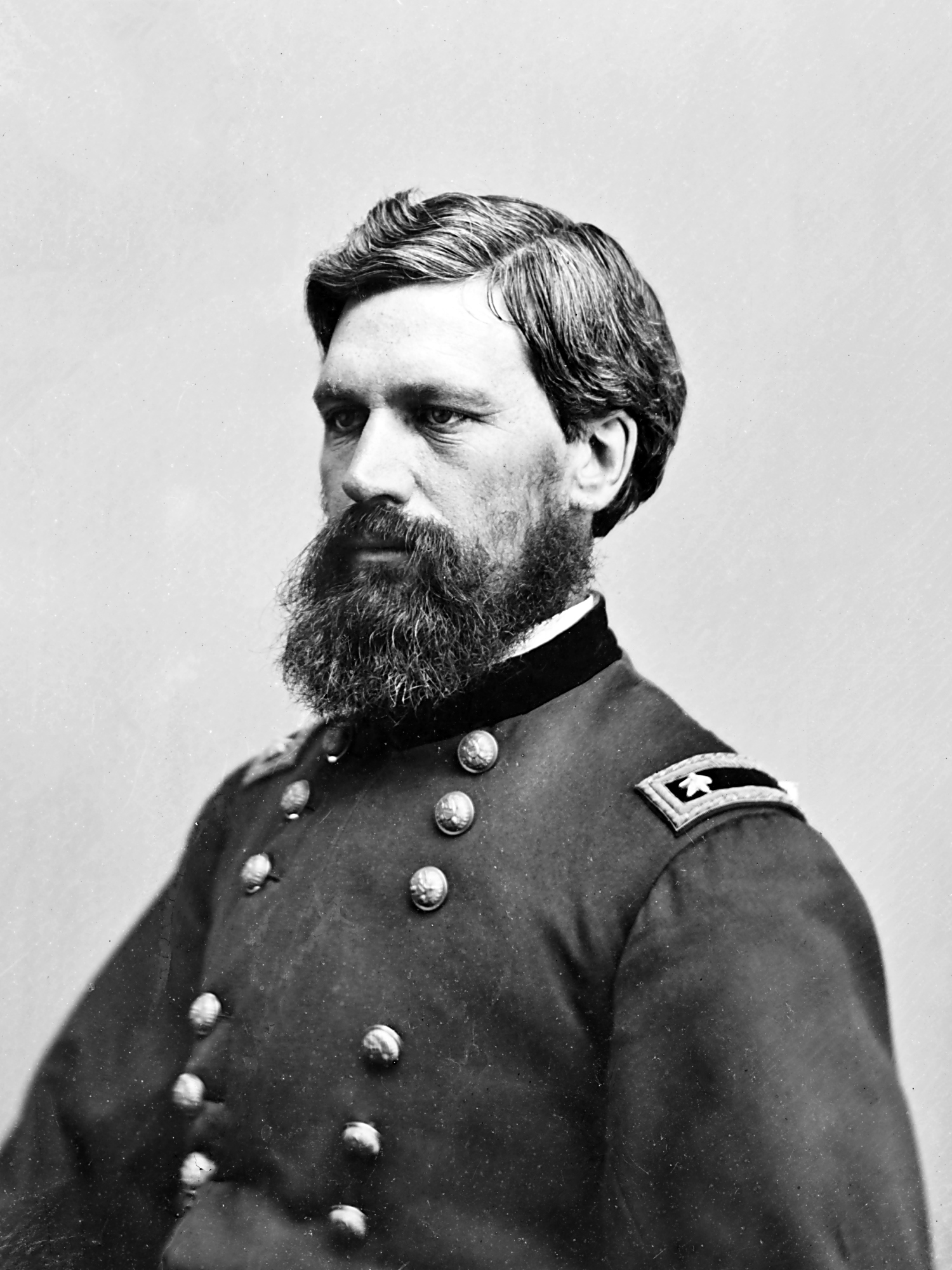
Portrait of Oliver O. Howard
The General Who Stayed at His Desk
Oliver O. Howard lost his right arm at Fair Oaks in 1862 and went right on soldiering, which tells you something about the man before any battle report does. He fought through the war under Sherman, took the blame — mostly undeserved — for the Union collapse at Chancellorsville when Stonewall Jackson's corps came screaming out of the woods on an unguarded flank, and earned, half admiringly and half derisively, the nickname "the Christian General" for a piety that never left him, on campaign or off it.
But the war is not really where Howard's psychology shows itself most clearly. That comes after, in the decade he spent running the Freedmen's Bureau — an agency asked to feed, educate, and legally defend millions of newly emancipated people with almost no money and no political cover — and in the university he founded and then led, which still bears his name. Howard was not a visionary in the way Reconstruction's boldest architects were. He was something rarer and, in its own way, harder: a man who kept a moral commitment running for years past the point where anyone would have blamed him for letting it lapse. That is the signature of ISFJ, and Howard wore it as plainly as any figure in this archive.
Howard's ISFJ core was not sentiment but stamina — a dominant Si that remembered every obligation once it was accepted, and an auxiliary Fe that would not let him set one down.
A Bureaucracy Built to Last
Dominant Si is often described as a loyalty to precedent, and in Howard that showed up as a near-literal memory for obligation. Once he accepted a duty — a command, a bureau, a university's charter — he did not revisit whether it was still convenient to hold. He administered the Freedmen's Bureau the way a careful steward runs an estate he did not build but has sworn to protect: methodically, through regulations and reports, region office by region office, year after underfunded year, long after Congress had stopped caring whether the thing survived.
That same Si shows in his autobiography, which reads less like a general's triumphant memoir than a ledger of who did what, when, and under what order — a mind that trusted the documented record over the flattering story. It is also, less happily, why his Chancellorsville failure stung so much: an Si-led officer builds his confidence on known terrain and established procedure, and Jackson's flank attack was precisely the kind of improvisational shock that Si does not process quickly. The fault was Jackson's daring, not Howard's competence, but Si does not forgive itself easily for being caught unready.
Duty That Kept Visiting Schools
What separates Howard from a merely diligent administrator is the auxiliary Fe running underneath the Si — a conscience that needed its duty to be personal, not just procedural. He did not administer the Freedmen's Bureau from behind a desk in Washington and call the job done. He toured the schools it built, corresponded with teachers and freedpeople directly, and treated the moral weight of the assignment as something owed to actual people rather than to an abstract policy. His piety, so often mocked as sanctimony by fellow officers, was the same instinct wearing its religious face: a felt obligation to the vulnerable that Howard experienced as conscience rather than calculation.
Founding Howard University in 1867, and then staying on as its president, extends the pattern past the point strict duty would have required. The Bureau was a government assignment; the university was not. Howard kept showing up for it anyway, in the same register — earnest, paternalistic at times, but unmistakably sincere. Fe of this kind does not need an audience to sustain itself; it needs the relationship to still exist.
The Arithmetic of an Impossible Mandate
Tertiary Ti gave Howard's moral commitments their working machinery. Running the Bureau was not a matter of sentiment alone; it was a logistics problem of staggering scale — millions of people needing rations, land disputes, schools, and legal standing, against an appropriation Congress trimmed every year it could. Howard reasoned his way through the allocation of scarce resources with a private, internally consistent logic, deciding where a dollar or an agent did the most good even when no policy manual told him how. It was quiet, unglamorous reasoning, rarely visible in his public reputation — but it is the reason the Bureau's better chapters, chaotic as the whole enterprise was, held together at all.
Why ISFJ Over ISTJ
Why not ISTJ?
An ISTJ's sense of duty is procedural and largely self-contained — obligations are met because the rules and the role demand it, not because the people on the other end of them are constantly present in mind. Howard's duty was never that impersonal. His religious conviction and his habit of personally visiting Bureau schools and corresponding with the freedpeople he served point to Fe conscience actively in service of others, not Te-and-Si administrative correctness running on its own. He needed the relationship, not just the record, to feel the job was being done.
The distinction matters because it is exactly what made Howard's Bureau years bearable to the people living through them, imperfect and paternalistic as his stewardship sometimes was. An ISTJ could have kept the ledgers. Howard kept showing up.
Connected Figures
Further Reading
- Autobiography of Oliver Otis Howard, Major General, United States Army — Oliver O. Howard1907 memoir covering his military career and Freedmen's Bureau tenure in his own words.
- Yankee Stepfather: General O.O. Howard and the Freedmen — William S. McFeely1968 biography and the standard critical account of Howard's Bureau leadership.
- Reconstruction: America's Unfinished Revolution, 1863–1877 — Eric Foner1988 history situating the Freedmen's Bureau within the broader Reconstruction project.
