 Historical Figure MBTI
#872 · 6-22-26 · The American Civil War
Joseph Wheeler
Confederate Cavalry General · 'Fightin' Joe' · Later US General
1836 — 1906
6 min read
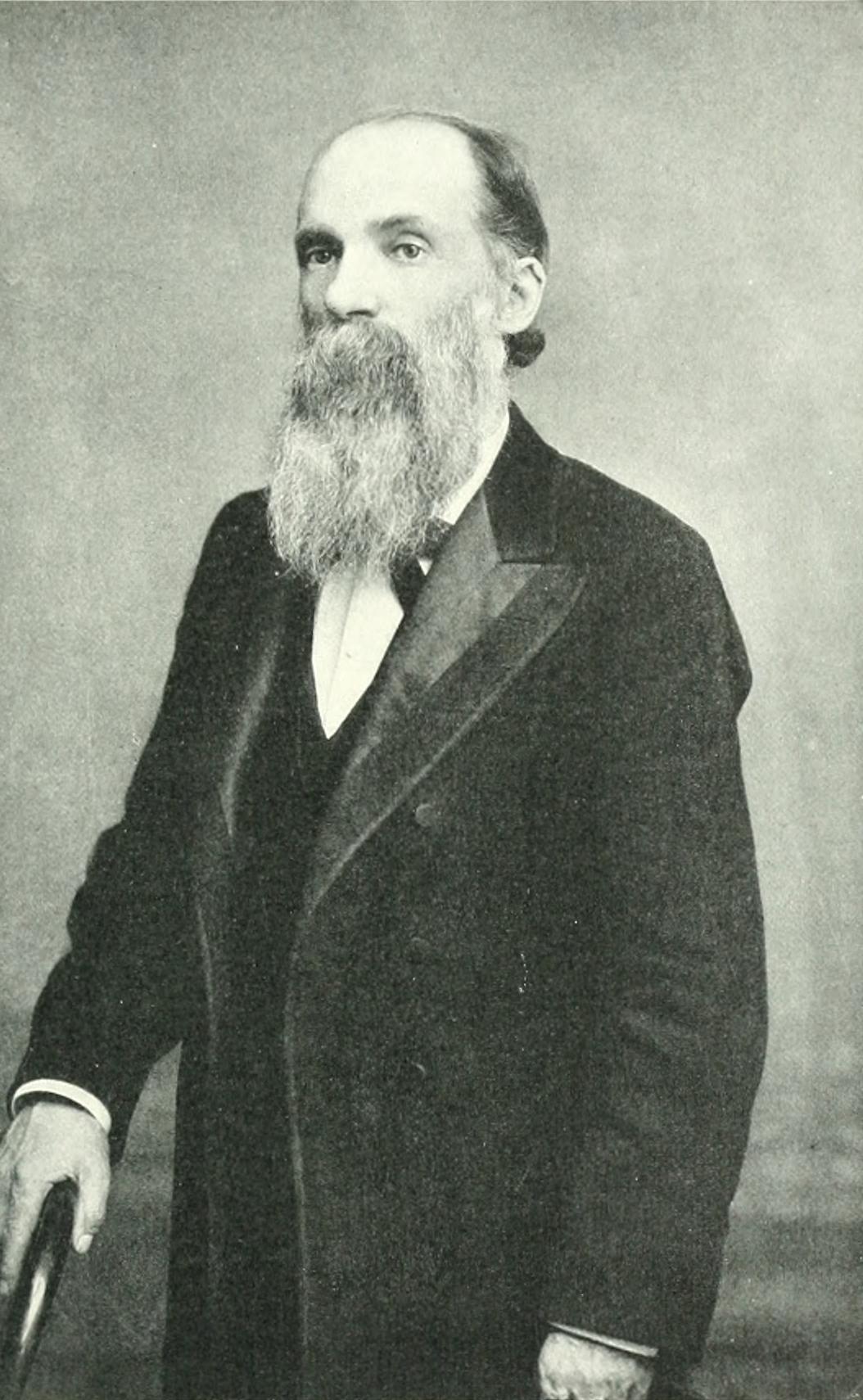
Portrait of Joseph Wheeler
The General Who Never Stopped Riding
Joseph Wheeler fought more engagements than any other general on either side of the American Civil War — a claim that sounds like exaggeration until you notice it comes not from a single campaign but from a habit. Wheeler did not plan wars so much as he rode into them, again and again, wherever Union columns happened to be moving. As Sherman cut his path through Georgia and the Carolinas, it was Wheeler's cavalry that stayed pressed against his flanks and rear, skirmishing, burning bridges, raiding wagon trains, rarely winning anything decisive and rarely stopping. He was small, wiry, and by every account entirely at home under fire — the kind of officer who led from the front because leading from anywhere else would have bored him.
That temperament is the whole case for ESTP. Wheeler's genius was not strategic; it was kinetic. He read a battlefield the way a boxer reads an opponent's shoulders — in real time, through the body, with no patience for standing back to theorize. And the most telling detail of his life is that this orientation outlasted the war that made him famous. In 1898, well into his sixties, wearing a United States major general's stars, he charged into Cuba against Spain and, by several accounts, once forgot which army he was leading and hollered for his men to go get "the Yankees." It is the single funniest and most diagnostic anecdote available to any entry in this archive.
Wheeler was an ESTP down to the reflex — a man whose dominant Se made the saddle and the skirmish line more legible to him than any war room ever was.
A Career Measured in Skirmishes
Extraverted Sensing wants contact with the present moment, and Wheeler arranged his entire military life to maximize it. Other cavalry commanders husbanded their forces for a handful of set-piece battles; Wheeler treated nearly every day of the war as an opportunity for one more clash. He fought in hundreds of actions — most of them small, unglamorous, and instantly forgotten by history, but each one a fresh dose of the immediate, physical problem-solving that dominant Se craves: where is the enemy right now, what is the terrain doing right now, what can my saber and my horse accomplish in the next five minutes.
This made him extraordinarily effective as a screening and harassment commander and largely useless as anything else. Wheeler was never going to out-plan Sherman; nobody meaningfully did. What he could do — and did, relentlessly, for the length of the March to the Sea and the Carolinas campaign that followed — was make Sherman's march physically uncomfortable at every turn, a persistent friction generated by a man who simply would not stop showing up wherever the fighting was.
The Spanish-American War postscript only sharpens the picture. Three decades, a lost war, and a complete change of flag did nothing to touch the underlying wiring: put Wheeler near a battle and his mind snapped, instinctively and irresistibly, back into the tempo of combat. That is not senility or confusion. It is a dominant function operating exactly as dominant functions do — as the lens a person can't take off, regardless of context.
The Craft Beneath the Chaos
It would be a mistake to read Wheeler as pure impulse. Auxiliary Introverted Thinking gave his aggression a working logic — not the sweeping architecture of grand strategy, but a real, internalized feel for the mechanics of cavalry work: how to screen an army's movements, how to time a raid against a supply line, how to disengage before a skirmish curdled into a battle he couldn't win. His tactical vocabulary was narrow but genuinely sound, refined the same way a craftsman refines a technique — through repetition, not through study.
That Ti shows up most clearly in what Wheeler consistently avoided: he rarely committed his cavalry to fights it could not survive, and he rarely let a raid run past the point of diminishing return. Underneath the ceaseless motion was a private, almost technical calculus about risk and terrain, refined over hundreds of repetitions until it became instinct — which is exactly how auxiliary Ti tends to operate in an Se-dominant person: not as deliberate theorizing, but as a felt sense of "how this kind of problem works," triggered and discharged in the moment rather than planned in advance.
Why ESTP Over ISTJ
Why not ISTJ?
An ISTJ cavalry officer would have built a career on disciplined, precedent-bound operations — careful logistics, conserved forces, doctrine applied consistently across engagements. Wheeler's career reads almost as the inverse: constant, improvisational, high-tempo contact, sought out rather than managed, sustained not for one campaign but across two wars fought under two different flags. That is not the profile of a dutiful executor of established method. It is an appetite for action in the present tense, which is the signature of extraverted Sensing, not introverted Sensing's loyalty to what has already been proven to work.
The distinction sharpens once you set the two wars side by side. An ISTJ who had internalized "cavalry work" as a settled discipline in 1865 would have had no functional reason to relive it in 1898 — the war was over, the method proven, the lesson banked. Wheeler went back anyway, not out of duty but because the saddle and the skirmish were where his mind still wanted to be. That is Se refusing retirement, not Si honoring precedent.
Connected Figures
Further Reading
- "Fightin' Joe" Wheeler — John P. DyerThe standard biography, 1941.
- Fighting with the Confederacy's Cavalry — Edward G. LongacreContext on Confederate cavalry operations and command culture.
- Yankee Blitzkrieg — James Pickett JonesCovers Wheeler's cavalry actions against the March to the Sea.
