 Historical Figure MBTI
#676 · 5-19-26 · The Roman Republic
Jugurtha
King of Numidia · Bought Every Roman He Could
c. 160 BCE — 104 BCE
2 min read
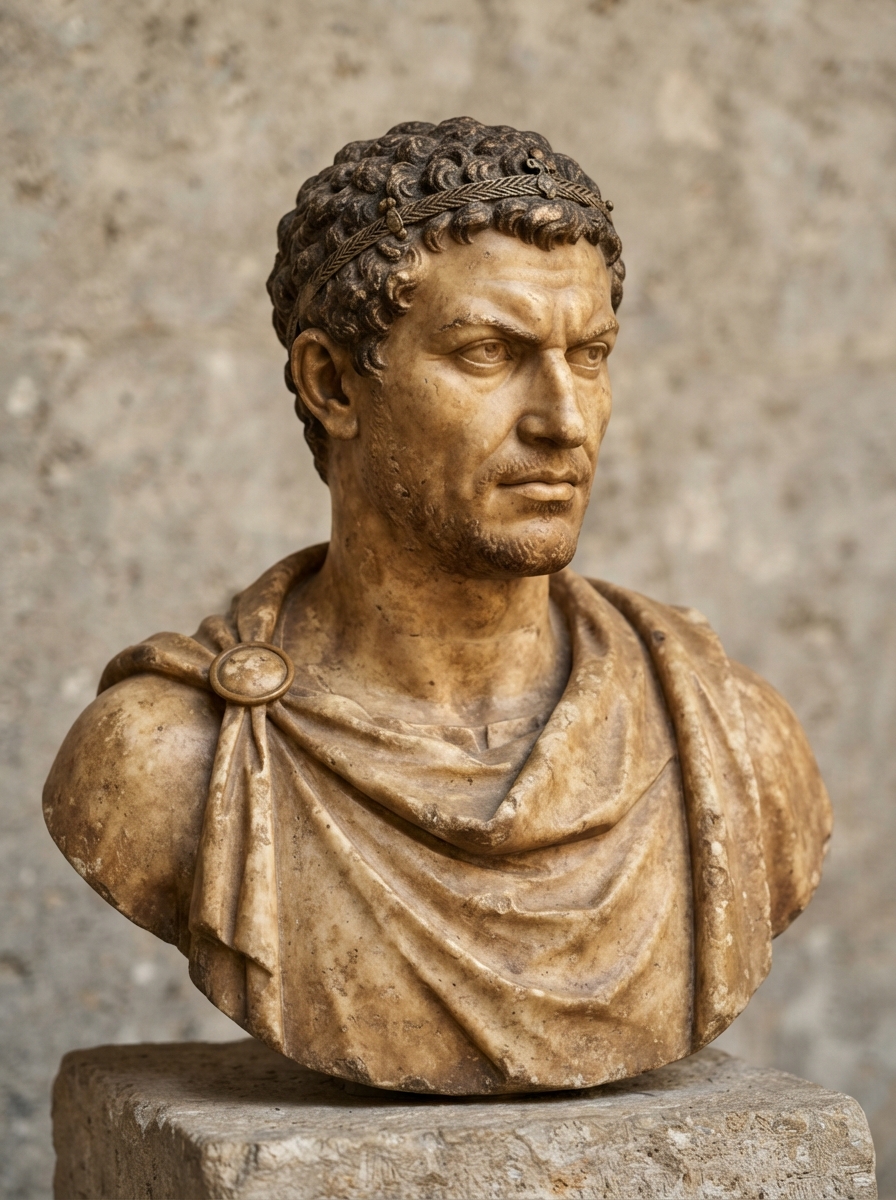
AI-assisted Portrait of Jugurtha
A City for Sale
Jugurtha was never supposed to have the throne. Grandson of the great Masinissa, he was an adopted heir among legitimate ones — a technicality he treated less as a limitation than as an opening. He read the gaps in every system he touched: the loose succession law of Numidia, the venality of the Roman Senate, the rivalries between the men Rome kept sending to stop him. He walked through each one, bribing where bribery worked, murdering where it didn't, and stalling everywhere in between.
The line that survives him — that Rome was a city for sale, if it finds a buyer — was not a boast so much as a diagnosis, delivered by a man who had tested the hypothesis personally and found it sound. For years he strung along Roman commanders and senators alike, never committing to one plan when three half-plans, played simultaneously, worked better. He is the rare figure in this archive who is defined almost entirely by his ENTP opportunism — a man who won, again and again, simply by noticing faster than everyone around him.
He did not have a strategy so much as a standing willingness to improvise one, which is the closest thing ENTP has to a doctrine.
It could not last. The war he provoked — the Jugurthine War, 112–106 BCE — dragged on precisely because he refused to fight it on any single front, and it ended only when Rome produced two men, Marius and Sulla, whose rivalry would outlast him by decades. Sulla, then a young quaestor, talked King Bocchus of Mauretania into handing Jugurtha over; Marius got the triumph. Jugurtha got the Tullianum, and starved there in 104 BCE — the last improvisation he never got the chance to make.
Psychological Verdict
Jugurtha's ENTP is legible less in any single decision than in his refusal to make just one. Dominant Ne read every Roman commander, every senator, every treaty as a system with a seam in it, and he probed for the seam instead of committing to a frontal assault. Auxiliary Ti supplied the cold, improvisational logic underneath the wit — the same faculty that produced the line about Rome being for sale also produced the years of bribery and betrayal that kept him alive long past when a more rigid man would have been crushed. What he lacked was patience for anything that couldn't be talked, bought, or outmaneuvered — and against Rome's eventual willingness to simply outlast him, that was, in the end, not enough.
Connected Figures
Further Reading
- The Jugurthine War — SallustThe primary ancient source, written within a generation of Jugurtha's death.
- SPQR: A History of Ancient Rome — Mary BeardSituates the war within the Republic's broader crisis of corruption.
- Gaius Marius: A Political Biography — Richard EvansCovers the war from the Roman side, including Marius's rise through it.
