 Historical Figure MBTI
#678 · 5-20-26 · The Roman Republic
Sulla
Dictator · Felix · The Man Who Walked Away
138 BCE — 78 BCE
11 min read
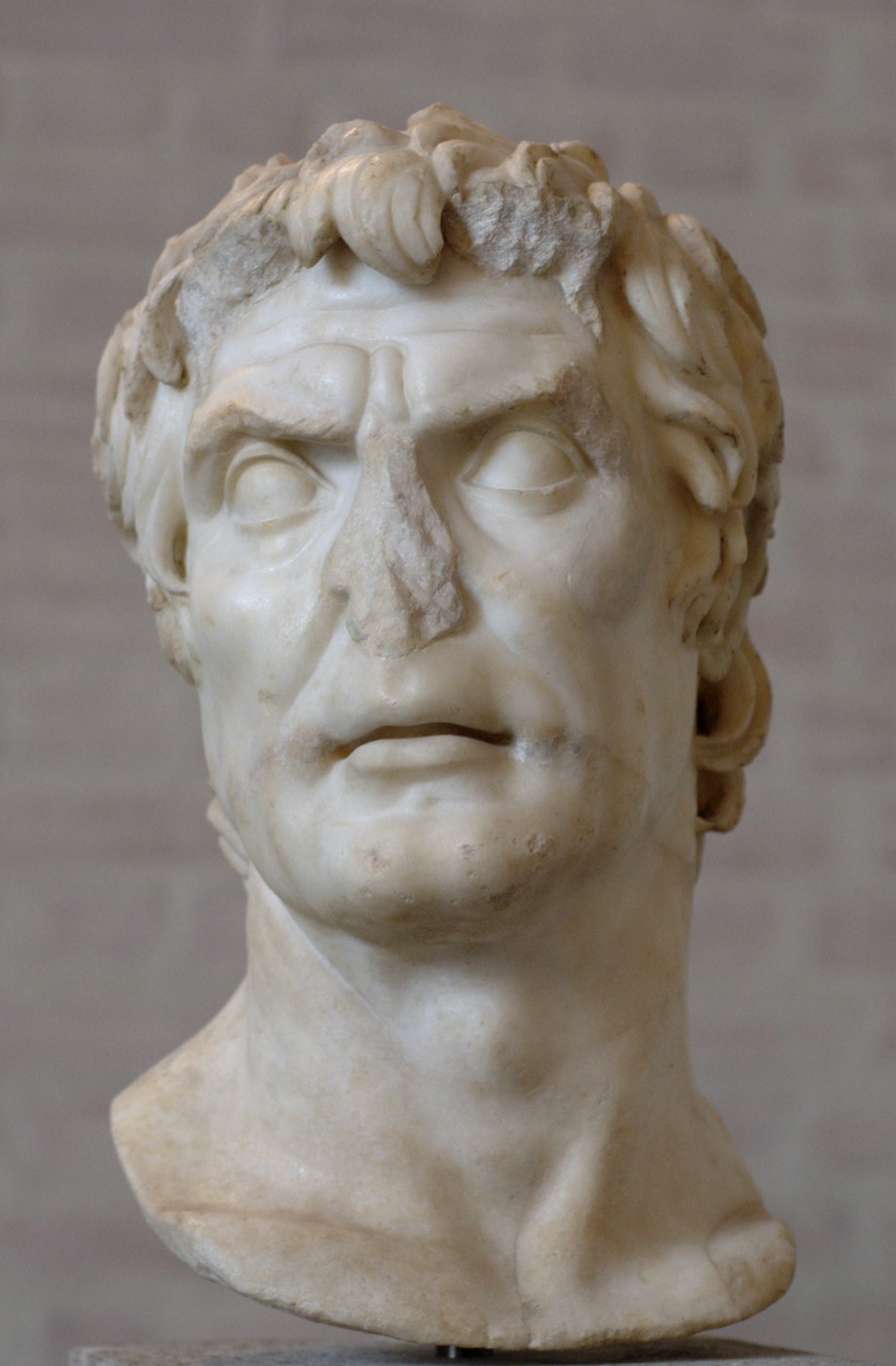
Portrait of Sulla
The Man Who Gave It Back
In 79 BCE, the most powerful man who had ever lived in Rome stood before the assembled people, laid down an office that answered to no law, dismissed his lictors, and offered to account to any citizen who wished to question him. Nobody did. Lucius Cornelius Sulla walked home through the streets he had filled with severed heads, an ordinary man again, and went to the country to write his memoirs and drink. He died in his bed the following year. In the whole long catalogue of men who have seized absolute power by force, the number who have handed it back while still healthy, still feared, and still winning is very close to one.
Everything before that moment argues for a different kind of man. He was born into a patrician family so decayed it had slid into genuine poverty, and he clawed back up through the army under Gaius Marius, where his first great coup was talking the Numidian king Bocchus into betraying his son-in-law Jugurtha — a piece of nerve and negotiation that delivered the war's trophy into Sulla's hands rather than his commander's, and seeded a hatred that would eventually cost Italy a generation. When the Senate was manoeuvred into stripping him of the Mithridatic command and handing it to Marius, Sulla did the thing no Roman had ever done: he went back to his legions, told them what had been taken, and marched them on Rome. Then he did it a second time. He proscribed his enemies by name on public lists, put a bounty on each head, and let the city hunt itself.
And then, with the whole machinery of the state in his fist and no one left to stop him, he audited his own work, found it finished, and quit. That sequence — total conquest followed by voluntary abdication — is not the shape of appetite. It is the shape of a project.
Sulla was an ENTJ: a dominant Extraverted Thinker who treated the Roman constitution as a broken mechanism, seized the only power sufficient to rebuild it, and set that power down the moment the rebuild was done.
The Constitution as a Machine to Be Rebuilt — Te dominant
Read the dictatorship not as a reign but as a work order. Sulla took an archaic office that had lain unused for over a century, had himself appointed to it without a fixed term — dictator legibus scribundis et rei publicae constituendae, dictator for the writing of laws and the settling of the state — and then spent his tenure doing precisely what the title said. He doubled the Senate's membership and refilled it from the equestrian order. He fixed the cursus honorum into a rigid ladder with minimum ages and mandatory intervals, so no second Marius could hold seven consulships. He gutted the tribunate — the office the Gracchi had used to route around the Senate entirely — by stripping its legislative initiative and barring its holders from further magistracies, making it a career dead end. He reorganized the permanent criminal courts into a system of standing tribunals with defined jurisdictions and senatorial juries.
That is not a tyrant's list. A tyrant's list is troops, treasure, and titles. Sulla's list is procedural plumbing: who may propose, who may judge, in what order, at what age. Extraverted Thinking is the function that looks at a world and sees a system performing below specification, and it reaches for structure — rules, thresholds, chains of authority — as the corrective. Sulla had watched the Republic seize up for thirty years, and his diagnosis was mechanical rather than moral: the levers had been left where any demagogue could reach them. So he moved the levers.
The proscriptions belong to the same cold logic, and that is the ugliest thing about them. Earlier Roman civil violence was riot and massacre — mobs, cudgels, bodies in the Tiber. Sulla's was administrative: names posted in the Forum, a fixed bounty per head, legal immunity for the killer, confiscated estates auctioned to fund the state and reward his own men. He turned political murder into a published schedule with a price list. Te at full power does not rage. It processes.
A Picture of the Finished Republic — Ni auxiliary
Te builds, but something has to tell it what to build toward. Sulla carried an unusually specific image of what a working Republic looked like — an aristocratic, senate-governed state of the kind his ancestors were supposed to have inherited — and every reform maps onto that single picture. It was a backward-facing vision, and arguably a fantasy; the Rome he was restoring had never quite existed in the form he imagined. But it was coherent, it was fixed, and he could tell the difference between measures that served it and measures that merely served him.
You can see the long sightline in how early it starts. The Jugurthine coup was already a young quaestor reading, correctly, that the war would be ended by a conversation with Bocchus rather than a battle with Jugurtha — and having the patience to court a wavering king rather than chase a glory that was not there. Later he had a signet ring made showing that surrender scene and wore it for the rest of his life, which is a strange thing to do about a diplomatic errand unless you understood, from the start, that it was the hinge everything else turned on. Introverted Intuition specializes in exactly that: recognizing which single moment is the one the future runs through.
And it is Ni that supplies the abdication. A vision with a defined end-state is a vision that can be completed, and completion is a fact you can perceive. By 79 BCE the laws were passed, the courts were sitting, the Senate was refilled, the tribunate was declawed, his veterans were settled on Italian land, and consular elections had resumed under his own rules. The design had shipped. Everything after that would have been maintenance, and maintenance was what he had built institutions to do. So he handed the thing over to the machine and left.
Felix — Se tertiary
None of this makes him austere. Sulla's appetites were enormous and entirely undisguised. In his youth, before the money and the commands, he kept company with actors, mimes and dancers, and he never dropped them — the comic actor Roscius and the impersonator Sorex were still at his table when he was master of the world. He drank spectacularly. He was, by every ancient account, a man of ferocious physical charm and equally ferocious physical excess, and he went back to all of it the instant he laid down the fasces.
The battlefield instinct was the same faculty pointed elsewhere. Marching on Rome in 88 BCE was less a plan than a read of the immediate situation: his officers refused to go with him and he went anyway, because he could see that the legions were his and that the taboo protecting the city was only a taboo. At Chaeronea and Orchomenus against Mithridates' vastly larger armies, and at the Colline Gate where he lost his own left wing and won on the right, he showed the improviser's nerve for a fight already in motion.
Above all there was the name. He called himself Felix — the Fortunate — and told everyone who would listen that his successes came from luck and the favour of Venus rather than calculation. Some of that was propaganda, but he plainly believed it: he trusted the moment, the omen, the roll. That trust is Se's signature. The point is that it served the design instead of ruling it. When luck and the plan disagreed, the plan won, and the man who could not stop drinking could stop being dictator.
No Man Better to His Friends — Fi inferior
Sulla's epitaph, which he is said to have composed himself, ran that no friend ever did him a kindness and no enemy an injury without being fully repaid. It is a moral system of exactly two rules, held with absolute conviction and applied without exception. That is what inferior Introverted Feeling looks like in a man of enormous competence: values compressed into a personal ledger, private, unnegotiable, and completely indifferent to whether anyone else finds it defensible.
Inside the ledger he was extravagantly loyal — Bocchus honoured, his actors kept, his veterans given land. Outside it, he had almost no access to what other people felt. When the proscription lists went up he was asked simply to say where they would end, and could not answer. Whole families were destroyed for proximity; estates were listed because they were desirable. Inferior Fi does not generate mercy — it generates a small private code and a vast blind spot around everyone the code does not name.
The blind spot cost him posthumously. He had a young relative by marriage on an early list, spared him at the urging of the Vestals and the boy's connections, and remarked that they should beware, for in that boy there were many Mariuses. He was right, and he let him go anyway. Julius Caesar would spend his career studying Sulla's example and drawing the opposite conclusion — that dictatorship was for keeping.
Why ENTJ Over ESTP
Why not ESTP?
On paper the case is strong: the gambler's nerve, the actors and the drinking, the two marches on Rome, the cognomen Felix, the willingness to break a five-hundred-year taboo on a week's read of the situation. That is Se-dominant behaviour, and Sulla produced a great deal of it. But dominant Extraverted Sensing is an appetite for the present advantage, and it does not switch itself off — an Se-dominant who has taken absolute power by force keeps it, because the power is the immediate good and there is no internal picture of a finished state to measure it against. Sulla, holding everything, stopped. The dictatorship's actual content was procedural code — age limits, jury composition, tribunician veto — the least Se-flavoured work imaginable, and the abdication only makes sense as a Te-Ni judgment that the specification had been met. The appetite was tertiary and loud. The blueprint was dominant and quiet, and the blueprint is what he obeyed.
The resignation is the crux, and it is worth sitting with how strange it is. Sulla was fifty-nine, in command of the loyalty of an army he had personally enriched, feared by every surviving man in Rome, and legally answerable to nobody. Every incentive an opportunist reads — safety, wealth, revenge, pleasure — argued for keeping the office. The only argument for giving it up was that the office had been taken for a purpose and the purpose was served, which is an argument that exists only inside a mind that had a designed end-state in the first place. Caesar, who understood him better than anyone, said Sulla had shown himself politically illiterate by resigning. That is precisely the ESTP reading of the act — and precisely why Sulla was not one.
Connected Figures
Further Reading
- Life of Sulla — PlutarchThe indispensable source — the actors, the drinking, the epitaph, and the abdication, drawn partly from Sulla's own lost memoirs.
- Sulla: The Last Republican — Arthur KeaveneyThe standard modern biography, and the fullest argument that the reforms were a coherent programme rather than improvisation.
- The Roman Revolution — Ronald SymeTraces the line from Sulla's precedent through Pompey and Caesar to the Augustan settlement.
- SPQR: A History of Ancient Rome — Mary BeardPlaces the proscriptions and the march on Rome in the wider story of the Republic's collapse.
- Caesar: Life of a Colossus — Adrian GoldsworthyUseful for the other side of the ledger — how the young man Sulla spared read the dictatorship's lesson.
