 Historical Figure MBTI
#934 · 7-9-26 · The Second World War
Keith Park
Air Vice-Marshal · The Tactician of 11 Group
1892 — 1975
5 min read
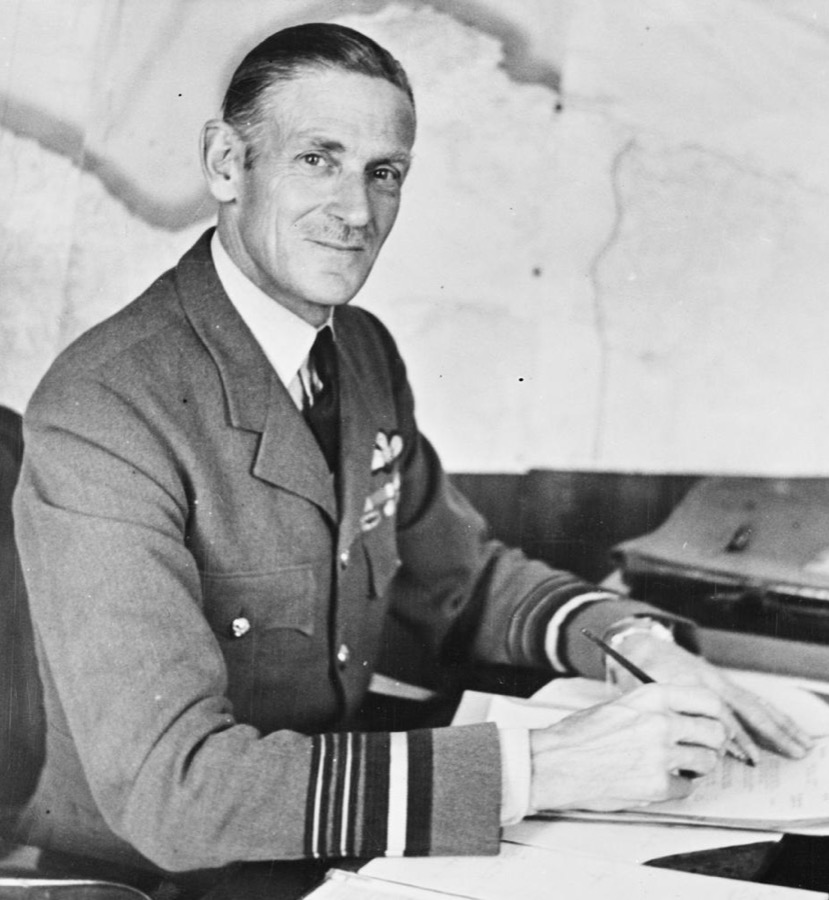
Photograph of Keith Park, 1940 (Imperial War Museums, public domain)
The Man Who Would Not Wait for the Big Wing
In the summer of 1940, the fate of the Battle of Britain rested less on any single pilot than on a set of decisions made in an underground bunker at Uxbridge, where Air Vice-Marshal Keith Park commanded 11 Group — the RAF Fighter Command formation covering London and the southeast, the exact stretch of sky the Luftwaffe had to cross first. Park, a New Zealand-born veteran flying ace of the First World War, met that pressure with a doctrine built on precedent: scramble squadrons early, in small numbers, and often, meeting incoming raids before they could mass and do damage, rather than waiting to assemble a large "Big Wing" of fighters before engaging.
That approach put him in open conflict with Douglas Bader and 12 Group's Trafford Leigh-Mallory, who argued for exactly the large-formation tactics Park rejected. The dispute grew bitter and political, and in its aftermath Park — like his own superior, Hugh Dowding — was quietly moved out of Fighter Command. History has since largely vindicated him: the doctrine that seemed merely cautious in 1940 is now widely credited as central to the battle's outcome.
Park did not improvise a new tactical philosophy under fire. He read the constraints of Dowding's early-warning system — radar's narrow margin, the time it took a squadron to climb and form up — and built a disciplined ISTJ response grounded in what the working system could reliably deliver.
A Doctrine Grounded in the System's Real Limits
Park's tactics were not a theory of air combat imposed from outside; they were an extension of what Dowding's early-warning network could actually support. Radar gave 11 Group only minutes of notice before a raid crossed the coast — barely enough time for a squadron to scramble and climb to intercept, let alone for several squadrons to rendezvous into a single large formation first. Park internalized that constraint as a fixed fact of the system he operated within, and built his entire interception scheme around respecting it rather than wishing it away.
This is Si doing what it does best: treating hard-won, concrete precedent — how long a Spitfire takes to reach altitude, how far a raid could travel while fighters assembled — as the bedrock of policy, and holding to that policy consistently across the length of the battle even as critics pushed him to abandon it for something more dramatic-looking.
Running 11 Group Like a Machine Under Pressure
Auxiliary Te is what turned Park's Si-grounded read of the system into daily operational execution. From the Uxbridge bunker he ran the busiest, most heavily attacked group in Fighter Command with a controller's cool efficiency, pushing squadrons up in relays sized to the threat, husbanding pilots and machines so 11 Group could keep flying sortie after sortie through the battle's worst weeks without collapsing from attrition.
Where Bader's Big Wing promised a single, satisfying mass blow, Park's Te-driven management optimized for throughput and sustainability — the unglamorous, correct answer for a force that could not afford to be caught on the ground reassembling when the next raid arrived.
A Quiet Conviction He Would Not Trade Away
Park rarely postured in the Big Wing dispute; the surviving record shows a man who simply would not abandon what he privately believed was right for his pilots, even as the political costs mounted around him. That is tertiary Fi at work — an internal standard, held quietly rather than argued loudly, that outlasted the career damage it caused him when he was eased out of Fighter Command alongside Dowding.
Adapting Only When the System Demanded It
Inferior Ne shows up in the moments Park was pulled furthest from doctrine — commanding the desperate, improvised air defence of besieged Malta, and later overseeing scattered RAF forces across Southeast Asia. He could stretch to meet genuinely novel circumstances when the situation left no precedent to fall back on, but it never became his native mode; it surfaced under necessity, not preference.
Why ISTJ Over ISTP
Why not ISTP?
An ISTP commander would have treated each raid as its own tactical puzzle, pushing for hands-on flexibility and case-by-case improvisation as conditions changed. Park did the opposite: he built one doctrine, grounded in a disciplined read of what the radar-warning system could support, and applied it consistently across the whole battle. That is Si-Te holding to a proven structure, not Ti-Se solving each engagement fresh.
Park's consistency was itself the argument. He did not out-improvise Bader; he out-disciplined him, defending one system-grounded doctrine through months of political pressure rather than trading it for a more flexible, situational approach — the signature of ISTJ over ISTP.
Connected Figures
Further Reading
- Park: The Biography of Air Chief Marshal Sir Keith Park — Vincent OrangeThe standard biography, drawing on Park's own papers and wartime records.
- The Battle of Britain: Dowding and the First Victory — John RayReassesses the Dowding–Park tactical system against the Big Wing controversy.
