 Historical Figure MBTI
#1224 · 9-8-26 · The Mughal Empire
Khusrau Mirza
Mughal Prince · Rival Claimant
1587–1622
5 min read
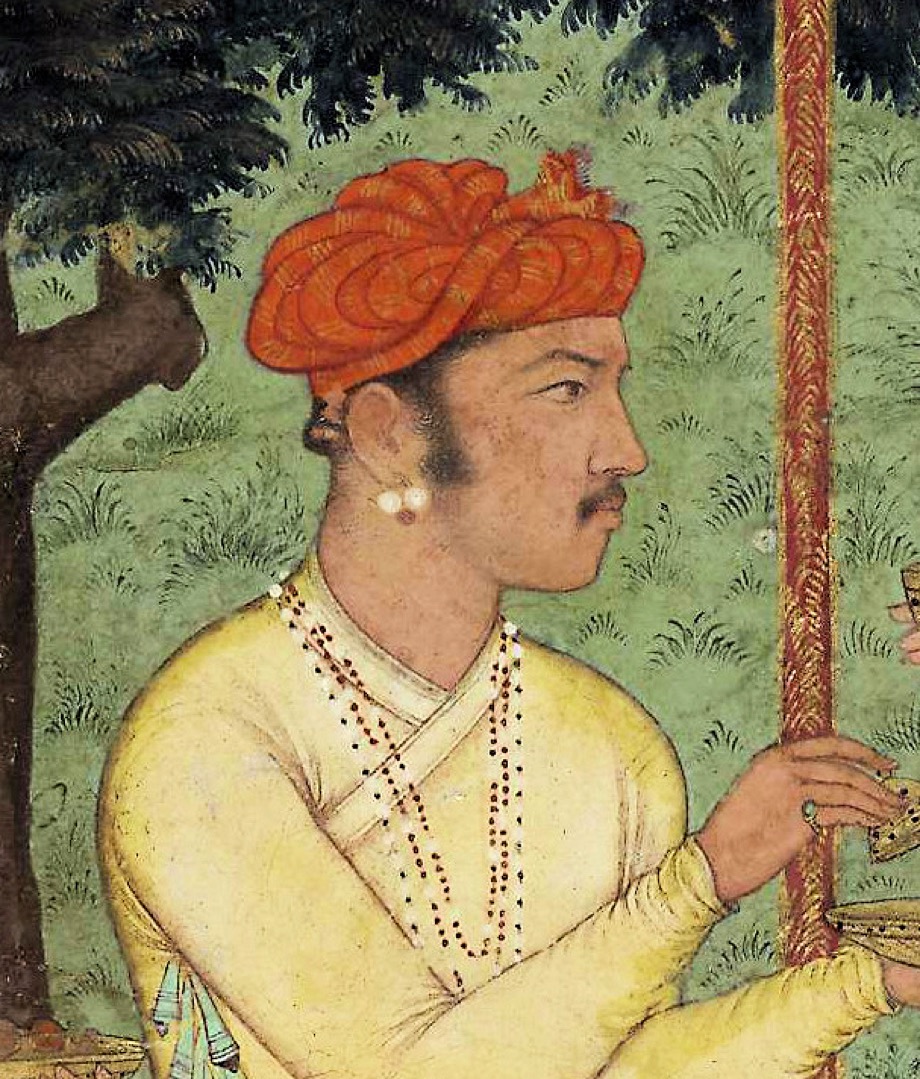
Portrait of Khusrau Mirza — 1610
The prince other people chose
In the struggle over Akbar’s succession, Khusrau Mirza was more than the grandson waiting behind his father. Powerful nobles considered making him emperor instead of Salim. Raja Man Singh and Mirza Aziz Koka tried to gather support for that alternative. They failed to secure a sufficient coalition, and Salim became Jahangir in 1605. For a moment, however, the seventeen-year-old prince had become the point at which several different anxieties about the future could meet.
That moment is the beginning of a tentative ENFJ reading, and also its greatest difficulty. A candidate’s capacity to gather other people can indicate social leadership. It can equally indicate that older, more powerful actors have found a useful candidate. Khusrau’s surviving reputation cannot simply be read backward into an assuredly charismatic personality. The prince is visible through other people’s hopes, loyalties, accusations, and retrospective grief.
Born in 1587, he was the son of Salim and Man Bai, a daughter of the Kachhwaha house of Amber. His descent connected him to an important military and political family as well as the Mughal dynasty. Those ties help explain support for his candidacy without requiring every supporter to have been personally enchanted. The story begins with a young man whose person carried claims larger than his experience.
Khusrau Mirza tentatively reads as an ENFJ, with dominant Extraverted Feeling suggested by the collective hopes gathered around his claim.
Making a following into a claim
An auxiliary Introverted Intuition reading would locate a possible pattern in the concentration of disparate support around one imagined future: Khusrau as the next sovereign. He did not attempt to establish an independent regional principality in 1606. His rebellion challenged his father’s command of the imperial center. The aim was singular, even if the means were hurried and the prospects uncertain.
He left Agra in April 1606 under the pretext of visiting Akbar’s tomb. The imperial memoir says he began with approximately 350 mounted followers. On the road he acquired further support, including Husain Beg Badakhshi’s contingent, and he appointed Abdul Rahim to a senior office under a new title. Such acts converted movement into the outline of a rival court. A prince traveling with supporters began behaving as though his claim already possessed a government.
Jahangir’s account makes this course the product of youthful folly encouraged by bad companions. That explanation should be identified as the victorious father’s judgment. It removes agency from his son when convenient and emphasizes his son’s guilt when punishment follows. The historical reader cannot repair the distortion by inventing a wise revolutionary in its place. What remains secure is the attempt to turn a dynastic possibility into organized action.
Khusrau advanced into Punjab and failed to take Lahore. Defeat and an unsuccessful attempt to escape across the Chenab brought his movement to an end. The ambition had outrun the coalition’s practical strength. A focused future does not imply accurate foresight, and an interpretation through personality must leave room for miscalculation, inexperienced command, and decisions made under pressure.
A public hope with little private testimony
The proposed dominant Extraverted Feeling rests less on courtly sociability than on the prince’s position within a web of shared allegiance. His claim could engage nobles, followers, and communities along his route. There is a plausible outward orientation in acting through collective recognition: people accepting him as the bearer of a future they wanted. But the record establishes the network more clearly than it establishes the young man’s habitual way of sustaining it.
The meeting with Guru Arjan is a particularly sensitive example. Jahangir associated the Sikh leader with Khusrau’s passage and used a hostile account of their contact in explaining his own action against the Guru. Guru Arjan was executed during the suppression of the rebellion. The episode belongs to the history of Mughal coercion and Sikh remembrance; it should not be reduced to evidence that the prince knew how to charm a holy man. Nor should a single encounter bear the whole explanation of the execution.
After his capture, Khusrau became a prisoner whose political importance survived his defeat. He was later subjected to blinding, with the degree and subsequent effects described differently across accounts. A damaged prince could still embody an alternative succession. That persistence reveals how dynastic legitimacy operated: the claim remained attached to his name even when freedom of action had been taken away.
He died in 1622 while in the custody of his brother Khurram, the future Shah Jahan; his death is generally treated as an arranged killing. By then he had spent much of his adult life under restraint. That disproportion matters. The surviving evidence gives us a short season of independent action and a much longer life interpreted by jailers, relatives, and partisans. Any confident account of his inner organization would exceed it.
Why ENFJ Over INFJ
Why not INFJ?
INFJ is a credible alternative if the prince’s defining pattern was a privately held dynastic vision expressed through a small circle of allies. The evidence cannot clearly establish which process led. ENFJ receives the narrow preference because his recorded political action depended so visibly on extending a following and seeking public recognition, but circumstances may explain that behavior better than personality does.
The low-confidence reading should stay low. A failed rebellion demonstrates ambition and political relationships; it does not by itself establish how a person usually thinks. Khusrau’s historical importance is much firmer than the proposed type.
Connected Figures
Further Reading
- The Tuzuk-i-Jahangiri; or, Memoirs of Jahangir — Jahangir; translated by Alexander Rogers, edited by Henry BeveridgeThe emperor’s judgments, observations, and self-justifications, with continuations distinguished from his own writing.
- The Mughal Empire — John F. RichardsA modern synthesis of conquest, administration, and the changing ideological basis of Mughal power.
- Jahangir — Encyclopaedia IranicaA scholarly account of the reign and its political and cultural setting.
