 Historical Figure MBTI
#1225 · 9-8-26 · The Mughal Empire
Parviz Mirza
Mughal Prince · Commander · Son of Jahangir
1589–1626
5 min read
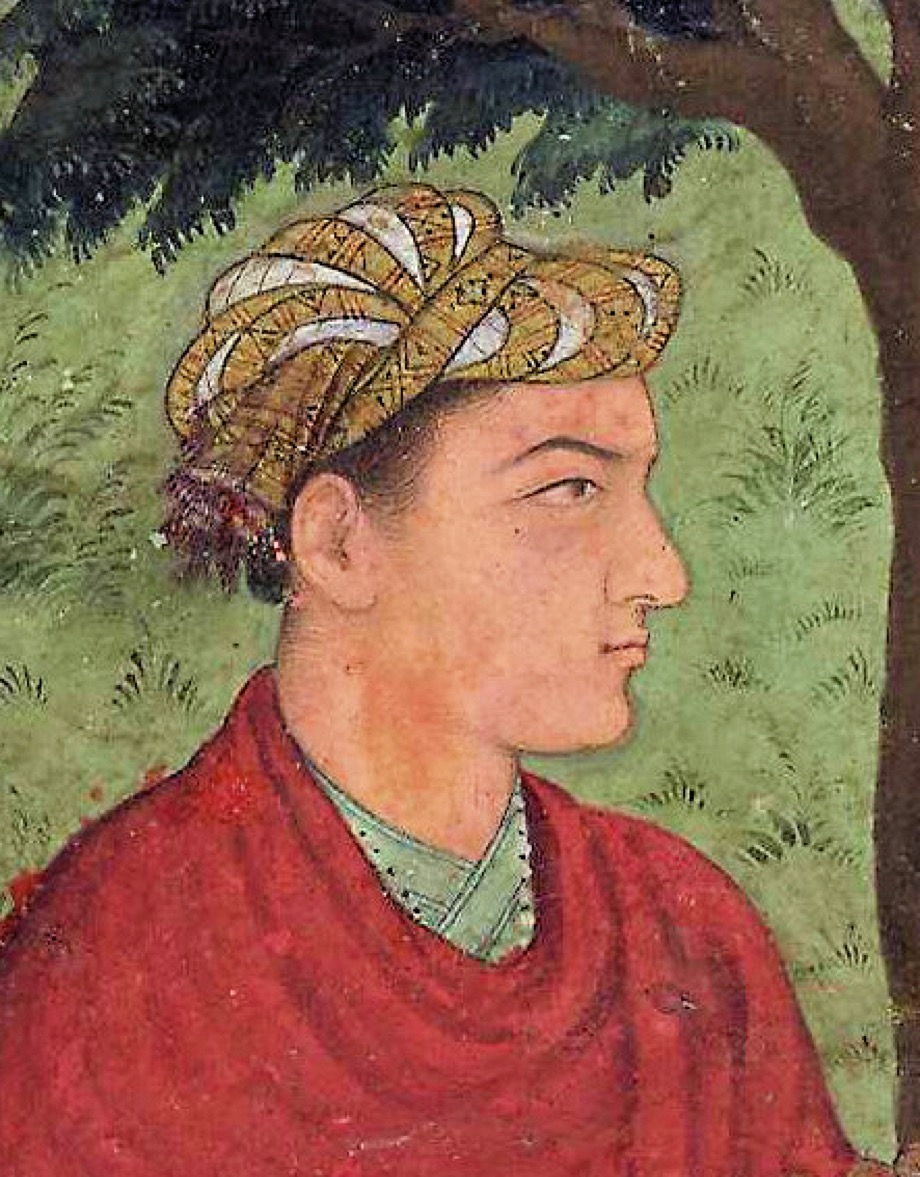
Portrait of Parviz Mirza — 1610
A prince behind the commander
Parviz Mirza appears in the records where a Mughal prince was expected to appear: beside an army, at the head of an appointment, within the arithmetic of succession. The difficulty begins when the appointment is mistaken for a portrait. An emperor could place a son over a campaign while entrusting its practical direction to experienced officers. The prince’s presence supplied rank, legitimacy, and a dynastic claim on victory. It did not necessarily reveal who made every decision.
Born in 1589, Parviz was a son of Jahangir and Sahib Jamal. He belonged to a generation in which several brothers could become plausible successors, and in which the exercise of command helped create that plausibility. Khusrau’s rebellion and Khurram’s later rise altered his position without making it secure. His career is best understood through those changing circumstances before any attempt is made to extract a personality from them.
The evidence is insufficient for a responsible MBTI assignment. Reports of drinking, dependence on advisers, or uneven military performance occur within a court where reputations served political purposes. They may preserve real behavior, but they do not establish a stable pattern of judgment across settings. Leaving Parviz untyped acknowledges a gap in personal evidence while retaining the considerable importance of the life.
The imperial son as an office
One of Parviz’s early commands concerned the campaign against the ruler of Mewar. It placed him in a long Mughal effort to bring the Sisodia dynasty into submission. The appointment made a young prince the visible bearer of his father’s authority, with senior servants around him. It also offered the experience and credit that might later matter in a succession struggle. Such a command was simultaneously military work and dynastic education.
When Khusrau rebelled in 1606, Jahangir summoned Parviz from the campaign to protect Agra. The rebellion was suppressed before he could perform the role his father had assigned. This small sequence is useful because it shows how a prince’s activity could be interrupted by the imperial family’s own crisis. A campaign in one region yielded to the danger posed by a brother in another. Parviz’s place in the system depended on obedience to the reigning emperor as much as on any separate ambition.
Further appointments took him into the Deccan, where the extension of Mughal power required difficult negotiation and warfare rather than a single decisive encounter. Senior officers carried much of the practical burden. Criticism of Parviz’s effectiveness should therefore be read alongside the structure of command. Shared authority could enable a campaign, produce rivalry, or furnish excuses after disappointment. It makes individual credit unusually hard to distribute.
The temptation is to draw a clean contrast between an energetic brother and an idle one. That contrast has a narrative convenience the evidence does not deserve. Khurram built a more successful position and eventually became Shah Jahan, but success can sharpen every remembered weakness of a rival. Parviz’s surviving record tells us that he received substantial responsibilities and did not convert them into lasting supremacy. The distance between those facts still contains many unanswered questions.
When loyalty acquired a military following
Khurram’s rebellion in the 1620s changed the meaning of Parviz’s service. The prince remained on his father’s side, while the experienced Mahabat Khan became the crucial military figure associated with him. Their forces pursued the rebel. Jahangir’s memoir, continued in the later years by court writers, records favor and high rank for Parviz within this struggle. He became an available imperial son against another imperial son who had broken obedience.
That availability mattered. A succession contender did not need to possess an entirely independent army to become consequential. Association with a formidable commander could make a prince a focus for soldiers and nobles. Mahabat Khan’s position beside Parviz therefore gave their relationship a significance extending beyond immediate operations. It affected how other powerful people at court understood the approaching succession.
Nur Jahan and her family had interests of their own in the configuration of princes and commanders. It is possible to describe the resulting rivalry without reducing each actor to a single permanent scheme. Alliances moved as illness, rebellion, marriage, and military success changed the possibilities. Parviz’s military association belonged to this unstable field. His importance was partly relational, but a relational source of importance is still historically real.
He died in 1626, before Jahangir. The timing removed one potential successor before the final contest after the emperor’s death in 1627. It also left Parviz’s career with no reign through which later readers might reinterpret his preparation. The prince who became emperor could retrospectively make his youthful service a beginning. The prince who died first remained a set of incomplete prospects.
What accusation cannot supply
Accounts linking Parviz to excessive drinking deserve consideration as evidence about behavior and reputation. They should not be made to explain everything about his military work, his political relationships, or his inner life. Intoxication could impair a person; the accusation of intoxication could also discredit a claimant. A historian must ask who recorded the charge, in what setting, and with what access to the conduct described.
The same restraint applies to reliance on Mahabat Khan. Depending on a skilled commander does not prove passivity, a particular cognitive preference, or an inability to judge people. Dynastic princes regularly operated through servants with far more experience. What would establish personality more convincingly would be a body of independently attested decisions, private correspondence, or detailed testimony across different kinds of pressure. For Parviz, that body is too thin.
Connected Figures
Further Reading
- The Tuzuk-i-Jahangiri; or, Memoirs of Jahangir — Jahangir; translated by Alexander Rogers, edited by Henry BeveridgeThe emperor’s judgments, observations, and self-justifications, with continuations distinguished from his own writing.
- The Mughal Empire — John F. RichardsA modern synthesis of conquest, administration, and the changing ideological basis of Mughal power.
- Jahangir — Encyclopaedia IranicaA scholarly account of the reign and its political and cultural setting.
