 Historical Figure MBTI
#1223 · 9-8-26 · The Mughal Empire
Jahangir
Mughal Emperor · Observer · Connoisseur
1569–1627
6 min read
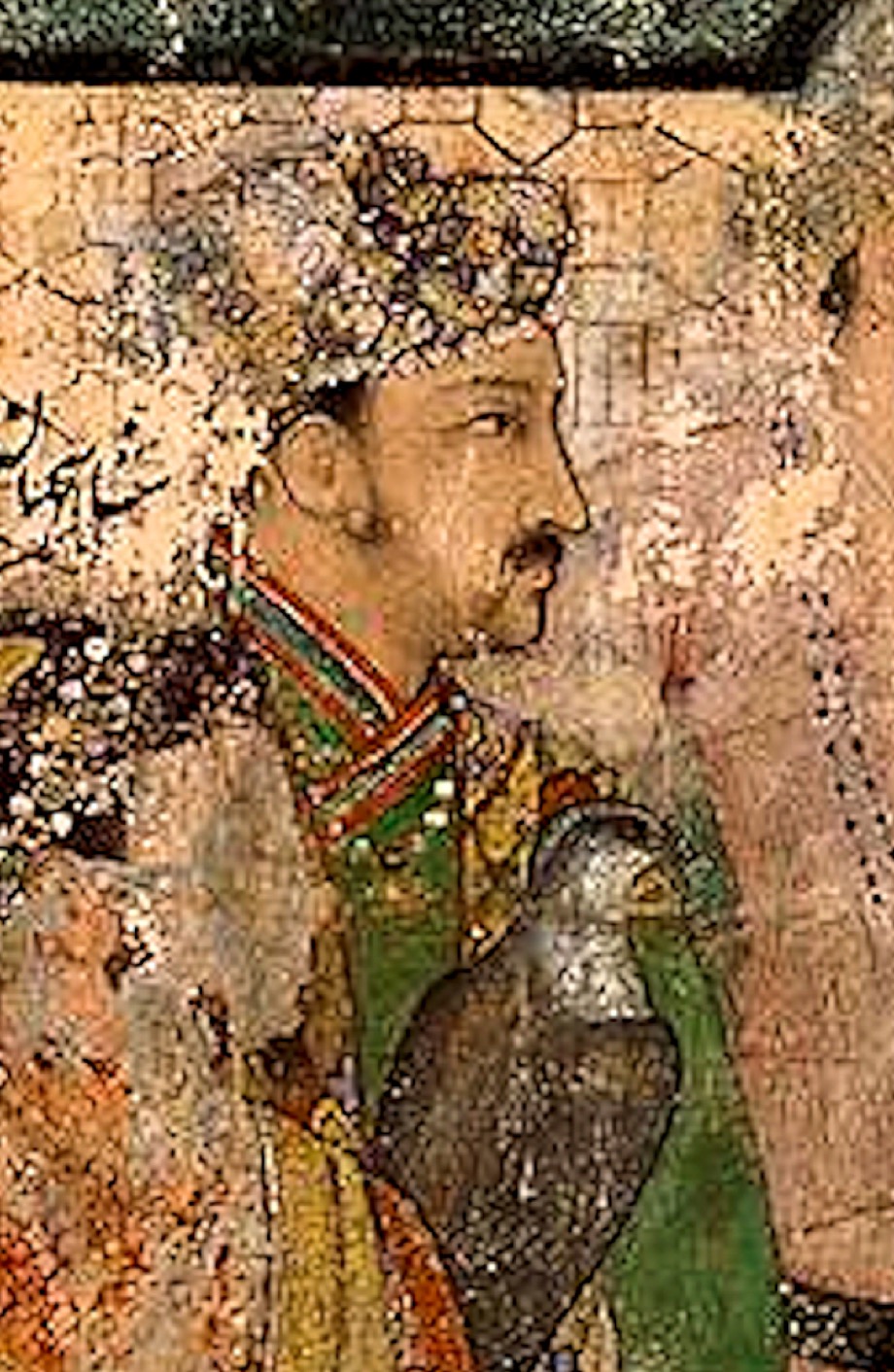
Portrait of Jahangir — 1605
An emperor looks twice
An unfamiliar bird arrived at the Mughal court, and Jahangir would not let its strangeness disappear into a general description. He watched the changing colors of its head and neck, the display of its feathers, and the relationship between its size and that of familiar peafowl. He ordered an image made. His father’s grandfather Babur had described unusual animals, he observed, but had not always supplied pictures. The memoir should preserve what the eye might otherwise lose.
That attention belongs to an emperor who could also order killing, imprisonment, and mutilation. Jahangir’s sensitivity did not soften the structure of his power. The tentative ISFP reading concerns how he formed judgments: a private scale of approval and aversion, repeatedly brought into contact with a particular person, object, or scene. It cannot turn affection for a painting into evidence of kindness, or an imperial memoir into an unguarded diary.
Born Salim in 1569, the son of Akbar, he inherited an empire in 1605 after a difficult struggle within his own family. Before his accession he had rebelled against his father and sponsored the killing of Abu’l-Fazl. He became a ruler who advertised justice while remaining capable of acts that make the advertisement painful to read. The contradiction is part of the subject, not an obstacle to a prettier portrait.
Jahangir reads as an ISFP whose dominant Introverted Feeling made his own judgment the center of a vividly observed world.
The judgment remained his own
The strongest case for dominant Introverted Feeling lies in the recurring authority of Jahangir’s own evaluation. He did not merely report that an object was excellent because the court esteemed it. He distinguished what he admired, described why it arrested him, and placed that judgment inside the record of his reign. A strange animal deserved close examination; a landscape deserved improvement; a servant could deserve favor, resentment, or forgiveness. The memoir’s first person continually makes the emperor the final measure.
This should not be confused with modern individualism. A Mughal sovereign’s preferences had institutional force. Men were promoted or punished by a ruler whose sense of justice could be intensely personal. In the account of his son Khusrau’s rebellion, Jahangir presents himself as a father wronged and an emperor obliged to restore order. His explanation concentrates moral responsibility in the young prince and his advisers. The reader encounters the ruler’s settled valuation, not a neutral reconstruction of competing claims.
Khusrau’s followers suffered exemplary punishments after the rebellion of 1606. The prince was later subjected to blinding, although accounts differ over its extent and aftermath. Jahangir’s tender responses elsewhere do not cancel these decisions. If private conviction is visible here, it is conviction backed by coercion. Personality language becomes misleading when it distributes sympathetic qualities to one type and cruelty to another.
A quieter episode reveals a different movement of the same personal authority. Jahangir reported dreaming that Akbar urged him to forgive Mirza Aziz Koka, his father’s foster brother. The dream was not an administrative finding, and its supernatural truth cannot be established. Yet the emperor used its remembered emotional force to explain a change of treatment. A relationship, an image of his father, and his own response could interrupt an earlier judgment. That responsiveness is more revealing than a list of hobbies.
The visible world would not stay abstract
The unfamiliar turkey was one example among many of Jahangir’s appetite for exact appearances. In the genuine memoir, description and illustration work together. The emperor wanted the reader to encounter the creature’s singularity, including changes that a flat category could not contain. He was interested in what happened before him, and in having that encounter recorded with enough specificity to survive his absence.
An auxiliary Extraverted Sensing interpretation therefore has substance beyond the fact that he collected art. The useful evidence is his active discrimination: noticing the shift of a color, comparing an unfamiliar body with known birds, and commissioning a visible record. Collecting could express prestige, investment, devotion, or conformity. These passages show the process of looking. Even then, they are selected passages from a highly fashioned royal work, and should bear only the weight they can support.
Near Ajmer, a spring and ravine drew his attention. He had the place improved and named it Chashma-i Nur. The scene became both an experience and an imperial possession, with his name set into the landscape. The act joins delight in a site to the power to alter it. His attention was not the detached gaze of a traveler with no consequences for the people around him.
This immediacy also complicates the familiar picture of a ruler permanently overshadowed by Nur Jahan. Her power, her family’s influence, and the shifting alliances of the later reign were real. But the memoir and the continuing exercise of royal authority resist turning Jahangir into a mere spectator. Illness, dependence, affection, and delegated government changed how power moved. They did not erase the emperor’s capacity to notice, choose, and intervene.
A pattern survives an unreliable mirror
Jahangir’s writing repeatedly tries to give a reign coherence through its ruler’s judgments. That organizing impulse can resemble tertiary Introverted Intuition: incidents are gathered into an account of what his sovereignty means. The famous image of accessible justice belongs to this self-presentation. Its presence tells us what he wanted associated with his rule, while his treatment of rebels shows why the association needs independent scrutiny.
The memoir is especially valuable because it preserves so much particular language of decision. It is also dangerous for the same reason. Self-description can make an emperor seem more internally consistent than he was. Parts of the work were continued by others, and even the portions attributed to Jahangir operate within court conventions. The evidence does not supply a clinical portrait or an uncomplicated window into private motivation.
The type remains a medium-confidence historical interpretation. Personal evaluation and immediate observation recur together strongly enough to suggest a pattern, but the surviving record privileges situations in which an emperor could make his preferences consequential. A man without that office might have looked different to observers. We can describe the pattern in the documents without pretending to recover every ordinary hour of the person.
Why ISFP Over ESFP
Why not ESFP?
ESFP is plausible because the memoir gives so much space to visible novelty, travel, animals, and pleasures. Yet the recurring center is the emperor’s personal verdict on what he encounters. Observation appears to serve an inward scale of value rather than continually displace it with the next experience. This distinction is interpretive, and the royal genre may magnify the apparent primacy of personal judgment.
The preferred reading is therefore ISFP, with room for an ESFP interpretation and for limits that neither four-letter label resolves. His writings make an unusually rich case, but richness is not transparency. The same author can preserve an exquisite perception and a devastating self-excuse.
Connected Figures
Further Reading
- The Tuzuk-i-Jahangiri; or, Memoirs of Jahangir — Jahangir; translated by Alexander Rogers, edited by Henry BeveridgeThe emperor’s judgments, observations, and self-justifications, with continuations distinguished from his own writing.
- The Mughal Empire — John F. RichardsA modern synthesis of conquest, administration, and the changing ideological basis of Mughal power.
- Jahangir — Encyclopaedia IranicaA scholarly account of the reign and its political and cultural setting.
