 Historical Figure MBTI
#1222 · 9-7-26 · The Mughal Empire
Naziri Nishapuri
Persian Poet · Voice Within Imperial Patronage
c. 1560–1612
5 min read
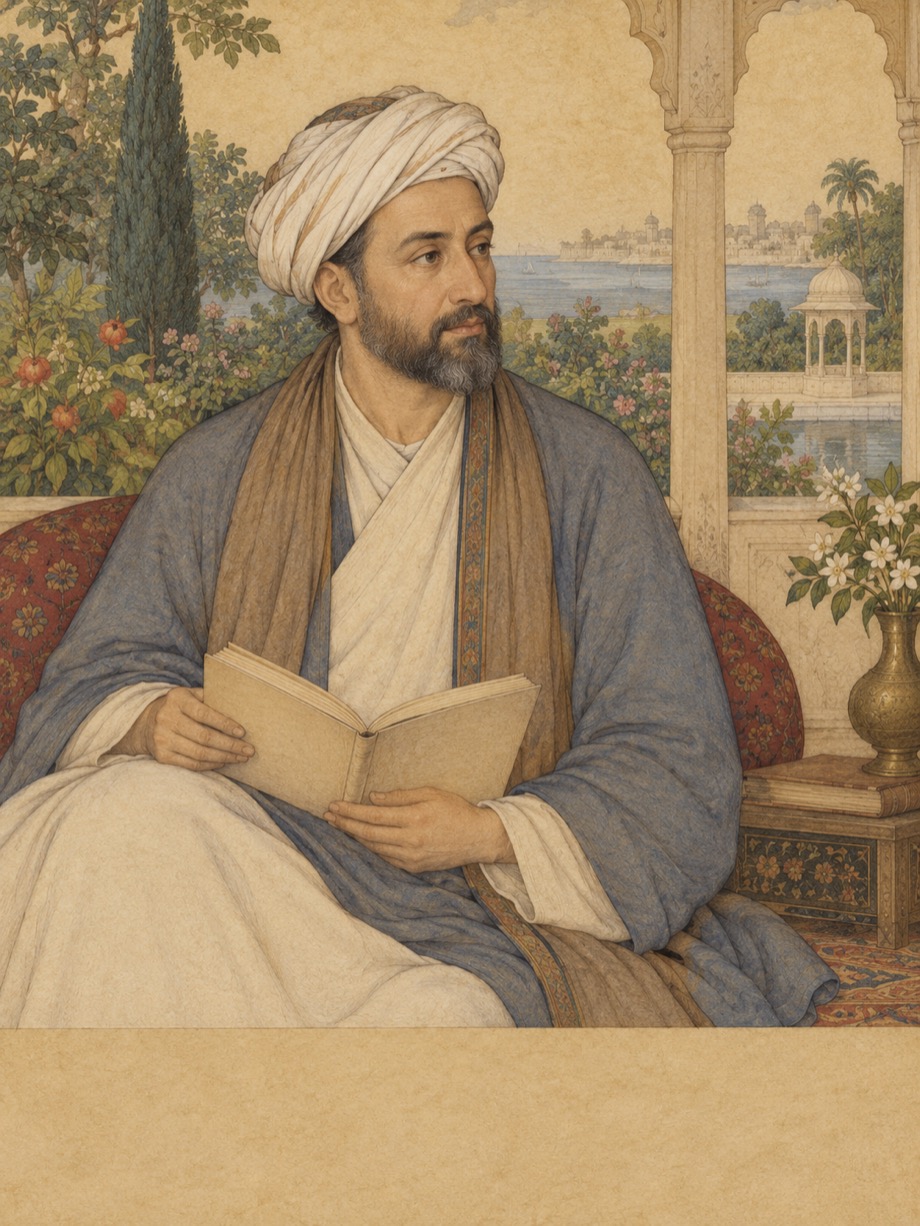
AI-assisted Portrait of Naziri Nishapuri
The Poet Who Would Not Stay a Dependant
Naziri Nishapuri made his reputation through patronage without letting one patron contain his whole life. His Persian poetry brought him into Rahim’s literary household, but his later position in Gujarat included commerce, property, and patronage of other writers. The movement from recipient to provider gives his career a shape more substantial than the conventional image of a poet waiting for a noble’s generosity.
Born Muhammad Husayn around 1560, he left Nishapur, developed his standing among poets in Iran, and migrated to India. Court service supplied opportunity, but it also made recognition a negotiated resource. Naziri could praise, compete, complain, and redirect his attachments. This archive proposes INFP with low confidence, based on that concern for personal standing and selective commitment. The voice of a poem must still be distinguished from the habitual mind of its author.
The low-confidence INFP reading places dominant Introverted Feeling in Naziri’s insistence on personal worth within the unequal bargains of literary patronage.
A Postscript Was Not Enough
The reported breach with Rahim began with a small act of recognition: Naziri was mentioned in a postscript to a letter thanking another poet. A panegyric complains about insufficient regard for long service. This is stronger evidence for a public grievance than for the exact private emotion behind it. Literary complaints could press a claim, improve terms, or mark a change in allegiance as well as express wounded dignity.
Nevertheless, the concern is distinctive. Service was not measured only in payment; it carried an expectation that the patron acknowledge the writer’s established place. Naziri’s career shows a willingness to assert that expectation rather than remain an invisible beneficiary. The proposed Introverted Feeling preference concerns a personally maintained standard of worth, not a claim that every reproach was spontaneous or untouched by calculation.
The generous patron could also become a rival judge of that worth. Rahim’s reputation for largesse does not settle the justice of every relationship inside his household. Naziri’s complaint reminds us that cultural patronage produced dependence and friction as well as masterpieces. The type reading remains plausible only if it keeps that actual inequality in view.
More Than One Source of Livelihood
Naziri’s later life in Ahmadabad gave him options beyond close attachment to one noble. The old biographical notices describe a merchant poet; Jahangir’s memoir records receiving an ode from him and rewarding it. Such evidence shows movement across audiences and livelihood strategies. The writer could seek imperial acknowledgement while retaining a place in a prosperous regional city.
Auxiliary Extraverted Intuition is a tentative interpretation of this widening field of possibilities. Naziri did not have to stop writing praise in order to loosen one particular dependency. Commercial and agricultural interests could make additional literary relationships practicable. The psychological claim is modest: he pursued alternative arrangements while preserving a central vocation, rather than allowing one established bargain to define every available future.
This is not proof of an indiscriminately adventurous style. His verse often respected inherited diction and established models. The possibilities he pursued in life need not coincide with a demand to break every convention in art. A cautious type reading can recognize flexibility in his career without forcing that flexibility onto poems whose formal commitments tell a different story.
Writing Under the Weight of Earlier Masters
Naziri practised poetic reply, using the metre and rhyme of an earlier poem to establish a new performance within a recognized relationship. His admired predecessors included Hafez and other major Persian poets. To write in this way was to submit to comparison while demonstrating the possibility of an individual achievement. Tradition supplied both the occasion and the difficulty.
Tertiary Introverted Sensing is only a tentative description of that engagement with inherited forms. A genre’s requirements cannot establish a writer’s mental preference, and the conservative qualities identified by literary scholars could also support an entirely different reading. What the poems securely show is disciplined work within a long memory of poetry. They do not disclose which memories mattered most in the rest of his life.
Testing the INFP Reading
Why not ISFP?
ISFP is a plausible alternative where personal dignity and strong evaluative commitments are visible. INFP is weakly preferred because Naziri’s career repeatedly opens alternative patronage and livelihood arrangements while remaining organized around a literary commitment. Neither vivid lyric detail nor the mere use of metaphor decides the issue. The evidence is too mediated by genre and retrospective biography for a firm distinction.
The inferior Extraverted Thinking proposed by the INFP stack is particularly difficult to recover. Naziri’s successful commerce and later patronage demonstrate practical competence; they do not tell us where organization sat within his private priorities. The verdict should therefore remain an interpretive possibility supported by selected decisions, not a complete psychological explanation of the poetry.
Connected Figures
Further Reading
- Divan-e Naziri-ye Nishapuri — Naziri Nishapuri; edited by Muhammad-Reza TaheriA modern edition of the poems, which must be read through their genres rather than as direct autobiography.
- Welcoming Fighani: Imitation and Poetic Individuality in the Safavid-Mughal Ghazal — Paul E. LosenskyExplains how poetic reply and inherited models could become forms of individual achievement.
- The Ain-i-Akbari, Volume I — Abu’l-Fazl; translated by H. BlochmannThe poetic notices and later annotations preserve early biographical evidence and disagreements.
- The Tuzuk-i-Jahangiri — Jahangir; translated by Alexander Rogers and Henry BeveridgeRecords Naziri’s appearance and reward from the emperor’s perspective.
