 Historical Figure MBTI
#1211 · 9-5-26 · The Mughal Empire
Abu’l-Fazl
Imperial Historian · Architect of Akbar’s Political Language
1551–1602
6 min read
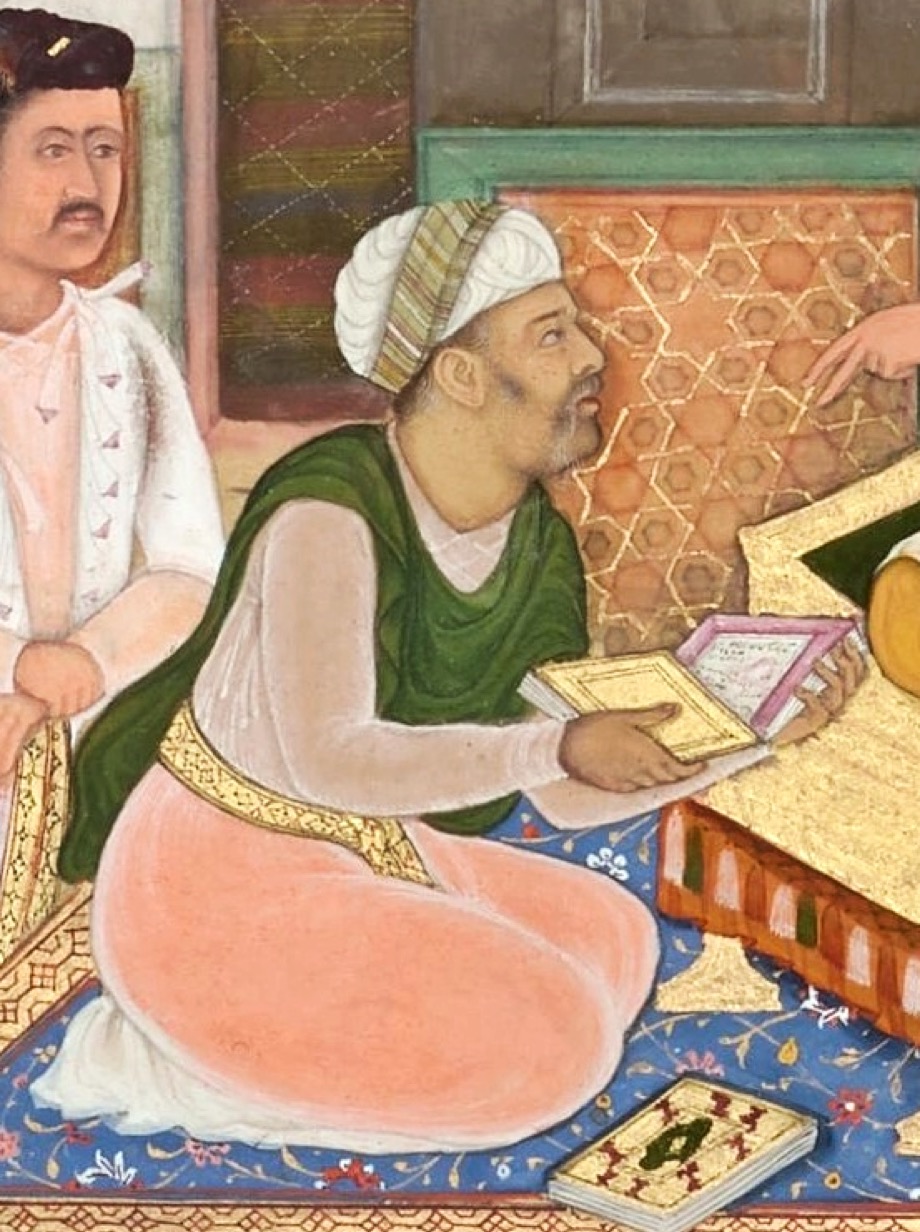
Portrait of Abu’l-Fazl — between 1603 and 1605 (later depiction)
The emperor made intelligible
Abu’l-Fazl did not merely record Akbar’s reign. He made its contradictions answerable to a larger idea. A Muslim dynasty governed a population whose religious lives exceeded the dynasty’s own tradition; an emperor invited disputation while demanding allegiance; conquest supported a language of universal peace. The historian’s task was to show how these things belonged together. His achievement was also a danger: an explanation could become so encompassing that the emperor’s mistakes disappeared inside it.
The proposed INFJ reading rests on that drive toward synthesis, joined to a concern with an inclusive political community. It is not deduced from his occupation as a writer or from the claim that he was personally compassionate. Court history had a patron and a purpose. We must distinguish the coherence of an authored vision from certainty about the private mind that produced it.
Born in 1551, he was the younger brother of Faizi and a son of the scholar Shaikh Mubarak. His education preceded his court career, which began in 1574. The Akbarnama and its concluding Ain-i-Akbari preserve an astonishing range of information. They also preserve a relationship: the learned servant’s devotion to a sovereign whom he regarded as more than an effective administrator.
Abu’l-Fazl reads as an INFJ led by dominant introverted intuition: he gathers the empire’s scattered acts into a single account of meaning and allegiance.
The many gathered into one
The Akbarnama makes individual events signs of a sustained royal purpose. Military success, appointments, acts of clemency, and intellectual inquiry repeatedly become evidence of Akbar’s exceptional judgment. When Adham Khan’s killing of Ataga Khan ends in execution, Abu’l-Fazl presents the emperor’s violence as the restoration of justice. He gives the episode a place in a moral order, rather than allowing it to remain an alarming struggle inside a household.
That interpretive habit suggests dominant introverted intuition: particular events converge upon an underlying meaning. Its force is clearest where the meaning resists the event. A ruler’s anger can become inspired justice; an interruption can become the moment at which a concealed purpose is revealed. This is also panegyric working as panegyric. The psychological proposal does not relieve the reader of asking what the interpretive pattern hides.
His conception of kingship drew together Persian traditions of divinely sanctioned monarchy and the Sufi ideal of the perfected human being. Religious difference could then be situated within a broader truth, with the emperor as the focus of a political allegiance that crossed sectarian boundaries. This was not simply a modern doctrine of state neutrality. The inclusive order acquired its center in a highly exalted individual. The author’s hunger for unity could expand belonging while making dissent appear to misunderstand the whole.
A community larger than a creed
The principle of sulh-i kul, universal peace, gave political language to government across religious divisions. Abu’l-Fazl’s account of Hindu beliefs in the Ain-i-Akbari belongs to this effort. Learning about a tradition could make its adherents more intelligible within the court’s world, although intelligibility was shaped by categories a Persian-reading audience recognized. Respect and translation did not remove the imbalance between the people described and the institution describing them.
His work on behalf of Akbar’s intellectual projects also required practical mediation. The translation enterprise brought Sanskrit learning into Persian through collaboration among people with different skills and commitments. It depended on an environment in which the emperor would sponsor work across inherited boundaries. Abu’l-Fazl helped articulate why that environment deserved to exist. The cultural bridge was made by translators and scholars, not by an ideology alone.
Auxiliary extraverted feeling is proposed for this sustained concern with the conditions of a shared political and intellectual life. His ideal requires more than private enlightenment; it requires a field in which different communities can offer loyalty and receive recognition. Yet the same concern can serve royal control. Badauni’s opposition exposes the cost of the settlement to people who considered its religious premises false. An encompassing community could still have sharp terms of entry.
The vision needs particulars
Abu’l-Fazl’s historical work collected testimony and information rather than relying on rhetoric alone. In the Ain-i-Akbari, offices, ranks, household operations, revenue arrangements, and regional resources acquire detailed descriptions. A cultivated vision of sovereignty sits alongside the working parts of its administration. The juxtaposition matters. He sought a political order that could be described through both principles and procedures.
Tertiary introverted thinking offers a tentative lens on the conceptual distinctions that support the synthesis. Describing an office entails knowing what authority belongs to it; distinguishing ranks entails relationships among obligations. These are literary and administrative operations before they are evidence for a type. The function interpretation is most useful where the author attempts to make his broader claims internally coherent, including his account of how religious diversity and imperial allegiance can coexist.
His father’s persecution provided a personal context for opposition to religious authorities. Contemporary accounts, including Badauni’s hostile narrative, remember the family seeking refuge under pressure. We should not turn this experience into a complete causal explanation of his philosophy. It nevertheless means that arguments over who could define orthodoxy were not only theoretical problems in his education. The right to judge another person’s belief could determine whether a household was safe.
The pen enters the campaign
Late in his career Abu’l-Fazl served in the Deccan, where intellectual authority had to become command and negotiation. From 1599 his duties involved difficult political and military conditions far from the court in which his influence had grown. The scholar’s participation prevents an easy division between contemplation and action. His service required other capacities than writing, even if writing remains the form in which his reputation is most visible.
Inferior extraverted sensing is the least secure part of the proposed portrait. His late military work does not demonstrate an inferior relationship to immediate circumstances. It shows that an official could adapt when a sovereign required another kind of service. In 1602, returning north, he was murdered through a plot associated with Prince Salim, the future Jahangir. The unifying account of kingship had not reconciled all the interests inside the dynasty. Its author remained exposed to them.
Why INFJ Over ENFJ
Why not ENFJ?
ENFJ can explain his skill in debate, mediation, and shaping a common allegiance around Akbar. INFJ receives a slight preference because social integration repeatedly appears as the application of a prior synthesis: a larger truth makes plural loyalty possible. The evidence does not establish that this was the order of his private thought. His public role could make the synthesis more prominent than the conversations through which it developed.
INTJ is another serious reading, given his systematic work and political effectiveness. The INFJ interpretation places greater weight on the continuing attempt to describe a shared moral community than on organization as an end in itself. Those aims were intertwined in imperial service. Both alternatives remain plausible, and praise written for a patron cannot settle the distinction.
Connected Figures
Further Reading
- The Akbarnama — Abu’l-Fazl; translated by Henry BeveridgeThe official court history, indispensable when read with attention to its praise of the emperor.
- The Ain-i-Akbari — Abu’l-Fazl; translated by H. Blochmann and H. S. JarrettA detailed account of imperial institutions, learning, and the court’s view of its own order.
- Abu’l-Fazl Allami — Richard M. Eaton; Encyclopaedia IranicaA scholarly account of his career and the ideology of universal peace.
- The Mughal Empire — John F. RichardsA modern synthesis of conquest, administration, and the changing ideological basis of Mughal power.
