 Historical Figure MBTI
#1213 · 9-5-26 · The Mughal Empire
Abd al-Qadir Badauni
Court Historian · Critic of Imperial Innovation
c. 1540–1615
5 min read
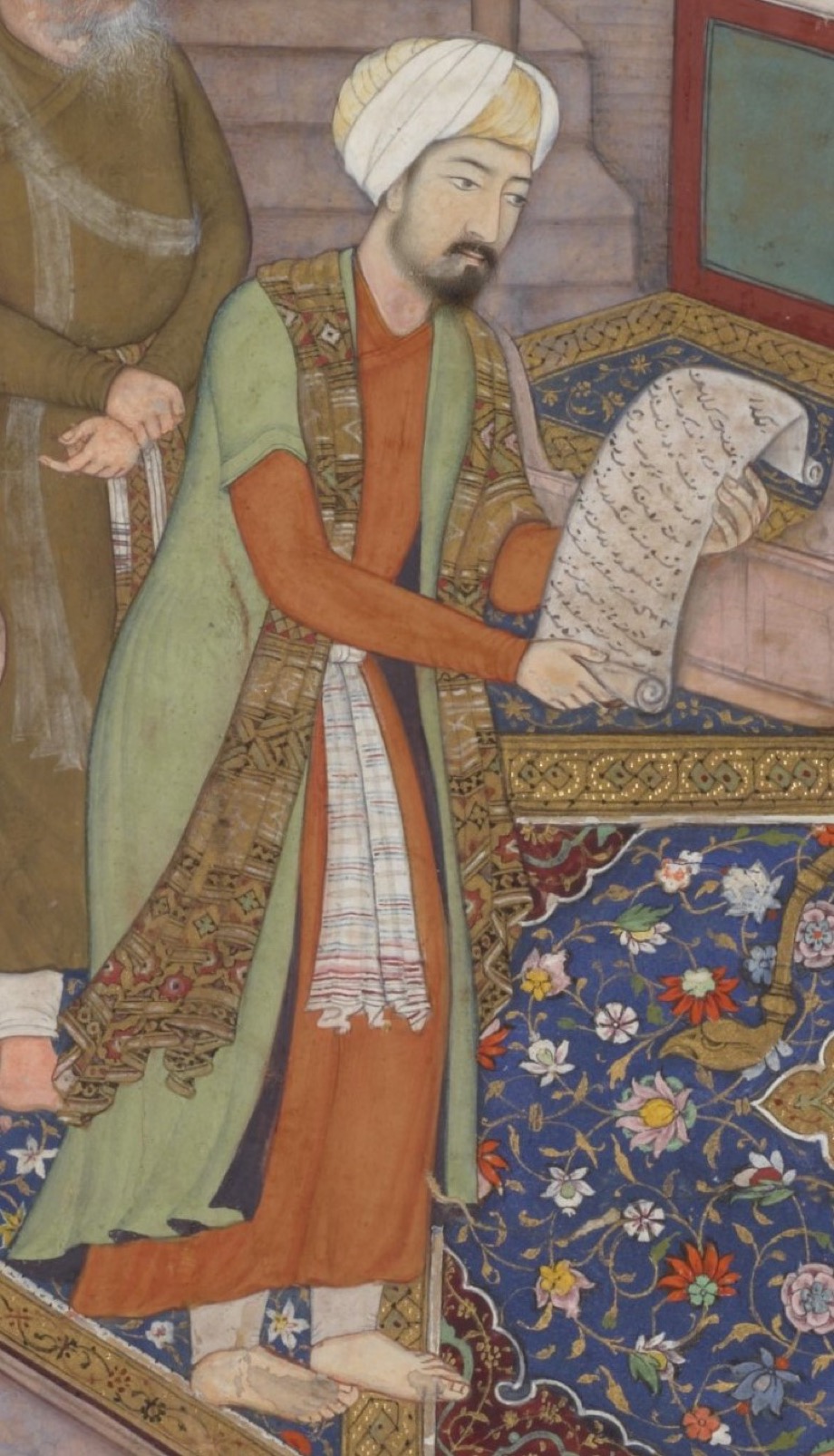
Portrait of Abd al-Qadir Badauni — ca. 1600
The court’s second memory
Badauni worked inside Akbar’s cultural enterprise while writing a history that resisted its claims. He helped bring Sanskrit works into Persian, then described the emperor’s religious innovations with alarm and hostility. His position was not comfortably outside the court. The institution he distrusted gave him work, access, and much of what he needed to become its witness.
The proposed ISTJ reading concerns a repeated way of making judgments: new practices are compared with remembered obligations, prior authorities, and a record of what actually occurred. Being a conservative Sunni does not establish introverted sensing. People can hold the same religious position through very different habits of thought. The argument depends on the particular method and texture of his chronicle, not on its confessional conclusion.
Born in 1540, he studied under Shaikh Mubarak, the father of Abu’l-Fazl and Faizi. Shared education did not produce a shared allegiance to intellectual change. His Muntakhab al-Tawarikh became the indispensable counterweight to an official history that celebrated what he deplored. Its hostility is evidence of disagreement, not a guarantee that every hostile detail is true.
Badauni tentatively reads as an ISTJ led by dominant introverted sensing: the court’s innovations are brought before remembered standards and a competing record of events.
The innovation measured against a past
Badauni’s account of the religious discussions records who spoke, how positions shifted, and what appeared to him to be lost as the emperor’s curiosity widened. His descriptions of the 1579 changes in religious authority connect ceremonial acts with a feared displacement of inherited legitimacy. The event is made intelligible through the order it interrupts. Where Abu’l-Fazl sees an expanding truth, Badauni repeatedly sees a standard being abandoned.
Dominant introverted sensing is proposed for this returning comparison between the present scene and an authoritative store of experience and precedent. The suggestion is narrower than calling him a traditionalist. His reporting attaches the objection to changes he identifies in practice: altered formulas, new relationships of discipleship, and a sovereign’s enlarged religious role. Remembered norms become instruments with which a particular episode is assessed.
His history does more than repeat a past unchanged. He selected, condensed, and supplemented sources, including Nizam al-Din Ahmad’s historical work. The first volume carries the narrative to Humayun’s death; the second covers Akbar’s reign; the third gathers biographies. That architecture places the disputed present within a longer remembered world. It also exposes his choices as an author. A man who distrusts a new official account must construct an account of his own.
The commission completed under protest
Badauni participated in the Persian Mahabharata project and translated the Ramayana. This was learned service undertaken within a program whose broader purposes disturbed him. Collaboration required receiving explanations, working across languages, and producing a usable Persian text. His objections did not make him an unskilled translator or leave him untouched by the material he was ordered to handle.
Auxiliary extraverted thinking offers a tentative reading of his ability to carry out a defined task while keeping his judgment of it separate. A commission could be completed even when its cultural meaning was unwelcome. Yet obedience to imperial orders had material causes as well as psychological ones. The historian depended on court employment. His performance is evidence of capability and constraint together, rather than proof that practical execution was his preferred support for thought.
A judgment the patron did not authorize
The Muntakhab al-Tawarikh did not circulate publicly during Badauni’s lifetime. Its critical account preserved judgments that official favor could not comfortably accommodate. Retaining that record is an act with a cost, although the cost must not be exaggerated into a story of uninterrupted open defiance. He served the court and found ways to remain within it. Writing offered another place in which the service could be judged.
Tertiary introverted feeling is a possible lens on the independent commitment retained beneath public work. Badauni’s tone is often sharp, and personal grievances can accompany principled objections. His treatment of Faizi is especially instructive: hostility toward the poet coexists with acknowledgment of his learning and the fact that Faizi interceded for him. The person whose ideas he opposed could also be the person who helped him. A private verdict had to live with that uncomfortable debt.
Why ISTJ Over INTJ
Why not INTJ?
INTJ could explain his independent critique and the larger pattern he detects in Akbar’s religious changes. ISTJ receives a preference because his argument repeatedly returns to established authorities and specific deviations, rather than replacing the imperial project with an equally encompassing alternative design. That is a distinction in an authored work, not decisive access to its author’s mind. His polemical purpose may emphasize precedent more strongly than he did elsewhere.
A full account of inferior extraverted intuition is not warranted by religious hostility. Disliking an innovation does not show an inability to consider possibilities. His translation work itself demanded engagement with unfamiliar material. The proposed type illuminates a pattern in his historical judgments while leaving the range of his private curiosity and decisions unresolved.
Connected Figures
Further Reading
- Muntakhab al-Tawarikh — Abd al-Qadir Badauni; translated by George S. A. Ranking, W. H. Lowe, and Wolseley HaigThe critical history itself, read as interested testimony rather than automatic correction.
- Badauni, Abd al-Qadir — Abd al-Samad Bazmee Ansari; Encyclopaedia IranicaA scholarly outline of his education, translations, and uncertain death date.
- The Akbarnama — Abu’l-Fazl; translated by Henry BeveridgeThe official court history, indispensable when read with attention to its praise of the emperor.
