 Historical Figure MBTI
#1214 · 9-5-26 · The Mughal Empire
Todar Mal
Revenue Administrator · Servant of Akbar
Died 1589; birth uncertain
6 min read
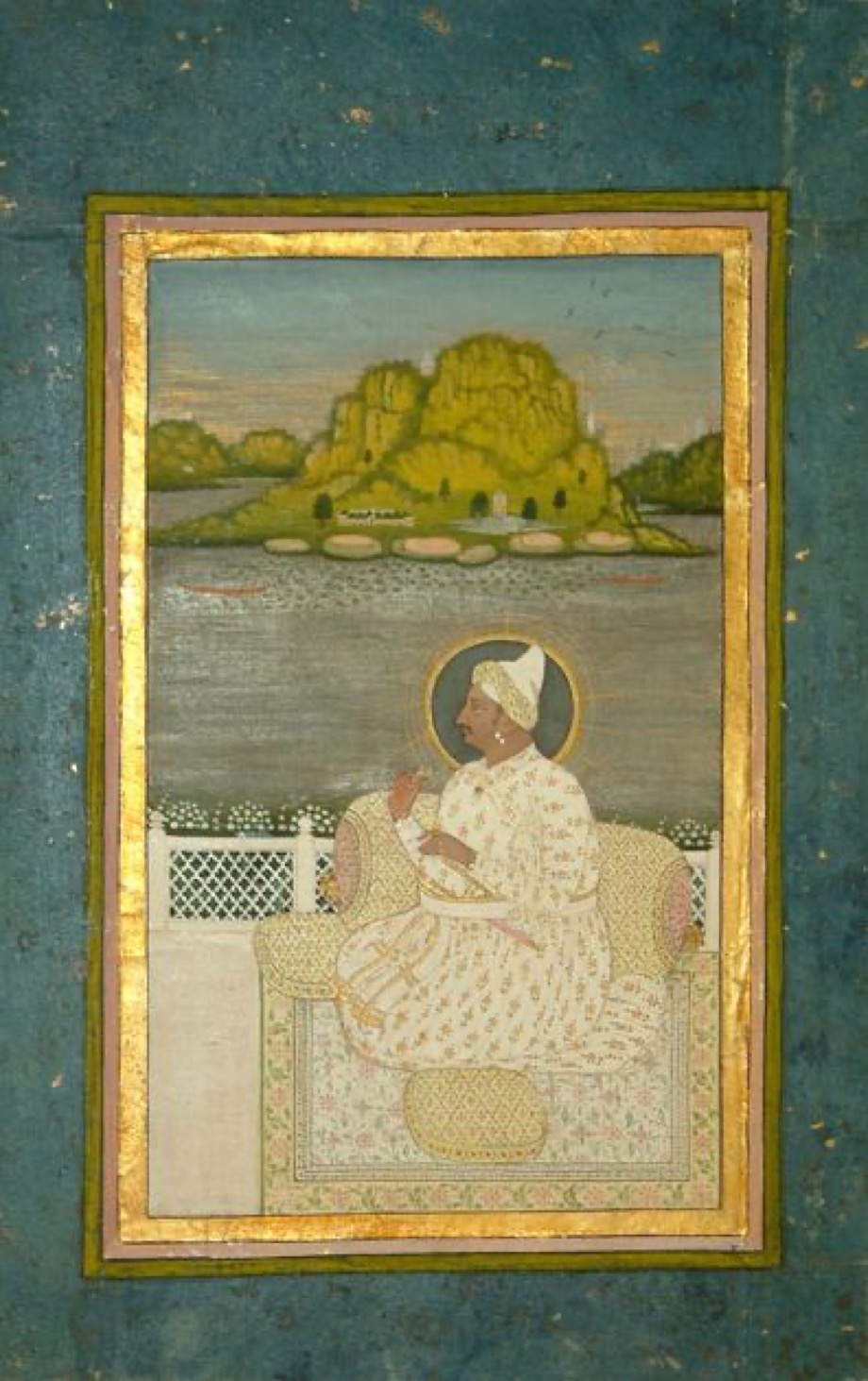
Portrait of Todar Mal — 17th century (later depiction)
The field behind the figure
Todar Mal’s reputation rests on making a ruler’s demand answerable to something that could be measured. A field had an area, a crop, a history of cultivation, and a value that varied with conditions. The imperial treasury needed a number. Between the two lay the labor of surveyors, clerks, local intermediaries, collectors, and cultivators who could lose much when a number was wrong or enforced without restraint.
The proposed ISTJ reading centers on the accumulation and disciplined use of particulars. It is low-confidence. An administrative achievement does not recover the administrator’s mind, and Todar Mal’s famous reforms were part of an extended collective process. His office is not his personality. The question is whether the pattern of measured assessment, documented responsibility, and practical steadiness offers a useful interpretation of his recorded conduct.
He served Akbar in campaigns as well as finance and died in 1589. His birth date and parts of his early career remain uncertain. Later accounts make him the exemplary revenue minister, but the surviving record does not reduce him to a man who stayed behind a desk. The countryside whose resources he helped assess was also a place of rebellion, military movement, and contested authority.
Todar Mal tentatively reads as an ISTJ led by dominant introverted sensing: the state’s demand must be checked against measured particulars and accumulated records.
An assessment with a memory
The revenue arrangements associated with Todar Mal belonged to the development of measured cash assessment under Akbar. The dahsala method drew on a ten-year period of information about yields and prices to establish rates. Its ambition was to make the state’s demand less dependent on an improvised estimate of the current harvest. It did not mean every cultivator received an unchanging ten-year contract, nor was the system uniformly applied across the empire.
The underlying problem was one of comparison. An area could be measured, yet its resources depended on what was grown and how continuously cultivation had occurred. Categories of land distinguished regular cultivation from different periods of fallow or abandonment. Assessing these differences required a store of local information as well as a common language in which the information could reach the center. A single undifferentiated demand would have been simpler to state and harder to justify.
Dominant introverted sensing is tentatively suggested by this dependence on recorded experience and differentiated particulars. The past supplies data against which a present claim is checked. Yet statistical averaging is not a personality test, and some of the reforms developed before his most senior appointments. The interpretation gains value only if it keeps the institutional history intact: a known administrator participated in making inherited and newly collected information more reliably usable.
The rule needs a receipt
A revenue memorandum associated with Todar Mal in 1582 makes accountability tangible. Measurements and collections were to be recorded and reported, while payments needed receipts. An assessment that looks orderly at court is of little protection to a cultivator if the collector can demand another amount and leave no trace. The administrative chain had to connect the treasury’s record with the transaction at the village.
Auxiliary extraverted thinking offers a lens on turning a standard into a procedure that different officials can execute and inspect. The method needs responsibilities, intervals, and an answer to disagreement. It also needs enforcement. Todar Mal’s reputation includes strict action against officials. That sternness should not be romanticized as automatic justice: coercion could be directed at collectors, and the larger system still extracted substantial resources from the people who produced them.
The Ain-i-Akbari’s biographical material credits him with giving revenue accounts a common Persian medium. Such a change could aid comparison and connect local clerical work to the language of the court. It also demanded new skills from those keeping the accounts. The reform illustrates the trade-off inside standardization. A shared record can make government more coherent while requiring people to adapt to the center’s preferred form of knowledge.
Steadiness under another kind of pressure
The military record supplies a different setting for the same proposed pattern. In Bengal, Todar Mal remained engaged when other commanders’ situations deteriorated. During the rebellions around Munger, the accounts describe him avoiding a general engagement when he distrusted the loyalty of auxiliaries and holding a fortified position under pressure. These are decisions made about a particular force in a particular landscape, rather than evidence of permanent caution.
His responsibilities therefore combined calculation with the capacity to stay effective amid uncertainty. Retaining a position could be more useful than pursuing a dramatic action; reporting an unreliable ally could matter as much as defeating an obvious enemy. The historical account is favorable and must not become a guarantee that every judgment was correct. It does, however, complicate the image of a reformer whose only relation to state power was a table of figures.
The suggested ISTJ portrait concerns this checking of circumstances before making a commitment that must be sustained. An ESTJ or several other types could act the same way. What makes the hypothesis moderately coherent is the connection between procedural reliability in revenue work and the record of maintaining a defensible position in military service. Both are visible public choices. Neither reveals what he was like away from the emperor’s business.
The service and the life beside it
Near the end of his life Todar Mal sought leave to withdraw to the banks of the Ganges. The biographical account says Akbar granted leave, then recalled him, arguing that carrying out his responsibilities was more virtuous than retirement. The scene preserves a boundary the emperor did not accept: the servant wished to direct the closing phase of his own life away from official duties.
Tertiary introverted feeling offers only a tentative interpretation of that independent wish and his religious commitments. Hindu devotion does not establish this function, any more than administrative precision establishes introversion. Inferior extraverted intuition is still less recoverable. We do not know how he considered unrealized possibilities in private. It is better to leave the weakest parts of the stack acknowledged than to turn a late request for retirement into a complete psychological revelation.
Why ISTJ Over ESTJ
Why not ESTJ?
ESTJ is a strong alternative because his reforms required public direction, enforcement, and the coordination of many officials. ISTJ receives a cautious preference from the emphasis on reliable particulars and established procedures as the basis of action. That preference should not imply social withdrawal. The surviving record shows a capable commander and senior officer, while offering little evidence of his ordinary social energy or private habits.
The type remains a proposed interpretation of method. Fiscal reforms were collective, uneven, and responsive to political necessity; Todar Mal did not invent the entire Mughal revenue apparatus. His distinction lies in the practical work associated with making assessment and responsibility more consistent. ISTJ helps name that pattern without converting achievement into certain access to temperament.
Connected Figures
Further Reading
- The Ain-i-Akbari — Abu’l-Fazl; translated by H. Blochmann and H. S. JarrettA detailed account of imperial institutions, learning, and the court’s view of its own order.
- The Mughal Empire — John F. RichardsA modern synthesis of conquest, administration, and the changing ideological basis of Mughal power.
- Todar Mal’s Original Memorandum on Revenue Administration, March 1582 — Shireen MoosviA translated document that makes the revenue procedures and chain of accountability concrete.
- The Agrarian System of Mughal India, 1556–1707 — Irfan HabibA major study placing fiscal administration within the agrarian society that supported it.
