 Historical Figure MBTI
#436 · 4-10-26 · The Ilkhanate
Mar Yahballaha III
Patriarch of the Church of the East · Bar Sauma's Companion
1245 — 1317
7 min read
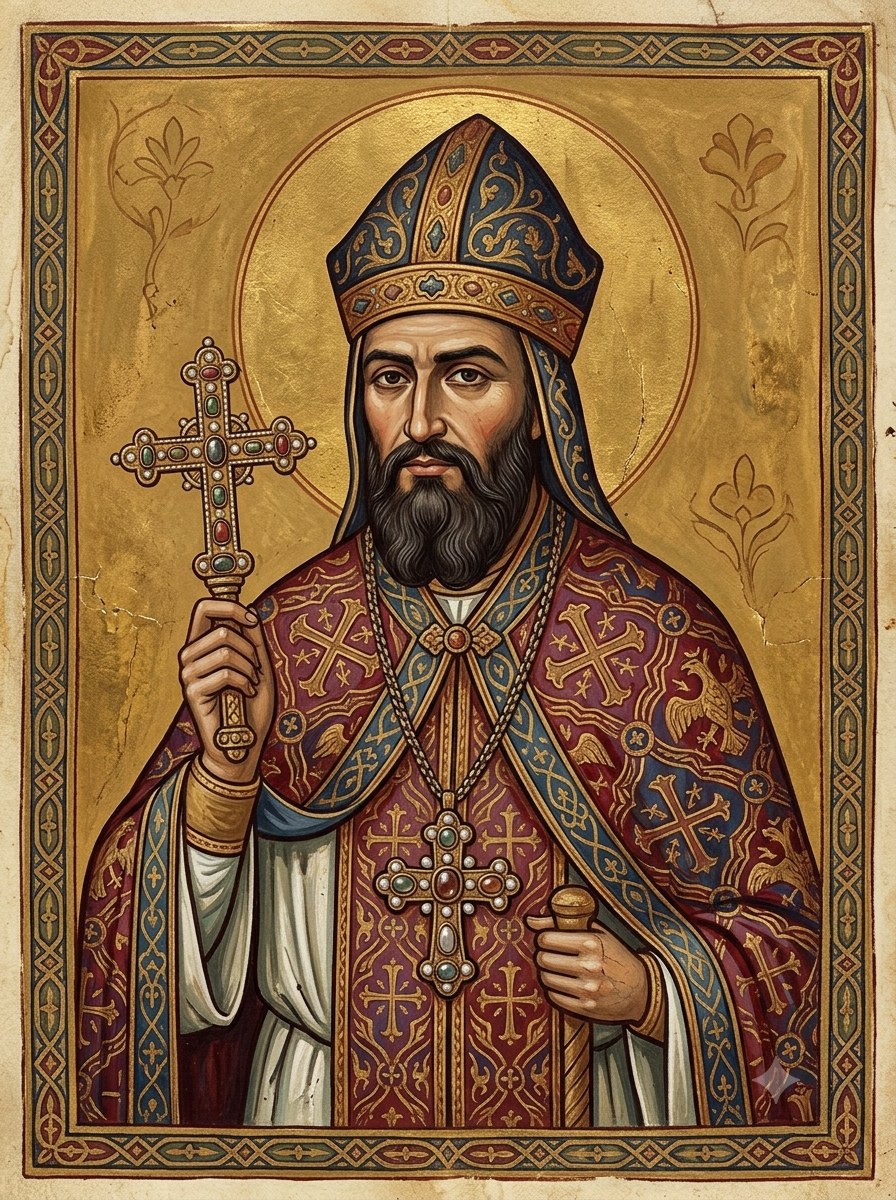
AI-assisted Portrait of Mar Yahballaha III
The Pilgrim Who Was Made a Patriarch
He set out from near Khanbaliq as a young monk named Markos, intending only to pray at the holy places of the West. He never reached Jerusalem. Born around 1245 to an Öngüd Turkic family in the orbit of the great Mongol capital, Markos was a Nestorian Christian—a member of the Church of the East, the far-flung communion that had carried the faith across Asia centuries before. Together with his teacher Rabban Bar Sauma, he joined the long pilgrimage road that ran the length of the Mongol world toward the Mediterranean. War closed the way ahead. Stranded in the Ilkhanate, the Mongol realm that ruled Persia and its many Christians, the two travellers found their lives rerouted entirely.
In 1281 the church elected Markos its Catholicos—Mar Yahballaha III, supreme Patriarch of the Church of the East—and the choice was as much diplomatic as spiritual. His Mongol, East-Asian origin made him uniquely valuable to a flock that lived under Mongol rule: here was a shepherd who could speak to the khans in their own idiom. For thirty-six years he held that office through every reversal fortune could devise—protected and honored while the Ilkhans favored Christians, then imprisoned, tortured, and watching his see at Maragheh sacked once those same rulers turned to Islam. He was not a commander of events. He was their faithful, suffering witness.
Mar Yahballaha III was the ISFJ in the seat of crisis—a dutiful keeper of tradition and a warm shepherd of his people, whose strength was never command but endurance: holding the office, and the flock, through suffering that would have broken a harder man.
The Keeper of the Faith
Si — dominant
Dominant Si is the steward's function—the deep, conservative loyalty to an inherited body of practice that must be preserved exactly as received. For Mar Yahballaha that body was the Church of the East itself: its liturgy, its canons, its episcopal order, the unbroken succession of patriarchs stretching back through Seleucia to the apostles. He was not a theologian who reshaped doctrine or a reformer who remade institutions. He was their guardian. His task, as he understood it, was to keep what had been handed to him whole and to pass it on undiminished.
That guardianship was tested as few patriarchs have ever been tested. When the early Ilkhans were friendly, Si did the quiet work of maintenance—consecrating bishops, holding synods, tending the apparatus of a church spread thin across Persia and Central Asia. When the persecution came, the same function showed its harder face: sheer endurance. Arrested, beaten, and stripped of protection after Ghazan and then Öljaitü embraced Islam, he did not flee his office or renounce it. He absorbed the blows and remained in his seat. The sacking of Maragheh, the loss of revenues, the betrayal by rulers he had served—none of it moved him to abandon the trust. Si does not improvise an escape; it holds the line because the line is what was given.
The Shepherd of a Suffering Flock
Fe — auxiliary
If Si gave Mar Yahballaha his fidelity to the institution, auxiliary Fe gave him his tenderness toward the people inside it. Fe attends to the harmony and wellbeing of the community as a living body; it feels the congregation's fear and grief as its own and orients the self toward their care. Sources remember Yahballaha as gentle, devout, and warm—a pastor far more than a politician. The honor of the patriarchate never hardened into the aloofness of high office. He remained legible as a man who loved his Christians and wished above all to keep them safe.
That pastoral instinct is what made his endurance meaningful rather than merely stubborn. He bore imprisonment and humiliation not to defend an abstraction but to remain present to a frightened flock that had no one else. Even his elevation traced back to Fe's logic: he was chosen partly because he could intercede with the Mongol khans on his people's behalf, and the diplomacy he attempted—leaning on the Christian-friendly favor of Arghun in the good years—was always aimed at shelter for the community, never at personal advancement. When that shelter collapsed, he stayed anyway. A self-protective man would have made his peace with the new order; the Fe shepherd will not leave the sheep.
The Quiet Administrator
Ti — tertiary
Tertiary Ti in an ISFJ is the supporting logic that lets a feeling-led steward actually run things—the capacity to grasp the structure of an institution and keep it ordered. The patriarchate was not only a spiritual office but an administrative one, governing canon law, the consecration of bishops, the discipline of a sprawling church. Yahballaha managed that machinery for three and a half decades. Ti supplied the framework his duty operated within: the rules of succession, the procedures of synod, the legal forms by which the Church of the East ordered its life.
But tertiary Ti is a servant, not a master. It gave him competence, not the cold, detached strategy of a born political operator. He could administer faithfully; he could not out-maneuver the khans who decided to abandon him. When raw power turned against his church, the orderly logic of canon and precedent had no answer, and Yahballaha did not pretend otherwise. His intelligence was real but subordinate—always in the service of keeping the institution intact, never weaponized to seize advantage over the men who held the swords.
At the Mercy of Events
Ne — inferior
Inferior Ne is the ISFJ's weakest ground: the realm of open-ended possibility, shifting alliances, and futures that refuse to stay fixed. The dominant-Si mind craves stability and is unsettled by a world of contingencies it cannot pin down—and Yahballaha's entire career was contingency. He had planned a pilgrimage and was handed a patriarchate. He had counted on Mongol favor and watched it reverse into persecution. The grand hope of his early years—that the Ilkhans might convert and make Christianity the faith of an empire—was an inferior-Ne mirage that dissolved into its opposite.
Faced with that volatility, he did what inferior Ne does under strain: he held tighter to the known. He could not read the political weather and bend with it the way a more intuitive operator might have; the larger geopolitical game ran past him. His response to a future spinning out of control was not reinvention but steadfastness—to keep doing the dutiful, familiar work of the office while the world rearranged itself around him. It was the strength and the limit of the type in a single life: he could not master the chaos, but he could outlast it.
Why ISFJ Over ISTJ
Why not ISTJ?
The ISTJ shares Yahballaha's dominant Si—the same fidelity to tradition, the same dogged endurance under pressure. The difference is the auxiliary. An ISTJ patriarch would have led as an administrator: impersonal, rule-bound, governing the institution for its own sake. Yahballaha led as a pastor. The sources remember not an efficient canon-lawyer but a gentle, grieving shepherd who suffered alongside his people—that warmth toward the community as a body is auxiliary Fe, not the colder Te of the ISTJ. His strength was loyalty to persons, not command of structures.
The decisive evidence is what he did when the office stopped protecting him. A figure driven chiefly by duty to the institution might have negotiated a survivable accommodation with the new Muslim rulers—the structure preserved, the man secured. Yahballaha instead endured imprisonment and torture to remain present to a flock that needed him. That is the ISFJ's defining motivation: not the order itself, but the people the order exists to shelter. He held on because leaving them was unthinkable.
Connected Figures
Further Reading
- Voyager from Xanadu: Rabban Sauma and the First Journey from China to the West — Morris RossabiThe definitive modern account of Bar Sauma and Markos's journey and the world that turned the disciple into a patriarch.
- The Monks of Kublai Khan, Emperor of China — E. A. W. Budge (trans.)The English rendering of the Syriac life of Mar Yahballaha and Bar Sauma — the primary source for everything we know of his patriarchate.
- The Martyred Church: A History of the Church of the East — David WilmshurstPlaces Yahballaha within the long arc of the Church of the East, from its Asian heyday to its decline under Islam.
