 Historical Figure MBTI
#435 · 4-10-26 · The Ilkhanate
Rabban Bar Sauma
Nestorian Monk · The Reverse Marco Polo
c. 1220 — 1294
10 min read
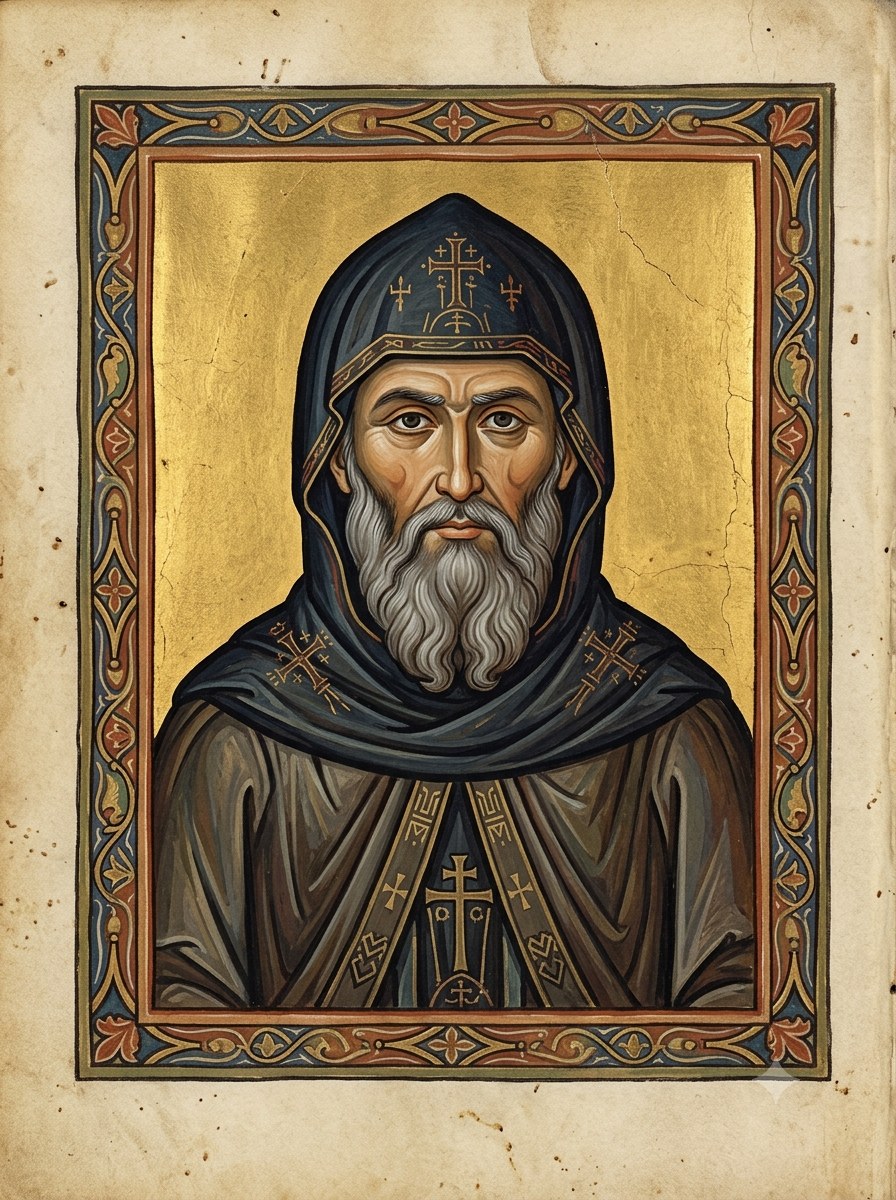
AI-assisted Portrait of Rabban Bar Sauma
The Pilgrim Who Walked the Wrong Way
Everyone knows the Venetian who went east. Almost no one knows the monk who came back the other way. Around 1220, in a Turkic Christian household near Khanbaliq—the Mongol capital that would become Beijing—a boy was born into the Church of the East, the Nestorian communion that had threaded itself along the Silk Road centuries before. He took the religious name Bar Sauma, “son of the fast,” withdrew young into a hermit's cell in the hills outside the city, and intended, by every indication, to spend his entire life there in prayer. Instead he became the first recorded man of East Asia to stand before the kings of Europe—the reverse Marco Polo, carrying a Mongol emperor's letter across the whole width of the known world.
The journey began as devotion, not diplomacy. Sometime around 1275, Bar Sauma and a younger monk named Markos resolved to make the pilgrimage to Jerusalem, and set out west on foot and by caravan across Central Asia. War on the road to the Holy Land turned them back, and they settled instead in the Ilkhanate, the Mongol realm in Persia. There the improbable became providential: Markos, his disciple, was elected Patriarch of the entire Church of the East as Mar Yahballaha III, and Bar Sauma—older, learned, fluent in the Mongol world—was chosen by the Ilkhan Arghun for a mission no one else could perform. Arghun wanted a Christian alliance against the Mamluks of Egypt, and so in 1287 he sent the monk to Constantinople, Rome, Paris, and the courts of the Western kings. Bar Sauma is the INFJ cast as envoy: a contemplative who became a bridge.
He came home with no treaty. The grand coalition he was sent to build never materialized; the Crusader states fell within a few years; the Mongol–Christian alliance dissolved into wishful correspondence. What he came home with instead was an account—the only medieval description of Europe written by an East Asian Christian, seeing its cathedrals, relics, and rituals through wholly Eastern eyes. The mission failed. The witness is priceless.
Bar Sauma was the INFJ as pilgrim and envoy at once—an inward, vision-driven contemplative (Ni) who reached across the widest gulf in Christendom by the warmth of his presence (Fe), and left behind not a treaty but a testimony.
The Sense of Sacred Purpose
Ni — dominant
Dominant Ni is the conviction that events mean something—that beneath the surface of a life there runs a single hidden thread, and that one's task is to follow it. Bar Sauma's whole biography reads as the steady unspooling of that thread. He did not drift into the hermitage; he chose it young, against his family's wishes, because the inner pull toward contemplation was clearer to him than any worldly path. When he and Markos set out for Jerusalem, the language of his account is the language of a man certain he is being led. The pilgrimage was not a trip; it was the visible form of an interior summons.
The mark of Ni is how easily it absorbs disruption into design. The road to Jerusalem closed; a lesser certainty would have collapsed into disappointment. Bar Sauma read the obstacle as redirection. The years stranded in Persia, Markos's astonishing election as Patriarch, Arghun's sudden need for an envoy who knew both the Mongol mind and the Christian faith—to a Ni dominant, this is not a chain of accidents but a pattern resolving into view. He took up the ambassadorship the way he had taken up the hermitage: as the next thing the unseen plan required of him. The contemplative and the diplomat were never two men. The same inward conviction that sent him into a cell sent him to the courts of Europe.
And it sustained him through a mission whose worldly logic kept failing. Bar Sauma crossed seas and mountains to assemble a coalition that never came, yet his narrative betrays no bitterness—because for the Ni dominant the meaning of the journey was never reducible to whether the alliance signed. He had been somewhere holy, seen what no one of his world had seen, given communion to a pope and received it from kings. The treaty was the pretext. The pilgrimage was the point, and the pilgrimage had not failed.
The Bridge Across Christendom
Fe — auxiliary
If Ni gave Bar Sauma his sense of mission, auxiliary Fe gave him the gift that made the mission possible: he could reach people. The diplomatic problem he faced was not merely linguistic but civilizational. He was a Nestorian—heir to a church the Latin West had condemned as heretical eight centuries earlier—arriving from a Mongol empire that Europe regarded with terror and confusion. By every structural measure he should have been received as an alien at best, an enemy at worst. Instead he charmed almost everyone he met. Fe is the function that attends to the emotional weather of a room and instinctively builds connection across it, and Bar Sauma deployed it on the highest stages in the world.
The encounters in his account read as a sustained act of bridge-building. He met the Byzantine emperor in Constantinople and toured the Hagia Sophia with evident wonder. In Rome, during a papal vacancy, he sat with the cardinals and discussed theology—a delicate exchange that could easily have curdled into a heresy interrogation—and emerged respected rather than condemned, the Fe instinct steering him toward common devotion and away from doctrinal collision. In France he was welcomed by King Philip IV; in Gascony he met King Edward I of England, who was so moved that he received communion from the monk's own hand. When a new pope, Nicholas IV, was finally elected, Bar Sauma gave him communion too. A condemned Easterner administering the sacrament to a Roman pontiff and an English king: that is Fe dissolving a thousand-year boundary by sheer warmth of presence.
The structural facts said heretic, foreigner, agent of the Mongol terror. Bar Sauma met emperors, cardinals, and kings as none of those things—and they took the bread from his hand.
The Observer Who Wrote It Down
Ti — tertiary
Tertiary Ti in an INFJ is the quiet analytical engine underneath the warmth—the part that wants to understand how a thing actually works, to sort and classify and get the distinctions right. In Bar Sauma it surfaces most clearly in the document he left behind. He did not merely feel his way through Europe; he recorded it, with a curiosity that is precise as well as devout. He noted the relics he was shown and itemized them, described the governance of the Italian communes, marked how the cardinals reasoned and where their theology diverged from his own. The account is the work of a mind that observes carefully and files what it sees.
The Rome disputation is the tertiary function's finest hour. Pressed by the cardinals on the procession of the Holy Spirit—the very question that had split the churches—Bar Sauma answered with a composure that was theological as well as diplomatic. He could articulate the logic of his own communion and hold the distinction under pressure without surrendering it and without rupturing the room. That is Ti serving Fe: enough internal clarity about doctrine to stand his ground, harnessed by the overriding instinct to keep the conversation whole.
Tertiary functions, though, are real but not commanding, and Bar Sauma's analysis never hardens into the cool detachment of a born systematizer. His curiosity is always finally in service of wonder. He examines the cathedral, but the examination ends in awe; he weighs the doctrine, but the weighing ends in fellowship. The intellect is there, and sharp—but it works for the devotion, not the other way around.
The Hermit on the Open Road
Se — inferior
Inferior Se is the INFJ's most foreign country—the sensory, physical, here-and-now world that the inward type holds at arm's length. The astonishing thing about Bar Sauma is that a man wired for the cell spent the back half of his life almost entirely in it. He crossed the deserts and mountain passes of Central Asia, endured the pitching deck of a Mediterranean voyage, sat through the noise and spectacle of half a dozen royal courts. For a contemplative whose native habitat was a silent hermitage, the sheer sensory assault of that itinerary was a lifelong stretch into the inferior function.
And his account registers it with an outsider's vividness. The hardened traveler stops noticing; Bar Sauma never stopped. The relics still dazzle him, the cathedrals still overwhelm, the rituals still strike with the force of the first time. There is a freshness to his descriptions—a wide-eyed attention to gold and stone and ceremony—that comes precisely because the physical world was never where he lived. Inferior Se, when it engages, often engages as wonder rather than mastery, and his Europe shimmers on the page for exactly that reason.
The strain shows too. He longed for home, for the East, for the settled life of prayer the mission had taken from him. He never returned to China; he ended his days back in the Ilkhanate, near his old disciple, the constant traveling at last behind him. The mission had demanded he live for years in his weakest mode—in the body, on the move, amid the world's clamor—and he had risen to it. But the rising cost him, and the homesickness that runs beneath his narrative is the inferior function's honest ache.
Why INFJ Over INTP
Why not INTP?
The case for INTP rests on the obvious: Bar Sauma is the rare medieval observer who wrote a careful, classifying account of a foreign world, and that documentary impulse can look like detached Ti analysis. But the INTP meets the world as a cool skeptic, holding back to examine; Bar Sauma met it as a warm devotee, leaning in to connect. His narrative brims with reverence and emotional immediacy—awe at the relics, fellowship with the cardinals, tenderness toward the kings—not the dispassionate scrutiny of an INTP cataloguing curiosities. He was a bridge-builder before he was an analyst, and the analysis served the bond, not the other way around.
The decisive split is what drove the man. An INTP travels to understand; Bar Sauma traveled to believe, and to be led. The journey began as a pilgrimage and stayed one even when it became an embassy—powered by inner conviction (Ni) and conducted through human warmth (Fe), with the sharp tertiary intellect (Ti) always in the service of devotion. Strip out the faith and the relational warmth and you do not have Bar Sauma at all; you have a tourist with good notes. What he actually was, was a contemplative who crossed the world for the love of God and charmed its kings on the way. That is the INFJ—the visionary bridge—not the detached INTP observer.
Connected Figures
Further Reading
- Voyager from Xanadu: Rabban Sauma and the First Journey from China to the West — Morris RossabiThe definitive modern biography in English — sets Bar Sauma's embassy in the full sweep of Mongol-era Eurasian diplomacy.
- The Monks of Kublai Khan, Emperor of China — E. A. Wallis Budge (trans.)The classic translation of the Syriac account — the primary source for the whole journey, in Bar Sauma's and Mar Yahballaha's own record.
- The Martyred Church: A History of the Church of the East — David WilmshurstThe essential history of the Nestorian communion Bar Sauma served — context for how a church condemned in the West reached all the way to China.
