 Historical Figure MBTI
#526 · 4-22-26 · The Wars of the Roses
Margaret Beaufort
Countess of Richmond · The Iron Matriarch of the Tudor Triumph
1443 — 1509
7 min read
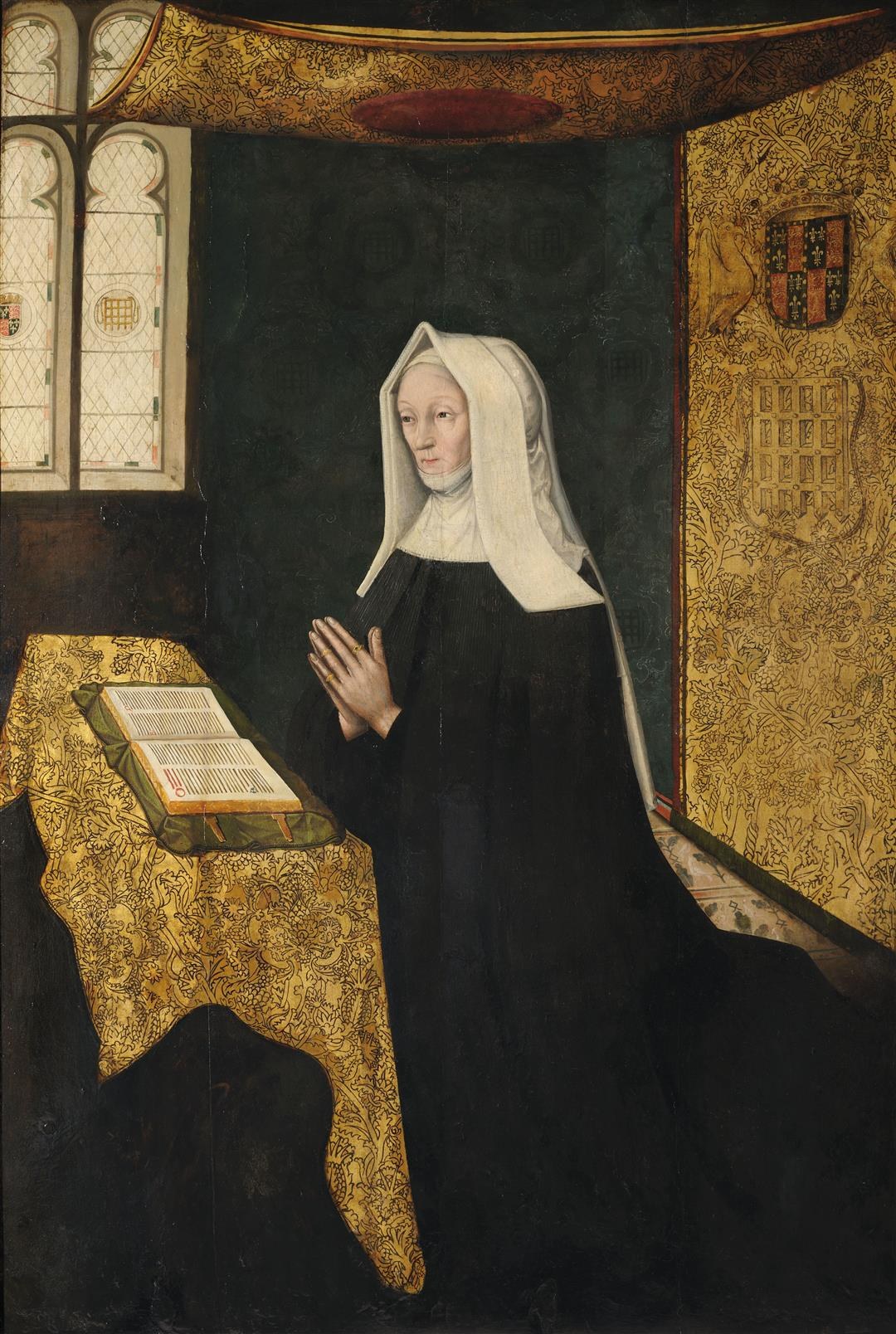
AI-assisted Portrait of Margaret Beaufort
The Woman Who Willed a Dynasty
She signed herself “Margaret R.” — the regal flourish of a woman who never sat on a throne but produced the man who did. Margaret Beaufort, Countess of Richmond, was the true architect of the Tudor triumph: a tiny, ferociously devout, far-sighted operator who spent the better part of forty years advancing a claim that everyone else thought hopeless, and lived to see it harden into a dynasty. Descended from John of Gaunt through the Beauforts, she carried the Lancastrian blood-right in her veins and transmitted it, by sheer will and patience, into her only child.
Her life began with a brutality that shaped everything after. Married at twelve, she bore Henry at thirteen — a delivery so violent it nearly killed her and left her unable to bear another child. Widowed almost at once, she was a mother before she was fully grown, and she fixed her entire being on that one son's survival and elevation. Through the long Yorkist decades she conspired, married strategically, and waited, never once losing sight of the distant prize. When Henry won at Bosworth in 1485, she became “My Lady the King's Mother,” one of the most powerful women in England.
That is the INTJ signature in its rarest, coldest form: a single fixed vision — my son will be king — held with unwavering patience across decades of danger, then executed through plotting, marriage-brokering, and the slow machinery of a coup. Her piety was real, but it was harnessed to a design.
The Forty-Year Vision
Ni — dominant
Dominant Ni is the capacity to lock onto a single distant outcome and bend every intervening year toward it. Margaret possessed it to an almost frightening degree. When her son's claim was no more than a thin Beaufort thread — a line Parliament had once barred from the throne, attached to a boy in exile across the Channel — she alone seems to have believed, with absolute conviction, that he would one day be king. That belief was not hope. It was a fixed inner certainty about where events were heading, and she organized her whole life as if the conclusion were already written.
The proof is in the patience. For decades she did not act rashly; she positioned. She married Lord Thomas Stanley not for affection but for access to the Yorkist court and protection for her plans. She conspired with Elizabeth Woodville to betroth Henry to Elizabeth of York — a stroke that would fuse the warring houses and make her son the candidate of reconciliation rather than mere revenge. She was deeply implicated in Buckingham's rebellion of 1483, and when it collapsed and she was placed under the loose custody of her own husband, she did not despair. She simply kept working the long game, certain the moment would come. At Bosworth, it did.
The Machinery of a Coup
Te — auxiliary
If Ni supplied the vision, auxiliary Te supplied the means to build it in the world. Margaret was an executor: a manager of secret correspondence, marriage negotiations, covert finance, and estates. The plot that put Henry on the throne was not a flash of inspiration but an operation — messengers moving between her household and the exiled court, money raised, allies coordinated, the rebellion against Richard III organized from the inside. She ran it with the discipline of a chancellor.
After Bosworth, the same Te turned to administration and construction. As “My Lady the King's Mother” she governed her vast estates with rigor, kept meticulous accounts, and enforced order on her tenants and household. Then she poured that organizing power into something permanent: learning. She refounded and endowed Christ's College, Cambridge, and set in motion the foundation of St John's College there; she patronized the printer Caxton and underwrote translations of devotional works. These were not idle charities but institutions — structures designed to outlast her, built with the same executive instinct that had built a dynasty.
The Vows She Chose
Fi — tertiary
Tertiary Fi in an INTJ is a private, deeply held inner code — values that belong to the self rather than to the crowd, and that the person guards fiercely. In Margaret it expressed itself as an intense, intensely personal devotion. Her piety was not display; she rose before dawn for hours of prayer, wore a hair shirt, kept rigorous fasts, and famously took a vow of chastity while still married — with her husband's consent — binding herself by a private conviction no one had asked of her.
That same inner code anchored her loyalty. Her love for her son was total and lifelong, the fixed emotional center around which the cold strategy orbited; the whole forty-year campaign was, at bottom, a mother's devotion given the form of a political project. Fi here is not warmth on display — she could be austere and unbending — but a privately governed sense of what was sacred and what was owed, observed with the same exacting seriousness she brought to her accounts.
The Body That Paid the Price
Se — inferior
Inferior Se is the INTJ's fraught relationship with the physical, immediate, bodily world — the realm the visionary mind would rather not be ruled by. Margaret's life was marked by the body asserting itself against her plans at the worst moments. The delivery of Henry at thirteen, in a frame too young to bear it, nearly killed her and ended her fertility for good — the single physical fact that made him her only instrument and raised the stakes of his survival to absolute. Her later austerities — the hair shirt, the fasts, the kneeling — read in part as a mind disciplining a body it distrusted.
And it was the body that finally caught up with her. She had held her vision intact across exile, rebellion, custody, and her son's reign; she lived just long enough to see her grandson's son, Henry VIII, crowned in 1509 — the dynasty secured into a third generation. Then, days later, she died, as if the design having been completed, the worn-out frame that carried it could finally let go. Inferior Se gets the last word: the indomitable will outlasted everything except the flesh.
Why INTJ Over INFJ
Why not INFJ?
Her famous piety tempts an INFJ reading — the saintly, idealistic mystic. But the INFJ leads with vision in service of people and meaning, recoiling from cold instrumentality. Margaret was a builder, plotter, and operator: she brokered a marriage to fuse two houses, helped organize a rebellion, toppled a king, and ran estates and college foundations with an accountant's rigor. Her devotion was genuine, but it was harnessed to a dynastic design rather than the design serving the devotion — that subordination of feeling to strategy is Te over Fe, INTJ over INFJ.
The distinction is the direction of the harness. An INFJ's religion would be the point, with worldly action reluctantly downstream of it; Margaret's religion was fuel and discipline for a far-sighted plan that always knew exactly what it wanted in the material world — a crown for her son. She did not pray and hope events would align with the good; she prayed, and plotted, and made them align. That is the strategist's soul, not the mystic's.
Connected Figures
Further Reading
- The King's Mother: Lady Margaret Beaufort, Countess of Richmond and Derby — Michael Jones & Malcolm UnderwoodThe authoritative scholarly biography — definitive on her estates, finances, and the machinery of her son's rise.
- Margaret Beaufort: Mother of the Tudor Dynasty — Elizabeth NortonA readable modern life that foregrounds her piety, her marriages, and her long campaign for the throne.
- Winter King: Henry VII and the Dawn of Tudor England — Thomas PennIlluminates the reign Margaret engineered — the suspicious, calculating court her son built once the crown was won.
