 Historical Figure MBTI
#525 · 4-22-26 · The Wars of the Roses
Henry VII
King of England · The Tudor Founder Who Ended the Wars
1457 — 1509
11 min read
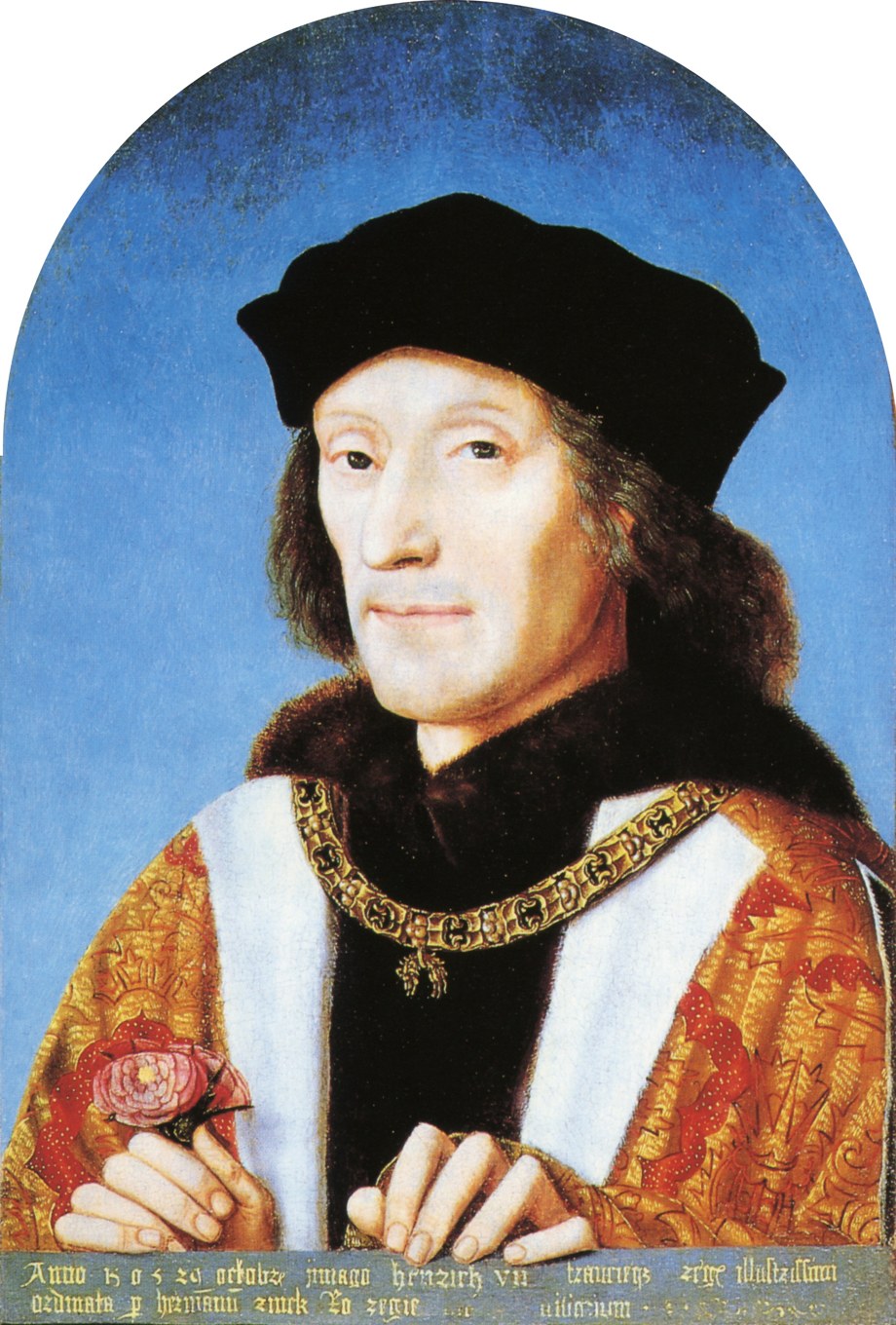
AI-assisted Portrait of Henry VII
The King Who Won a Crown He Was Never Born To
No founder of an English dynasty had a thinner claim to the throne than the man who took it at Bosworth Field in August 1485. Henry Tudor's royal blood ran through a single tributary — his mother, Margaret Beaufort, descended from John of Gaunt by way of a line that had been legitimized only on the express condition that it never inherit the crown. His father, Edmund Tudor, was the son of Owen Tudor, a Welsh squire who had married a widowed queen. By the strict arithmetic of inheritance, Henry should have been a footnote — a half-Welsh exile with a barred descent and no army of his own. Instead he ended the Wars of the Roses, married the Yorkist heiress, and built a state so solvent and so feared that his son inherited a throne no rival dared challenge.
He did it not with charisma or martial glory but with patience, suspicion, and an accountant's grip on the machinery of power. Raised in danger, spirited into fourteen years of exile in Brittany and France, he learned early that survival was a long game played by men who saw further than their enemies. When growing revulsion at Richard III — whose nephews had vanished in the Tower — finally cracked the Yorkist establishment, Henry was the last Lancastrian hope standing, and his mother had spent years quietly assembling the alliances that would carry him to the throne. The Stanleys' decisive betrayal of Richard mid-battle sealed it. Henry was crowned on the field, his title resting less on blood than on the simple fact that he had won.
What followed was a reign of cold, far-sighted statecraft. He fused the warring roses — red Lancaster and white York — into the single Tudor rose by marrying Elizabeth of York, and then spent twenty-four years ensuring no one could ever take from his line what he had taken from Richard's.
Henry VII was the INTJ founder in his purest form: a strategist who saw the whole board decades ahead and executed his vision with bonds, ledgers, and patience — building a dynasty and a new kind of monarchy from a claim that should have come to nothing.
The Man Who Played the Long Game
Ni — dominant
Dominant Ni is the capacity to fix on a single distant outcome and bend every present decision toward it. Henry's outcome was always the same: a secure, permanent Tudor dynasty, immune to the dynastic chaos that had consumed England for thirty years. Every move he made was a move in that one long game. Where the Wars of the Roses had been driven by impulsive kings and overmighty subjects lurching from battle to battle, Henry governed as though he could already see the next two reigns. He was not solving the problem in front of him; he was solving the structural problem that had created all the problems — a crown too weak, too poor, and too easily contested.
That vision shaped his strategy of marriages. He wed Elizabeth of York not for affection but to absorb the Yorkist claim into his own bloodline, so that future rebels would have no rival house to rally behind. He betrothed his elder son, Prince Arthur, to Catherine of Aragon, locking England into alliance with the rising power of Spain. He married his daughter Margaret into Scotland — a match that, four generations on, would deliver the English crown to the Scottish Stuarts, exactly the kind of decades-deep consequence an Ni mind plays for. Henry did not live to see most of these payoffs. He arranged them anyway, trusting a future he had calculated but would never witness.
The pretenders tested this patience and found it bottomless. When Lambert Simnel was paraded as a Yorkist prince, Henry crushed the rising and then, with chilling shrewdness, pardoned the boy and put him to work in the royal kitchens — turning a threat into a living advertisement of his own contempt. When Perkin Warbeck haunted his reign for years claiming to be one of the vanished princes, Henry did not panic; he waited, isolated the impostor diplomatically, and let the threat collapse before disposing of it. The Ni dominant does not react. It foresees, prepares, and outlasts.
The Accountant on the Throne
Te — auxiliary
If Ni supplied the vision, auxiliary Te built the machinery to realize it. Henry understood what his predecessors had not: that a king is only as powerful as he is solvent, and that money quietly accumulated is a surer instrument of control than armies periodically raised. He turned the English monarchy into something close to a financial enterprise, auditing accounts himself, initialing each page of the royal ledgers in his own hand, and pursuing every debt owed to the crown with relentless, systematic care. He avoided foreign wars not from timidity but from arithmetic — war was the most reliable way known to bankrupt a kingdom, and a bankrupt king was a vulnerable one.
His method for taming the nobility was pure Te: not the sword but the contract. Through bonds and recognizances — legal instruments by which a lord pledged enormous sums of money against his future good behavior — Henry placed the great families on a leash of debt. A nobleman who stepped out of line did not face a battlefield; he faced ruin. The overmighty subjects who had made and unmade kings throughout the Wars of the Roses found themselves financially mortgaged to a crown that kept meticulous records and forgave nothing. It was a bureaucratic conquest, won in the muniment room rather than the field.
By the end of the reign the treasury was overflowing, and the machinery of extraction had grown so efficient and so resented that his tax-collectors Empson and Dudley became the most hated men in England — a hatred so acute that Henry VIII would have both executed early in his own reign as a popular gesture. The Te that filled the coffers also hardened into something cold and grasping. But it worked. Henry handed his son a throne richer and more centralized than any English king had held in living memory.
The Private Grief Behind the Mask
Fi — tertiary
Tertiary Fi in an INTJ is a guarded inner core of private loyalty — a feeling life kept almost entirely out of view, surfacing only in the few relationships the strategist permits himself. For all his calculation, Henry was not without it. His marriage to Elizabeth of York began as a dynastic transaction, but the partnership deepened into something that contemporaries described as genuine affection. She was the steadying presence in a court built on suspicion, and when she died in 1503 — after the loss of Prince Arthur the year before — the famously controlled king reportedly shut himself away in grief, and his health and temper never fully recovered.
Those two deaths, falling within a year of each other, exposed the cost of a life ruled by foresight rather than feeling. The death of Arthur was a strategic catastrophe — it threw the careful Spanish alliance into doubt and left the dynasty resting on a single surviving son. But it was also a father's loss, and the chroniclers recorded that the king and queen comforted each other privately before resuming their public composure. Tertiary Fi keeps its grief behind closed doors; it does not perform sorrow for an audience, which is precisely why its rare appearances feel so heavy.
In his last years Henry grew more suspicious, more solitary, and more grasping, the inner life narrowing as the people who anchored it fell away. The Fi that had attached itself to his wife and his elder son had nowhere left to go, and what remained was the strategist without the few warm relationships that had softened him — a lonely man counting his money and his enemies.
The Joyless King
Se — inferior
Inferior Se is the INTJ's blind spot toward the immediate, sensory, present world — toward pleasure, display, spontaneity, and the ordinary enjoyment of being alive. In Henry it manifested as a notorious want of warmth and a deepening miserliness that shaded, by the end, into something joyless. He distrusted the splendor that other kings used to dazzle their subjects; he could spend lavishly on a strategic occasion when display served a purpose, but the open-handed generosity and easy magnificence that the age expected of a monarch were alien to him. Where his son Henry VIII would later play the radiant Renaissance prince, the father hoarded.
The suspicion grew heavier with age. A man whose dominant function lives in the future is rarely at ease in the present, and Henry was constitutionally watchful — alert to conspiracy, slow to trust, quick to see the pretender behind every disturbance. The pretenders Simnel and Warbeck had taught him that the present could always conceal a threat rising against him, and he never lost the wariness those years instilled. He surrounded himself not with companions but with informants and account-books.
By his death in 1509 the picture was of a grim, isolated, prematurely aged king, worn down by grief and grasping after the security he could never quite feel he had achieved. The strategist had won everything he set out to win — and could not enjoy any of it. That is inferior Se in its bleakest form: a life lived so entirely in service of a future outcome that the present was never permitted to be pleasant.
Why INTJ Over ISTJ or ENTJ
Why not ISTJ?
The ISTJ is a careful custodian of an inherited order — a king who would have guarded the realm he was handed and administered it by precedent and duty. Henry was something rarer: not a caretaker but an architect. He did not inherit a stable monarchy and preserve it; he invented a new kind of monarchy and a dynasty out of almost nothing, reorganizing how the crown controlled money and the nobility. That is the Ni-Te designer, not the Si-Te steward — vision imposing a structure that did not exist before, rather than tradition maintaining one that did.
Why not ENTJ?
The ENTJ commands from the front — an outward leader of men who wins loyalty through visible force of personality. Henry led from behind the ledger. He worked through patience, quiet suspicion, legal instruments, and calculation rather than charisma, and by every account he was reserved, watchful, and cold rather than commanding. His power flowed from foresight and control of the machinery, not from the room. That is the introverted strategist, not the extraverted general.
The distinction that settles it is direction of energy. Henry's great instrument was not his presence but his patience — the willingness to wait out a pretender, to leash a duke with a bond rather than a battle, to arrange marriages whose payoffs lay generations away. He controlled England from behind the account-book, in private, by seeing further than the men around him and quietly building the structures that would outlast them all. That is the inward-turned, future-fixed architect — the INTJ founder who designs a world rather than commanding or conserving one.
Connected Figures
Further Reading
- Winter King: Henry VII and the Dawn of Tudor England — Thomas PennThe most vivid modern portrait — captures the suspicion, the financial machinery, and the cold atmosphere of the late reign.
- Henry VII — S. B. ChrimesThe standard scholarly biography; authoritative on the administrative and constitutional foundations of the Tudor state.
- Henry VII — Sean CunninghamA clear, well-grounded account of the reign, strong on the security threats and the management of the nobility.
- The Tudor Revolution in Government — G. R. EltonThe classic study of how the early Tudor state was reorganized — essential context for what Henry VII began and his successors completed.
