 Historical Figure MBTI
#369 · 4-3-26 · Tudor England
Henry VIII
King of England · The Tudor Colossus · He Who Broke with Rome
1491 — 1547
8 min read
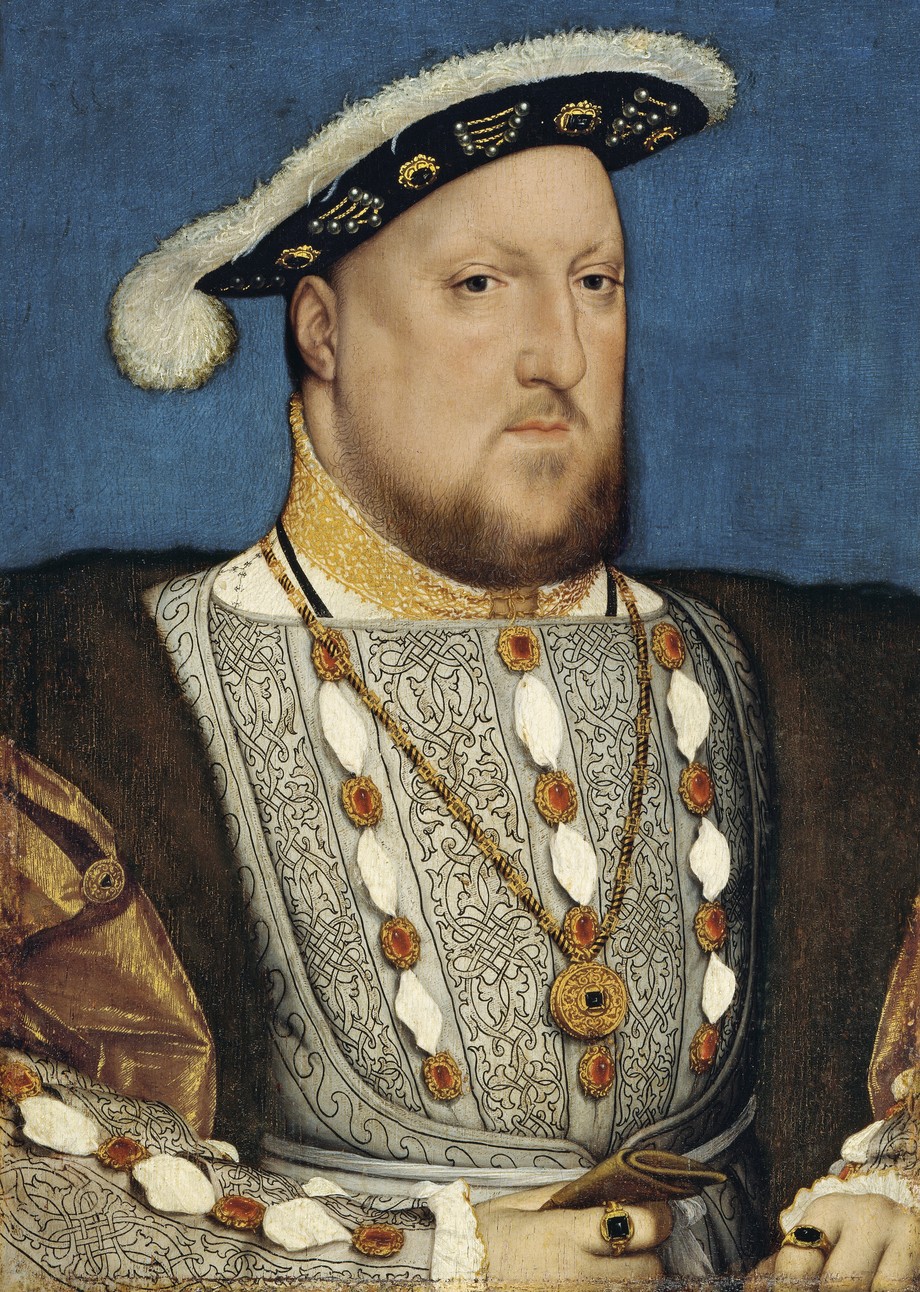
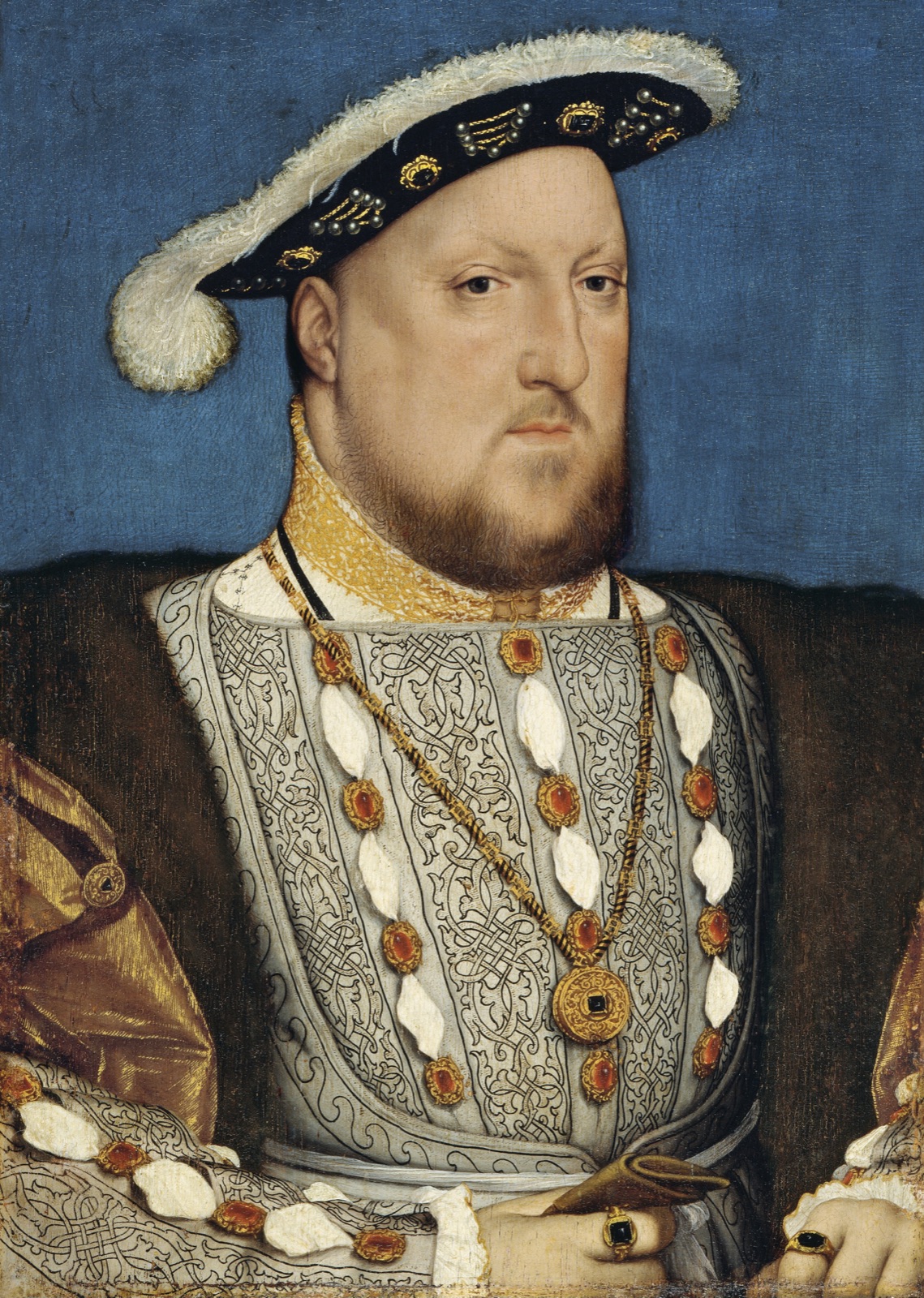
Portrait of Henry VIII
The Golden Prince Who Became the Monster
In 1509 England crowned a king who looked like a god. He was seventeen, six feet two in an age of small men, broad-shouldered, an athlete who could tire eight horses in a day’s hunting and unhorse any man in the lists. He spoke Latin, French, and Spanish, played the lute and virginals, composed songs still sung today, and read theology for pleasure. Erasmus praised him; Thomas More served him and believed, for a while, that he had found a philosopher on the throne. No English king ever began with so much promise.
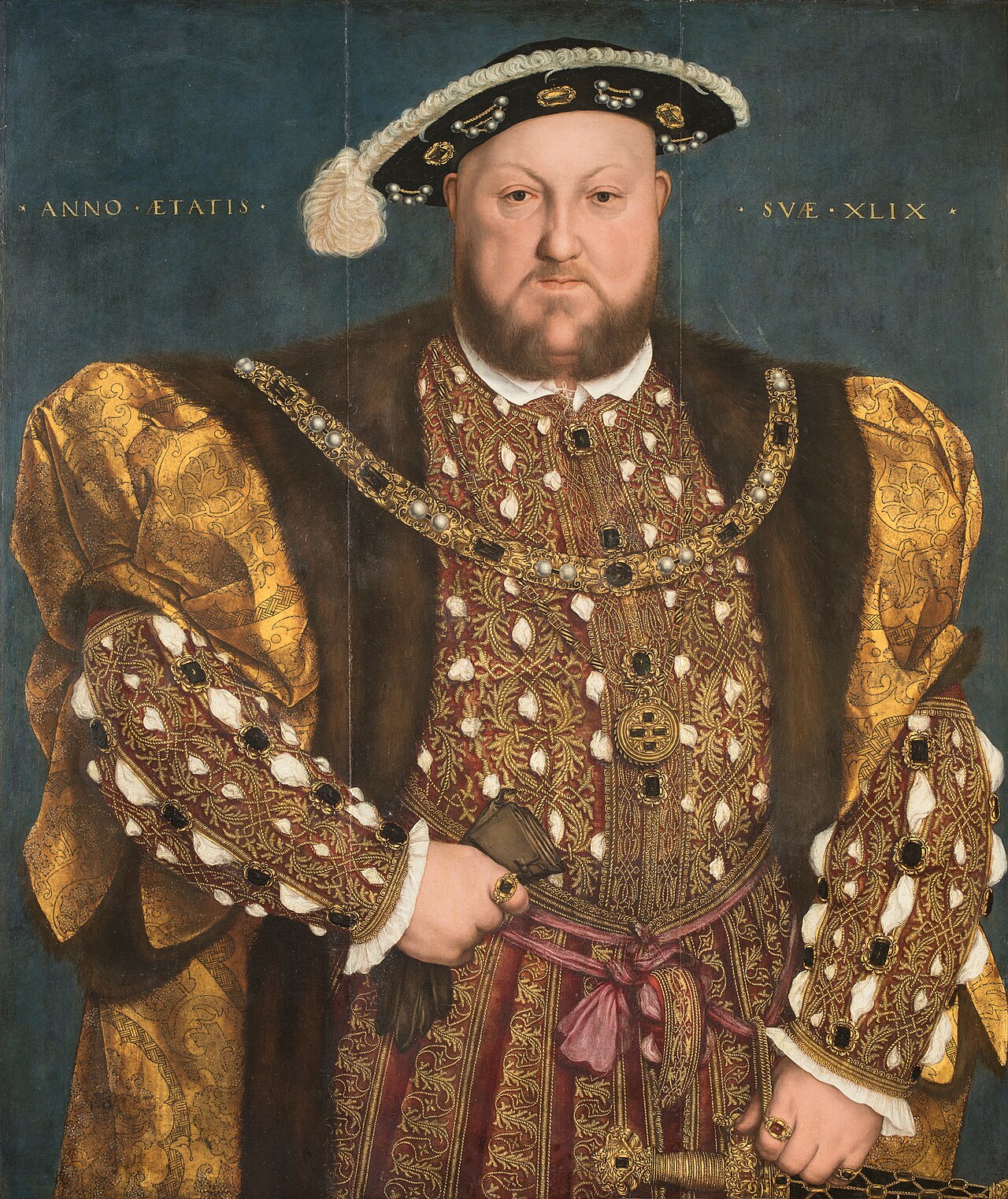
Four decades later the ideal had curdled. The athlete had swollen to thirty stone, hauled up staircases by machinery, his leg split by a suppurating ulcer. He had killed his closest friend, More, for declining to swear an oath. He had killed the minister who served him most brilliantly, Thomas Cromwell, on a manufactured charge—then mourned him within months. He had sent two wives, Anne Boleyn and Catherine Howard, to the block. He had torn England from a thousand years of Roman Christianity, declared himself Supreme Head of the Church, and dissolved the monasteries—and he had done it, at bottom, to be free to marry a woman he wanted and to get the son he believed God owed him.
The thread from the golden prince to the bloated tyrant is not strategy and not madness. It is appetite armored in righteousness. Henry lived for sensation—sport, women, feasting, display—and he possessed a will that genuinely bent reality to suit that appetite, while requiring, always, that he believe his wanting was also his conscience. That combination is the ESTP at its most dangerous: dominant extraverted sensing that lives wholly in the gratification of the moment; auxiliary thinking that can marshal scripture, law, and theology into an argument for whatever he has already decided; tertiary feeling that craves adoration and produces charm; and inferior intuition that surfaces not as foresight but as paranoia. He did not plan the Reformation. He wanted, and the world rearranged itself, and he called the wreckage providence.
Henry VIII was the ESTP with a kingdom for a playground and a scaffold for an argument—a dominant Se appetite for pleasure and dominance, lawyered by auxiliary Ti into the conviction that whatever he craved was also what was right.
The King Who Lived in His Body
Se — dominant
Dominant extraverted sensing lives in the immediate, physical, gratifying now—it wants to act, to win, to feel the world directly and dominate the space it occupies. No king who sat the English throne embodied it more completely. The young Henry was an athlete of legendary appetite: he hunted from dawn until he had ridden his horses into exhaustion, jousted with a recklessness that twice nearly killed him, wrestled, hawked, drew the longbow with the best of his archers. He filled his court with music and feasting and built palaces as stages for spectacle. When he met Francis I of France in 1520 he staged the Field of the Cloth of Gold—three weeks of jousts, banquets, and golden tents so extravagant it nearly bankrupted both kingdoms and settled nothing: a pure Se monument to the pleasure of being seen as magnificent.
The same function drove his pursuit of women and the obsessive hunger that organized his whole reign. Henry did not love in the abstract; he wanted, bodily and immediately, and what he wanted he persuaded himself he must have. The years-long campaign to discard Catherine of Aragon for Anne Boleyn was at root a Se man refusing to be denied a present desire. His love-letters to Anne, written by a king who hated writing, are frank with physical longing; the chase consumed six years and reordered Christendom. The instant he tired of the wife he had upended a continent to obtain, he wanted the next.
Dominant Se does not tolerate frustration; it strikes. Henry’s violence was rarely the cold execution of a plan—it was reactive, immediate, the lashing-out of a man who experienced obstacles as affronts to be removed from the room. When his body began to fail him—the jousting accident of 1536 that left his leg permanently ulcerated, the constant agony—the Se king who had defined himself through physical mastery became something far more dangerous: an animal in pain, still sovereign, with the whole machinery of the state for a fist.
The Theologian Who Lawyered His Appetites
Ti — auxiliary
It would be easy to dismiss Henry as a brute, but the dismissal misses the disquieting truth: he was a genuinely learned man, and the learning was not ornamental. Auxiliary introverted thinking gave the Se king a real capacity for argument and logical construction—and what makes Henry frightening rather than merely greedy is that he turned that capacity entirely to the service of his appetites. In 1521 he wrote the Assertio Septem Sacramentorum, a defense of Catholic doctrine against Luther so competent that the Pope rewarded him with the title Fidei Defensor—Defender of the Faith, a title English monarchs carry to this day, granted for a book attacking the very schism Henry would later lead. The Ti was real.
But Ti in the service of dominant Se does not pursue truth—it builds the case for what the body has already decided. The whole apparatus of the “King’s Great Matter” was motivated reasoning on a civilizational scale. Henry constructed an argument that his marriage to Catherine—his late brother’s widow—had been incestuous and accursed from the start, citing Leviticus, canvassing the universities of Europe, and persuading himself with apparent sincerity that the lack of a surviving son was God’s punishment for a sin he had been too blind to see. He genuinely believed his own brief. That is the signature of auxiliary Ti yoked to appetite: not cynicism, but a mind that reasons with real rigor toward conclusions its desires have fixed in advance.
The break with Rome was the same instrument scaled to the size of a kingdom. With Cromwell drafting the statutes and Thomas Cranmer supplying the ecclesiology, Henry assembled a legal-theological case that England owed no obedience to any foreign bishop, that the king was Supreme Head of the Church under God, and that the whole edifice of papal authority was a usurpation he was merely correcting. It was constructed, lawyered, footnoted—and it existed so that one man could marry the woman he wanted and silence anyone who said the wanting was the point.
The Charm That Demanded to Be Loved
Fe — tertiary
Tertiary extraverted feeling gave Henry the one quality that turned a powerful man into a magnetic one: charm, and the bottomless need to be adored that produces it. The young king was affable, expansive, easy with his subjects—he danced, jested, threw his arm around courtiers, dazzled ambassadors, and made everyone in his presence feel the warmth of the sun briefly turned on them. He understood spectacle as a bond between sovereign and people, and for much of his reign the love England bore him was something he actively cultivated and emotionally required.
But tertiary Fe is need rather than nourishment—it craves approval far more than it extends genuine fellow-feeling, and it experiences the withdrawal of devotion as betrayal. Henry could lavish affection on a wife, a friend, a minister, and mean it in the moment—and then, the instant they ceased to gratify him or were made to seem disloyal, the warmth flipped to cold annihilation. Anne Boleyn, pursued for six years and crowned in defiance of Christendom, was charged with adultery and incest on flimsy evidence and beheaded within three years of her wedding. Cromwell, indispensable one spring, was attainted without trial the next and later openly missed. The same Fe that made him lovable made him incapable of the steady loyalty Fe is sentimentally imagined to provide.
Henry needed his cruelties ratified—needed Parliament to bless them, theologians to justify them, the realm to keep loving him through them. When More, the friend he had genuinely cherished, would not even speak the words of approval Henry craved—would not swear, would not bless the new marriage—the wound was unbearable, and Henry destroyed him for the silence. Tertiary Fe wants love so badly that the refusal of it reads as treason.
The Future He Could Only Fear
Ni — inferior
Inferior introverted intuition is the ESTP’s shadow—the function of long-range foresight and reading the hidden pattern beneath events. In a healthy ESTP it surfaces occasionally as strategic insight; under pressure and in a man as unrestrained as Henry, it curdles into suspicion, dread, and a paranoid certainty about plots he cannot actually perceive. Henry had almost no genuine foresight. He acted on the impulse of the moment and left the consequences to those around him, and the catastrophes he set loose—a kingdom severed from Rome, a treasury emptied as fast as the monasteries filled it, decades of religious violence—were never things he had seen coming and chosen. They were the wreckage of a man who lived forward one appetite at a time.
Where the inferior function did erupt, it erupted as fear. The older Henry grew, and the more obsessed with the succession he had upended Christendom to secure, the more he saw treachery everywhere—in his wives, his ministers, the great families of the realm. The downfall of Anne Boleyn, the destruction of Cromwell, the disgrace of Catherine Howard: again and again the same pattern, a man whose buried intuition delivered not insight but a free-floating conviction of betrayal, which his dominant Se then converted instantly into a death warrant. Inferior Ni gave him the dark certainty; Se supplied the axe.
It is telling that the one achievement most often credited to Henry’s foresight—the founding of the Church of England and the sovereign English state—was not foreseen by him at all. He did not set out to make a Protestant nation; he set out to get a divorce and a son. The institutions were the accidental residue, built by Cromwell and Cranmer in the wake of his appetites. History remembers him as an architect. He was a force of nature who happened to leave a building standing.
Why ESTP Over ENTJ
Why not ENTJ?
Henry remade church and state, which tempts an ENTJ read—but he was not a disciplined strategic visionary. He found governing tedious and handed the actual statecraft to Wolsey and then Cromwell while he hunted; his “policy” was personal appetite rationalized into righteousness. The engine was Se hedonism plus ego plus iron will, not Te’s cold long game. ENTJ overstates the strategy and understates the sheer pleasure-and-impulse.
The decisive evidence is what Henry did with power once he had it: as little as possible. A Te-dominant builds systems, masters detail, and governs because governing is the point; Wolsey and Cromwell were such men, and Henry used them precisely because the grinding work of administration bored him to distraction. He wanted the crown for what it could feel and seize and enjoy, not for the long architecture it allowed him to build. The Reformation that looks, in hindsight, like a visionary’s master-stroke was nothing of the kind—it was the byproduct of a divorce, improvised by ministers. ENTJ describes a man who wills the future into a shape he has foreseen. Henry willed the present into a shape that pleased him and let the future fall where it would.
Connected Figures
Further Reading
- The Six Wives of Henry VIII — Alison WeirThe definitive popular account of the marriages, with close attention to the women’s own voices.
- Henry VIII — J. J. ScarisbrickThe standard scholarly biography—dense, authoritative, and still the benchmark after sixty years.
- Henry VIII: The King and His Court — Alison WeirA richly detailed study of the court’s daily life, spectacle, and politics.
- The Tudors — G. J. MeyerAn accessible narrative history of the dynasty, placing Henry’s reign in its full dynastic arc.
- Wolf Hall — Hilary MantelFiction, but indispensable: the finest portrayal of Cromwell’s world and the machinery behind Henry’s reign.
