 Historical Figure MBTI
#372 · 4-3-26 · Tudor England
Jane Seymour
Queen of England · The Beloved Third Wife · Mother of Edward VI
c. 1508 — 1537
5 min read
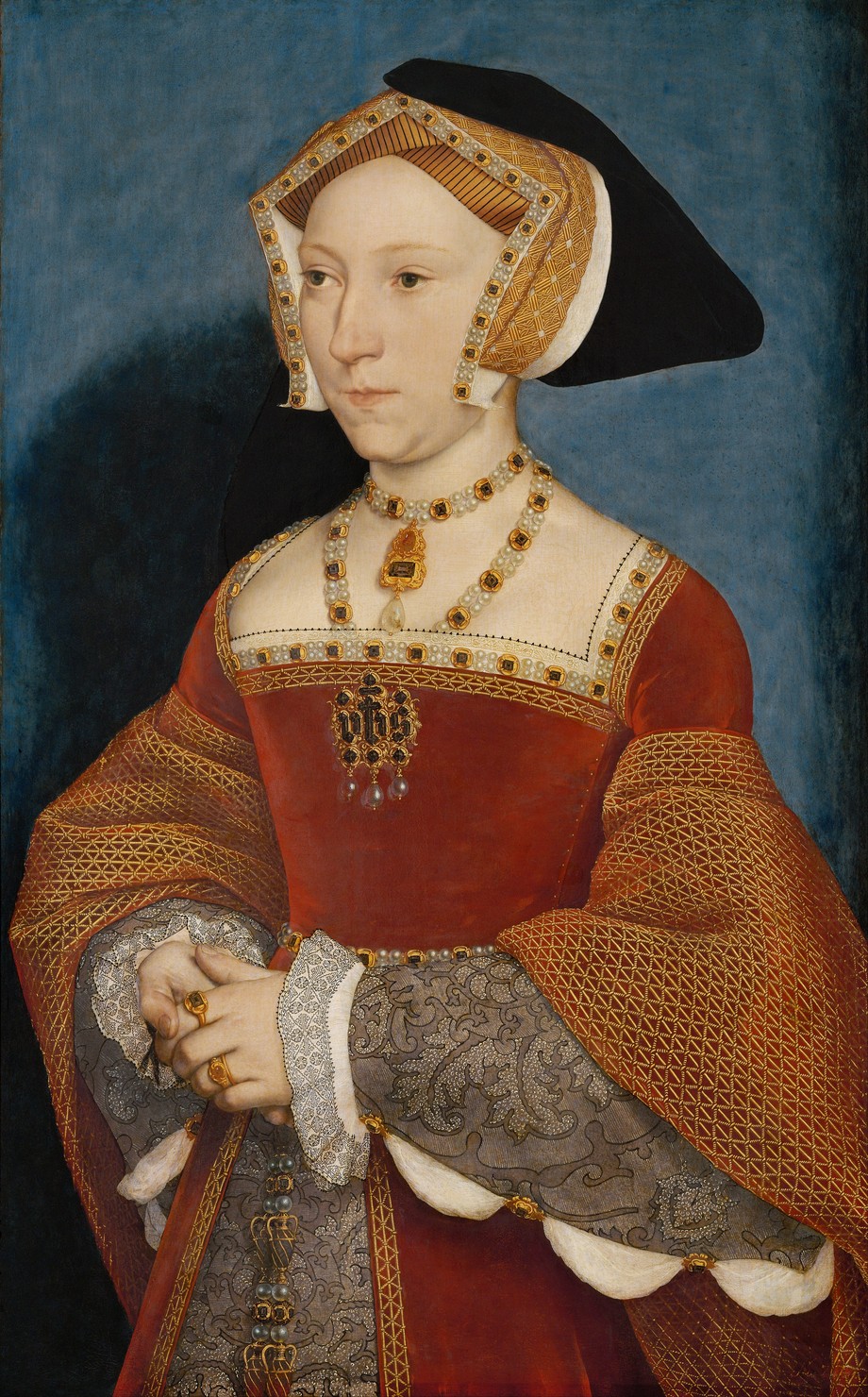
Portrait of Jane Seymour
The Still Queen Between Two Storms
Jane Seymour did the one thing none of Henry VIII's other five wives could: bore him a living son. Born around 1508 at Wulfhall, she came to court as lady-in-waiting to Catherine of Aragon, then to Anne Boleyn. She was Anne's exact opposite: quiet where Anne was quick, demure where Anne was dazzling. Her motto—“Bound to obey and serve”—was a banner, not an apology.
Anne was beheaded on 19 May 1536. Henry was betrothed to Jane the next morning and married her within eleven days. Contemporaries read not ambition but its opposite: a return to order. Henry had broken a church to marry a woman who fought him; he married Jane to be left at peace.
On 12 October 1537 Jane gave him the heir, Edward VI, and was dead twelve days later of childbed fever. Henry mourned her as his “true” wife and ordered, at his own death, to be buried beside her at Windsor. What survives of her is a temperament: still, dutiful, decorous—the ISFJ's dominant Si in her quiet traditionalism; auxiliary Fe in the warmth that made her plead for a stepdaughter and present herself to a violent king as comfort rather than threat.
Jane Seymour was the ISFJ in a court of predators—a dominant Si that clung to the conventional and proper, and an auxiliary Fe that turned that quietness into the one thing the king craved after Anne: a wife who soothed rather than challenged, who served rather than ruled.
The Safety of the Conventional
Si — dominant
Dominant introverted sensing values continuity and decorum. Eustace Chapuys described Jane as modest and pale, scarcely raising her eyes; others noted she was virtuous, quiet, old for a maid of court. Where Anne Boleyn had imported French fashions and argued theology with cardinals, Jane was conventional to her marrow—the gentlewoman who knew her place and kept it. As queen she reached back toward the austere decorum of Catherine of Aragon's household, restoring values Anne had overturned. She did not want to remake the court; she wanted to return it to something it remembered. That made her safe to a king who had watched one wife defy him and another fight him to the end.
The Peacemaker's Warmth
Fe — auxiliary
Auxiliary extraverted feeling gave Jane's quietness its direction: toward reconciliation and the mending of broken relationships. Henry's elder daughter Mary had been declared illegitimate, and Jane knelt before the king to urge her restoration—a motive with no dynastic logic, since Mary was a rival to any son Jane might bear. When Henry rebuked her—reminding her what had become of the last queen who meddled—Jane withdrew rather than press the point. Where Anne's love was a contest of wills, Jane's was framed as service, and Fe's instinct for what others need gave the king exactly the devotion he most craved.
The Quiet Knowing of Where the Bodies Lay
Ti — tertiary
Tertiary introverted thinking is inner analysis that never announces itself. Jane spent years watching how a queen could fall—Catherine discarded for fighting, Anne destroyed for the same—and drew the lesson in Si caution: be the opposite of the woman the king was tiring of. Her courtship conduct—refusing his gifts, declining to be alone with him, declaring her honour her only dowry—reads as artless virtue or a coached script; the likeliest truth is both. It never surfaced as Anne's open cleverness; it worked under the surface, letting a retiring woman navigate the most lethal court in Europe without appearing to navigate at all.
The Roads She Never Took
Ne — inferior
Where Anne Boleyn was a creature of Ne reinvention—new fashions, new ideas, a new model of what a queen might dare—Jane reached for none of it. She is defined by the possibilities she declined to entertain. Inferior Ne in an ISFJ surfaces as anxiety rather than daring; in a court where every novelty had proved lethal, Jane clung to the conventional with a near-protective instinct. In the cruellest sense she was spared the test the other wives faced: Catherine's long defiance, Anne's desperate gambits, Anne of Cleves' shrewd acceptance of divorce, Catherine Parr's escape from a heresy charge. Jane died at the summit of her triumph. The inferior Ne was never called upon, and so it never failed her.
Why ISFJ Over ESFJ
Why not ESFJ?
Jane shared the ESFJ's warmth and family-mindedness, but the ESFJ leads with extraverted feeling—an outward, socially commanding warmth that takes charge of a room. Jane was the opposite of commanding: every contemporary stresses her stillness, her downcast eyes, her retiring modesty. Fe supporting dominant Si rather than leading it is the ISFJ, not the ESFJ.
An ESFJ queen would have filled the role the way Anne Boleyn filled it—visibly, vocally, taking emotional command of the court—and that was exactly what the king had grown to dread. Jane is the still, domestic ISFJ whose appeal was the reverse: a wife who would serve rather than preside, be seen as comfort rather than competition.
Connected Figures
Further Reading
- Jane Seymour: Henry VIII's True Love — Elizabeth NortonThe most focused modern biography, drawing on contemporary sources to reconstruct the queen's brief reign.
- The Six Wives of Henry VIII — Alison WeirThe standard popular account of all six queens, placing Jane's story in the full context of Henry's marital history.
- Henry VIII: The King and His Court — Alison WeirA detailed study of life at the Tudor court during Jane's years as queen, 1536 — 1537.
- The Tudor Queens of England — David LoadesScholarly overview of all Tudor queens consort and regnant, with a chapter on Jane's character and significance.
