 Historical Figure MBTI
#373 · 4-3-26 · Tudor England
Anne of Cleves
Queen of England · 'The Flanders Mare' · The Wife Who Won
1515 — 1557
6 min read
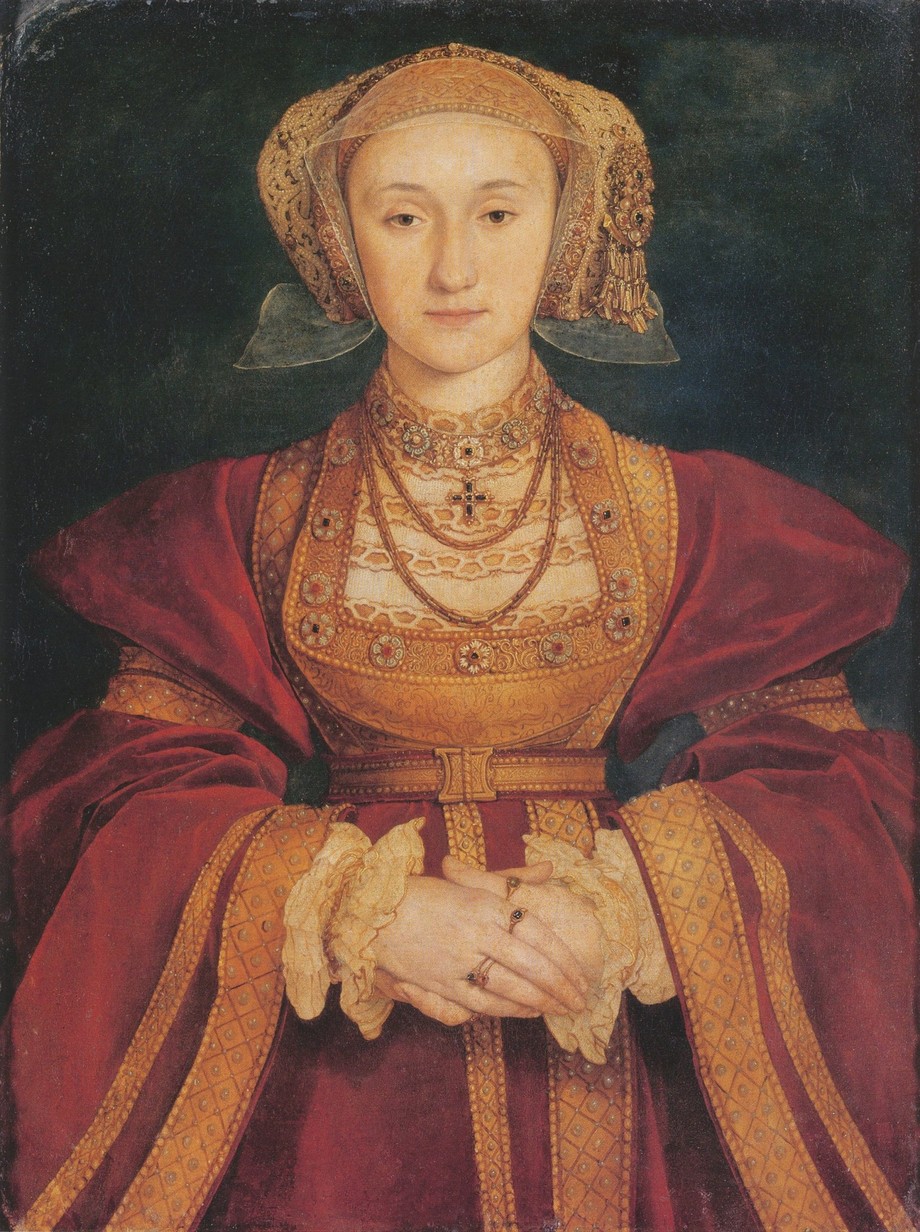
Portrait of Anne of Cleves
The Wife Who Lost and Thereby Won
A German princess chosen in 1539 by Thomas Cromwell to seal a Protestant alliance, Anne of Cleves had been approved on the strength of a flattering Holbein portrait. When Henry VIII met her at Rochester he was repelled, married her anyway because the diplomacy had gone too far to undo, and had the union annulled by summer.
Here is the twist. Where defiance had cost Catherine of Aragon the last decade of her life, and would cost others their heads, Anne simply agreed. She consented—graciously, immediately, and on superb terms: generous houses, a handsome income, the honorary rank of the King's “Beloved Sister,” and warm relations with Henry and his children for the rest of his life. She kept her head, her property, and her independence, outliving every other wife—and Henry himself—dying in 1557, the last of the six standing.
She is a clear ISFP: dominant Fi in the refusal to fight for what she did not value; auxiliary Se in the comfortable life she built once free; tertiary Ni in the instinct to read the room before others did. She won by knowing exactly what she wanted—and it was not a crown.
Anne of Cleves was the ISFP who lost the marriage and won everything else—a dominant Fi that would not fight for a thing it did not value, and an auxiliary Se that turned a quiet annulment into a long, self-chosen life.
The Battle She Declined to Fight
Fi — dominant
Dominant introverted feeling is the easiest of the dominant functions to mistake for passivity. It is not. Fi is a private compass—an inner sense of what matters and what is simply not one's concern, held so close it rarely announces itself. Faced with a king who no longer wanted her, Anne did not experience the annulment as a catastrophe to resist. She assessed it against her private sense of what she actually valued—and a crown she had never sought, beside a man who repelled her as much as she repelled him, was not on the list.
Where Catherine of Aragon fought her annulment for years because her identity as queen was inviolable, Anne held no such conviction about her brief and joyless union. Dominant Fi is selective: it will not spend itself on a cause it does not own. Anne picked her battles by an entirely interior standard, and this was a battle she declined. The warmth she kept with Henry and his children afterward was genuine—nothing she valued had been taken, and so she had nothing to be angry about.
The Comfortable Life She Built
Se — auxiliary
Se is the function of the present and the tangible—physical comfort, pleasant surroundings, good company. Anne, once she was no longer queen, became one of the wealthiest and most independent women in England, and she used that freedom in a thoroughly Se way: not to scheme her way back to influence, but to live well. Her settlement gave her several handsome properties, including Hever Castle. Contemporaries noted her fondness for fine clothes, for cards and good living—a cheerful presence, entirely at ease in the small daily pleasures. Where Henry's dominant Se drove him to seize and dominate, Anne's auxiliary Se simply asked that the day be pleasant, and arranged for it to be so.
The Instinct to Read the Wind
Ni — tertiary
Tertiary Ni in an ISFP produces something useful in a tight corner: the ability to see, before others do, that a situation has already been decided, and to stop struggling against the inevitable. Anne Boleyn had gone to the scaffold less than four years earlier; Catherine of Aragon had died alone and dispossessed after years of legal resistance. Anne of Cleves read the lesson faster than a proud woman would have: against this king, resistance was ruin. Her tertiary Ni served her dominant Fi perfectly—it told her the thing she did not value was already lost, which freed her to let it go without a struggle.
The Queen Who Never Wanted to Rule
Te — inferior
Inferior Te—the drive to command and exert open authority—is conspicuous in Anne chiefly by its absence, and that absence is diagnostic. She came with little command of the language, no instinct for the Tudor court's factional game, and no appetite for the work of queenship. At first this left her politically isolated, a pawn of Cromwell's failing diplomacy. But the same inferior Te that left her defenseless also left her without the ambition that doomed the others. She did not crave command, so she did not cling to it; she could let the crown go with a lightness a more commanding temperament could never have managed. Her weakness in the function that drives ambition was, in the end, the thing that saved her.
Why ISFP Over ESFP
Why not ESFP?
The ESFP shares Anne's warmth and love of comfort, but is gregarious and energized by an audience—it seeks the spotlight and lives outward. Anne was the opposite: reserved and quiet, a woman who withdrew from the glare of the court and built a contented life out of view. Her satisfactions were inward and self-defined, not performed for a crowd—the unshowy ISFP who needed no witnesses to her happiness.
Both types love a pleasant, sensory life; the question is whether it faces outward or inward. Nothing in Anne's record suggests a hunger to be seen or central—the very things that destroyed the wives before and after her. She wanted a comfortable, private life governed by her own compass. That inward contentment, dominant Fi furnished by auxiliary Se, is the ISFP's signature. Anne of Cleves won by wanting less, and by knowing, privately and exactly, what that less was.
Connected Figures
Further Reading
- Anne of Cleves: Henry VIII's Unwanted Wife — Elizabeth NortonThe principal modern biography, drawing on primary sources to reconstruct Anne's life before, during, and after her brief queenship.
- Six Wives: The Queens of Henry VIII — David StarkeyA comprehensive study of all six wives in full Tudor court context; the Cleves marriage and its rapid dissolution receive careful treatment.
- The Six Wives of Henry VIII — Antonia FraserA landmark popular history that gives each wife her own chapter; Fraser's portrait of Anne is sympathetic and attentive to the diplomatic mechanics that brought her to England.
- Henry VIII: The King and His Court — Alison WeirProvides the court backdrop against which Anne's annulment played out, including the fall of Cromwell and the factional maneuvering around the Cleves alliance.
