 Historical Figure MBTI
#374 · 4-3-26 · Tudor England
Catherine Howard
Queen of England · The Rose Without a Thorn · The Doomed Fifth Wife
c. 1523 — 1542
5 min read
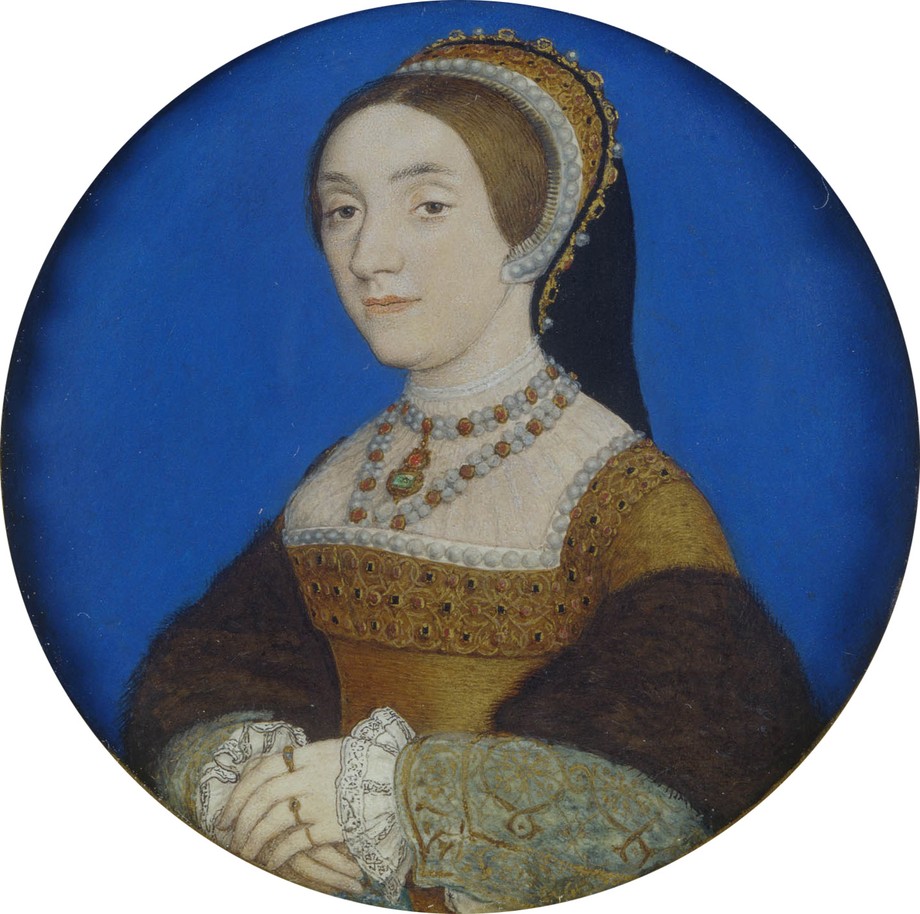
Portrait of Catherine Howard
The Rose Without a Thorn
She was born around 1523 into the poorer branch of the Howard clan and raised, after her mother's death, in the loosely governed household of the Dowager Duchess of Norfolk—dormitories where the door was meant to be locked at night and often was not. She was a child when older men began to notice her: her music teacher first, at perhaps thirteen, then Francis Dereham, whom she called her husband. None of it should have killed anyone.
By 1540 the Howard faction pushed her into the path of Henry VIII, eager to displace Cromwell's reformers. She was seventeen; he was nearly fifty. He called her his “rose without a thorn.” She took Dereham into her household and fell into a secret affair with Thomas Culpeper. When rumors reached the king in 1541, the structure came down and she was beheaded in February 1542—still a teenager. Her short life is the portrait of an ESFP: dominant Se hunger for the thrill of right now, auxiliary Fi of helpless romantic feeling, inferior Ni with no foresight.
Catherine Howard was the ESFP butterfly pinned to the wheel of a murderous court—a dominant Se living wholly for pleasure, dancing, and admiration, an Fi heart that loved where it should not, and not a particle of foresight to tell her that this court killed the careless.
The Girl Who Lived in the Dance
Se — dominant
Dominant Se lives in the immediate and sensory, and everything we know of Catherine fits it. She was vivacious, a tireless dancer who delighted in being looked at. As queen she threw herself into the part not as a stateswoman but as a young woman handed a wardrobe and a court—new gowns, new gold, new admirers. There is no record of her caring for policy, factions, or religious quarrels: the surface of things was where life happened.
The same appetite explains the entanglements that destroyed her. In the Duchess's house she took the pleasure in front of her. The romances with Manox and Dereham were not calculations but the natural reaching of a sensation-driven girl toward what felt good now. To weigh present pleasure against distant cost is precisely what dominant Se does worst, and in Henry's court that failing was lethal.
The Heart That Loved Where It Should Not
Fi — auxiliary
Auxiliary Fi gave Catherine's Se a private core—what she truly wanted, held inwardly and obeyed without much regard for the world's rules. Fi does not ask whether a feeling is permitted; it follows it. Her affair with Culpeper was not a grasp for advantage—she was already queen. It was a genuine, helpless attachment to a man her own age, indulged against every dictate of sense.
The letter she wrote to Culpeper survives—clumsily spelled, artless, aching: it makes her heart die to hear he has been ill; she is his as long as life endures. That letter, kept and produced against her, helped send her to the scaffold—auxiliary Fi at its most exposed, a private truth lethal the moment the world read it. Unlike her cousin Anne Boleyn, who marshaled eloquence for the scaffold, Catherine only wept: Fi refusing to disown what it had truly loved.
The Faint Cunning of a Cornered Girl
Te — tertiary
Tertiary Te appears in flickers: using Lady Rochford to arrange assignations with Culpeper, finding back stairs and quiet hours—the planning of a girl organizing a tryst, not a woman defending her life. Taking Dereham into her service was done so visibly it advertised the very secret she should have hidden. When the inquiry closed she confessed her early relationship with Dereham while denying a contract of marriage that might have voided her union with the king and saved her neck. Tertiary Te can manage a small scheme; it cannot run a defensive strategy.
The Future She Could Not See
Ni — inferior
Inferior Ni is the ESFP's great blind spot—the missing organ of foresight. In Catherine it is missing almost entirely. She was the fifth wife of a man who had executed a queen on adultery charges—her own cousin Anne Boleyn. The danger could not have been more plainly written. She never read it.
She lived forward one bright moment at a time; the scaffold was not real until it was upon her. The terror, the weeping, the legend of a child practicing laying her head upon the block: all of it is the inferior function arriving at last—the unseen future crashing into a mind with no defenses. She had spent her whole life unable to imagine the present could end. And then it ended.
Why ESFP Over ISFP
Why not ISFP?
The ISFP shares the Se-Fi pairing, but the ISFP is inward and private, shrinking from the spotlight. Catherine was the opposite: vivacious, flirtatious, hungry for dancing and admiration, the visible center of every room she could find. That craving to be seen is dominant extraverted sensing, not the introverted Fi-dom of the ISFP, who would have wanted the feeling without the audience.
Catherine reached outward for pleasure, attention, and excitement—blind to consequence, as if the future were a country she had never heard of. That present-tense hunger yoked to an absent inferior Ni is the unmistakable ESFP signature. In the wrong place, the ESFP is the most exposed of all the types.
Connected Figures
Further Reading
- Katherine Howard: A New History — Conor ByrneThe fullest modern biography, drawing on primary sources to rehabilitate Catherine beyond the 'wanton queen' caricature.
- The Tudors — G. J. MeyerEngrossing narrative of the entire Tudor dynasty that situates Catherine's tragedy within the wider brutality of Henry's reign.
- Six Wives: The Queens of Henry VIII — David StarkeyDetailed dual biography of all six wives; the Catherine Howard chapters are particularly sharp on the Howard family's cynical calculation.
- The Private Lives of the Tudors — Tracy BormanExamines the everyday world behind the royal façade — useful for understanding the household environments that shaped Catherine.
