 Historical Figure MBTI
#523 · 4-22-26 · The Wars of the Roses
Richard III
King of England · The Last Plantagenet, Slain at Bosworth
1452 — 1485
11 min read
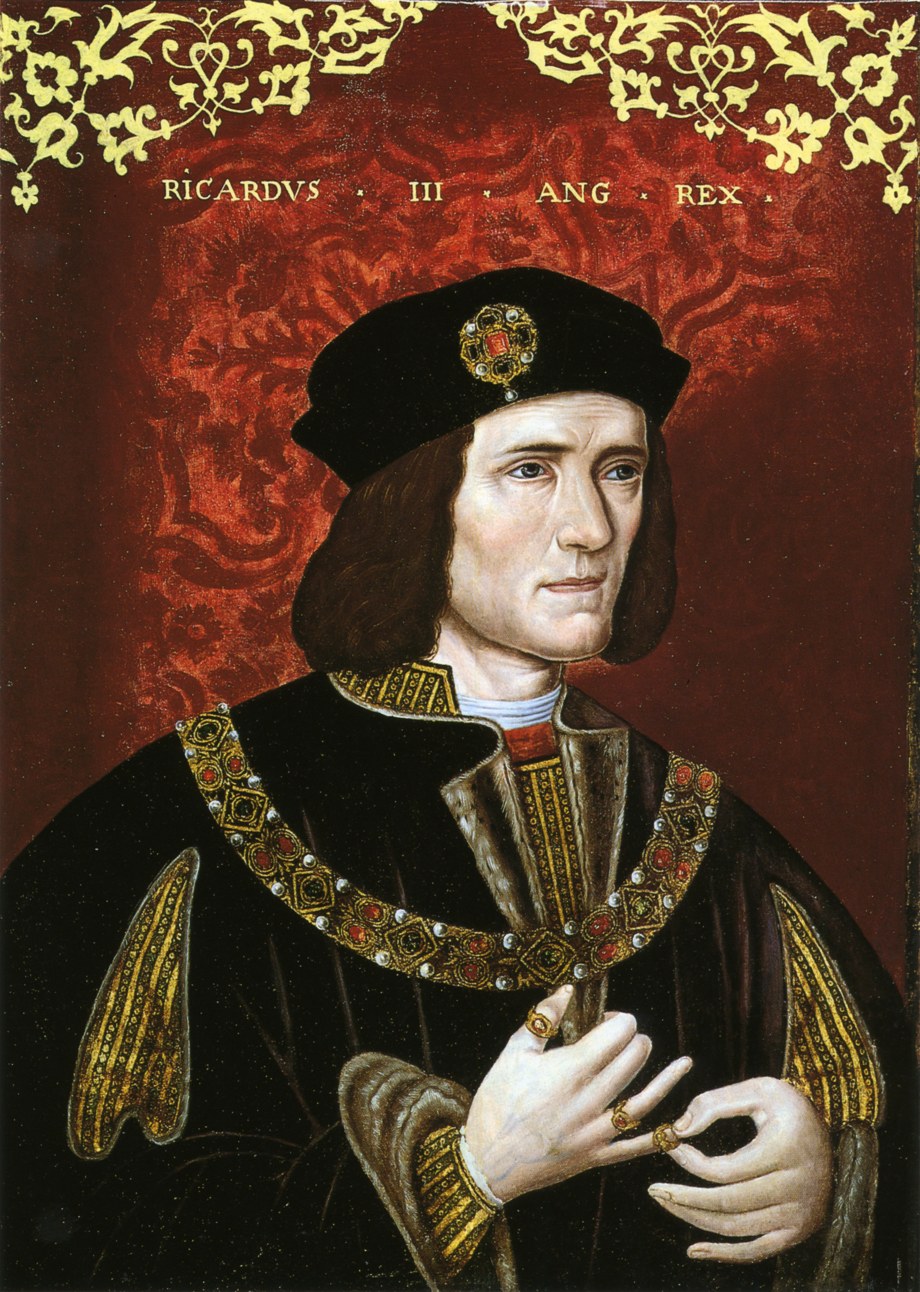
AI-assisted Portrait of Richard III
The Loyal Brother Who Stole a Crown
No English king has been argued over more fiercely than Richard III, and the argument has never really been about the man — it has been about the gap between two irreconcilable Richards. There is the Richard of his own lifetime: the steadfast younger brother of Edward IV, the capable and genuinely popular Governor of the North, the dutiful servant who, alone among Edward's siblings, never once betrayed him. And there is the Richard who emerged in the spring and summer of 1483 — the Lord Protector who seized his twelve-year-old nephew, executed the boy's relatives and Lord Hastings without trial, declared the children illegitimate, lodged them in the Tower of London, and took the crown himself. Between those two men lies the most consequential three months in fifteenth-century English history.
He was the last Yorkist king and the last Plantagenet, and his reign lasted barely two years before it was destroyed by the scandal of the vanished boys and a rebellion he could not contain. At the Battle of Bosworth Field in 1485 he was cut down charging headlong at Henry Tudor, betrayed in the field by the men who should have fought beside him — the last English king to die in battle. His body was thrown into an obscure grave and lost for five centuries, until it surfaced in 2012 beneath a Leicester car park, its twisted spine confirming a scoliosis the Tudor chroniclers and Shakespeare had inflated into a hunchbacked monster. He is the great Rorschach test of English kingship: villain or tragic figure, schemer or cornered administrator, depending entirely on the eye that reads him.
The MBTI lens cuts through some of that fog. The Richard of the documents — not the Richard of the stage — reads not as a brilliant long-game plotter but as a dutiful, rule-bound, intensely loyal man who acted with terrifying speed when the ground shifted beneath him, and justified everything he did by law, precedent, and necessity.
Richard III is the ISTJ signature pushed to catastrophe: Si's loyalty and reverence for established order, paired with Te's capacity for swift, methodical, unsentimental execution — a conventional man who, under sudden threat, did something irreversible and never saw how it would destroy him.
The Dutiful Servant of the North
Si — dominant
For thirty of his thirty-two years, Richard was the very picture of dominant Si: loyal, conventional, reliable, defined by duty discharged through established channels. While his other brother, George of Clarence, schemed, switched sides, and finally drowned in a butt of malmsey for his treasons, Richard never wavered. He fought for Edward IV at Barnet and Tewkesbury, followed him into exile, and was rewarded with the lordship of the North — a region he then governed for more than a decade by the book, enforcing the king's law, settling disputes through precedent, and earning a reputation in York for fairness that long outlasted the Tudor propaganda. When the city heard he had died at Bosworth, its council recorded that he had been “piteously slain and murdered, to the great heaviness of this city” — not the epitaph a tyrant earns from the people who actually knew him.
Dominant Si stores the past as a working code of how things ought to be done, and Richard ran his northern administration as an extension of that code. He was a meticulous, hands-on lord — founding chantries, endowing colleges, intervening personally in the petitions of small men. His Parliament of 1484 produced a body of statute notably protective of ordinary subjects: reforms of bail, of jury composition, of the abuses of land tenure. This is Si as conservatism in its truest sense — not reaction, but a deep instinct to preserve, repair, and keep faith with the established order. He believed in the machinery of legitimate rule, which is precisely what makes 1483 so vertiginous.
Because the same reverence for established order shaped how he justified the usurpation. Richard did not present himself as a man grabbing power; he presented himself as the man restoring it — the legitimate adult heir of York stepping in where his brother's marriage had, he claimed, been void from the start. The Si mind needs a precedent, a rule, a documented basis. He found one, or manufactured one, and clung to it.
Eleven Weeks That Took a Crown
Te — auxiliary
When Edward IV died suddenly in April 1483, leaving a boy-king and a court already fracturing between the old nobility and the queen's ambitious Woodville relations, Richard moved with a speed and decisiveness that still startles. Auxiliary Te is the executive function — organize, secure, eliminate the threat, do it efficiently — and across the spring and summer Richard ran a near-flawless operation. He intercepted the young Edward V on the road to London and arrested the boy's Woodville escort. He had Earl Rivers and others executed at Pontefract. In a single sudden council meeting at the Tower he had Lord Hastings — an ally turned obstacle — seized and beheaded within the hour, without trial. Each move closed off an avenue of resistance before it could open.
Then came the legal machinery: the assertion that Edward IV had been pre-contracted in marriage to another woman before he wed Elizabeth Woodville, rendering that marriage bigamous and the princes illegitimate. Whether the precontract was real or fabricated, the Te instinct is unmistakable — it gave the seizure a documentary, procedural basis. Parliament duly ratified it in the act Titulus Regius. The boys went into the Tower; the crown came to Richard; and the whole thing was done, start to finish, in roughly eleven weeks.
This is the crucial point about the historical Richard: the usurpation does not read as the payoff of a years-long secret plot. It reads as a dutiful, organized man confronting a sudden crisis and acting fast, hard, and methodically under threat — then reaching, reflexively, for law and precedent to make it legitimate. It was a Te response to an emergency, not the masterstroke of a lifelong schemer.
The seizure of 1483 was not the climax of a long conspiracy — it was a Te-driven emergency operation, executed with frightening efficiency and then wrapped in the language of law. A conventional man, cornered, moved decisively, and could not undo it.
Loyalty Binds Me
Fi — tertiary
Richard's personal motto was Loyauté me lie — “Loyalty binds me” — and there is no better three-word summary of tertiary Fi in an ISTJ. This is not the warm, outward, group-harmonizing feeling of an Fe type; it is a private, internal code of values, intensely held and rarely advertised. For most of his life that code expressed itself as unbreakable fidelity to his brother and to the House of York. It was real, and it was the thing his contemporaries trusted in him.
But tertiary Fi has a darker register too: when the inner code is wounded or threatened, it can curdle into a stubborn, self-justifying conviction of being in the right. After taking the throne, Richard seems genuinely to have believed himself the wronged party — the rightful heir protecting the realm from Woodville domination, the legitimate king maligned by liars. His Fi did not let him see the seizure as the world saw it. It supplied him instead with an airtight private narrative of duty and justification, which is exactly why the charge that has clung to him longest — the fate of the boys — he never effectively answered. To explain himself would have meant admitting the gap between his self-image and his acts, and Fi does not bend that way.
There is grief in the record too. The deaths of his only legitimate son in 1484 and of his queen, Anne Neville, in 1485 left him, by the accounts, visibly shaken — a man whose carefully ordered world was collapsing, and who had no Fe vocabulary to share the loss outward. He absorbed it inward, in the lonely way of tertiary Fi.
The Future He Could Not Imagine
Ne — inferior
Inferior Ne is the blind spot of the ISTJ — the chronic underestimation of how differently things might unfold, how possibilities can branch, how a present that looks stable can suddenly turn. Richard's tragedy is written in this weakness. He could execute a flawless tactical seizure of power, but he could not imagine the second- and third-order consequences that flowed from it. He had the boys declared illegitimate and lodged in the Tower, treating the problem as solved — an administrative matter closed. He seems never to have grasped that two vanished children would not stay a closed matter; that their disappearance would become a wound that bled rumor, suspicion, and rebellion for the rest of his reign.
The same blindness shaped his fatal misreading of his own coalition. He trusted that the magnates who had elevated him would hold — and within months the man who had been his chief ally, the Duke of Buckingham, rose in revolt. He trusted, or could not conceive of the alternative to trusting, that the great northern lords would fight for him at the decisive hour. At Bosworth Field in 1485, the Stanleys sat with their armies on the flank and watched, then turned on him at the moment of crisis. The historical Richard had outplanned everyone in the room in 1483; he could not see the room reconfiguring around him in 1485.
His death itself was inferior Ne in its purest, most desperate form. Rather than wait, regroup, and play a longer game of possibilities — the move an Ne-strong type might instinctively reach for — he gambled everything on a single decisive charge across the field at Henry Tudor himself, betting the whole war on one stroke. It very nearly worked. It got him within a sword's length of his rival. Then it got him killed: the last English king to die in battle, undone by the one faculty he never developed.
Why ISTJ Over INTJ or ESTJ
Why not INTJ?
The INTJ reading is the Shakespearean one — Richard as the brilliant, self-aware villain who confides his master plan to the audience, manipulates everyone, and runs a long, visionary scheme to the throne. It is irresistible theater and almost certainly wrong about the man. The historical Richard shows no sign of a years-long plot; for three decades he was a loyal, conventional administrator, and the seizure of 1483 was a sudden, precedent-justified response to an emergency, not the unveiling of a hidden design. His tragedy is a dutiful man's overreach, not a genius's scheme — and the vanished boys read as a catastrophic miscalculation, not a chess move he had foreseen.
Why not ESTJ?
Both types share Te's decisive executive drive, and the speed of 1483 has an ESTJ flavor. But Richard's temperament was reserved, inward, and precedent-bound rather than outwardly commanding. He governed the North through quiet diligence and personal fairness, not the public, room-dominating presence of a Te-dominant ESTJ. His values were privately held (tertiary Fi's “loyalty binds me”), his self-justification was internal rather than performed, and his whole bearing was that of the steadfast servant, not the commander. The dominant function was Si — the keeper of order — with Te in support, not the reverse.
The essential distinction is motivational. The INTJ acts from vision; the ESTJ acts from command; the ISTJ acts from duty — and duty is the through-line of Richard's entire life, including the moment it failed him. He was loyal until loyalty and survival pulled apart, and then he did the decisive, terrible, precedent-wrapped thing a cornered Si-Te man does, and justified it to himself forever. He was not a mastermind and not a tyrant by temperament. He was a conventional man who overreached once, catastrophically, and never developed the imagination to see the catastrophe coming.
Connected Figures
Further Reading
- Richard III — Paul Murray KendallThe classic sympathetic biography — vivid, narrative, and the foundational text of the modern revisionist case.
- Richard III — Charles RossThe more skeptical scholarly counterweight to Kendall — measured, source-critical, and wary of rehabilitation.
- Digging for Richard III: The Search for the Lost King — Mike PittsThe definitive account of the 2012 Leicester car-park excavation and the science that confirmed the body was Richard's.
- Richard III — William ShakespeareThe Tudor caricature that buried the historical man for centuries — essential reading precisely because it is the legend, not the life.
