 Historical Figure MBTI
#306 · 3-26-26 · The Enlightenment
Marie-Angélique Diderot
Diderot's Daughter · Madame de Vandeul · Keeper of the Manuscripts
1753 — 1824
3 min read
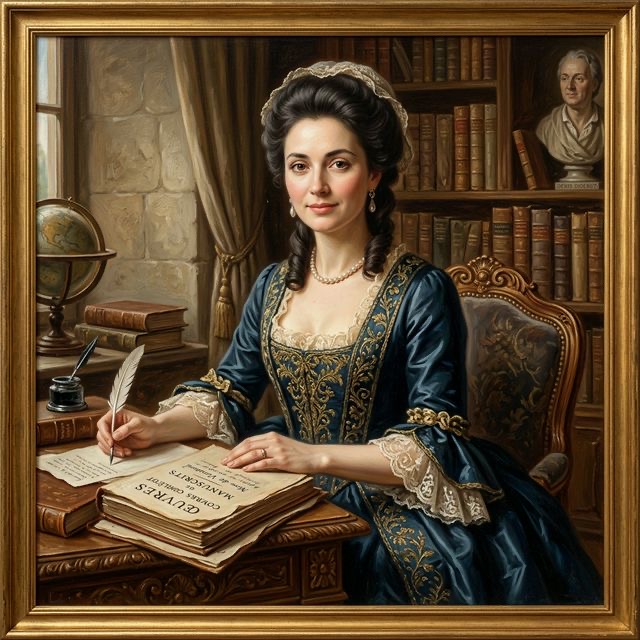
AI-assisted Portrait of Marie-Angélique Diderot
Diderot's Daughter, the Encyclopédie's Heir
Marie-Angélique Diderot was born in Paris in 1753, the only surviving child of Denis Diderot and his wife Antoinette Champion. She grew up in a household where ideas were the primary currency. Diderot devoted himself to her education with unusual seriousness — an attention that found literary form in Conversation of a Father with his Children, a dialogue dramatizing the tension between moral law and individual judgment.
In 1772 she married Nicolas-François de Vandeul, a wealthy manufacturer, becoming Madame de Vandeul. She remained a devoted daughter through Diderot's decline and death in 1784, and it was she who received his manuscripts. That legacy was enormous and largely unpublished: Diderot had written works he knew could not appear in his lifetime, and it fell to Marie-Angélique to manage them.
Her Mémoires pour servir à l'histoire de la vie et des ouvrages de M. Diderot is the primary source for many details of his life and character. She was not a philosopher; she was something rarer: the faithful custodian of a genius who produced more than his world could absorb.
The Work of Preservation
The posthumous fate of Diderot's manuscripts is one of the stranger stories in French literary history. Many of his most radical works — Rameau's Nephew, Jacques the Fatalist, The Nun — existed only in manuscript at his death. Catherine the Great had purchased his library for St. Petersburg; his papers remained in Paris. Sorting, preserving, and eventually publishing this body of work fell to Marie-Angélique and her heirs — work that required patience and a sense of duty to something larger than the moment.
Sophie Volland had been Diderot's great intellectual correspondent — the woman who engaged with his ideas as an equal. Marie-Angélique was something different: not the intellectual partner but the practical heir. Sophie provided the audience that sharpened his thinking; Marie-Angélique provided the care that preserved it. The archivist, the faithful daughter who sorts through the papers — these figures are invisible in the histories that celebrate the men whose work they saved. Marie-Angélique kept the Encyclopédie's editor alive in posterity through work that was meticulous, loyal, and unsung.
Psychological Verdict
The pattern of Marie-Angélique's life — devoted daughter, faithful preserver, biographical memorialist — fits the ISFJ profile with considerable coherence. ISFJ labor tends to be practical, thorough, and duty-oriented rather than self-expressive. She did not attempt to continue her father's intellectual project or present herself as his heir. She preserved what he had written and told what she knew of how he had lived. This is Si-dominant loyalty in its most recognizable form.
The Fe component is visible in the Mémoires, which is not a cold archival document but an affectionate portrait. She wrote about Diderot as a man she loved, not only as a historical subject — preserving both the intellectual record and the human one. This combination of archival faithfulness and personal warmth is the ISFJ at their best: the keeper of memory who refuses to let it become merely institutional.
Connected Figures
Further Reading
- Diderot and the Art of Thinking Freely — Andrew S. CurranCovers Diderot's family life and the manuscripts left unpublished at his death, later preserved by Marie-Angélique.
- Diderot: A Critical Biography — P. N. FurbankDraws on Marie-Angélique's own Mémoires, the primary source for much of what is known of her father's life.
- Diderot — Arthur M. WilsonTraces the fate of Diderot's radical manuscripts after his death, the archive his daughter spent decades managing.
