 Historical Figure MBTI
6 min read
#283 · 3-25-26 · Catherinian Russia
Mary Somerville
Mathematician · Scientist · Queen of Nineteenth-Century Science
1780 — 1872
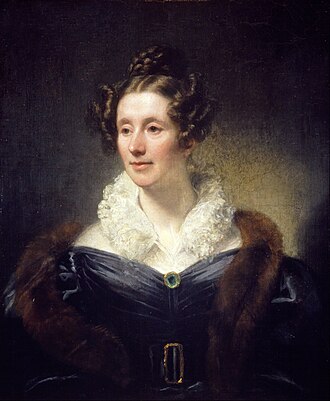
Portrait of Mary Somerville
Algebra by Candlelight
She taught herself algebra by candlelight at age ten, hidden under the bedcovers after her parents had ordered the candles taken away — worried that too much study would destroy a girl's health. They confiscated the books; she worked from memory. They redirected her to needlework; she kept the algebra running in her head while her hands moved. Mary Fairfax spent her entire early life fighting for permission to think — and when that permission was refused, doing it anyway.
Her first marriage, to Samuel Greig — son of the Scottish-born Russian admiral Samuel Greig and Sarah Cook of Kronstadt — was suffocating: he disapproved of her studying. He died in 1807, and her subsequent explosion into serious scientific work speaks for itself. Her second marriage, to William Somerville, was the intellectual partnership that made everything possible.
The INTP mind does not merely absorb information — it constructs internal logical architectures from it. Somerville's project was not the accumulation of scientific facts but the discernment of the underlying structure that connected them all.
Her major works — The Mechanism of the Heavens (1831), On the Connexion of the Physical Sciences (1834), Physical Geography (1848) — were all syntheses: not discoveries in the laboratory sense, but deep structural integrations that hold enormous amounts of specialized knowledge in a single logical framework. The word she chose — "connexion" — is as good a description of her method as any.
The Logical Architecture Beneath the Facts
Somerville's dominant function was Ti — introverted thinking — and it expressed itself in a form unusual even among scientists: she was not primarily interested in discovering new phenomena but in understanding the logical structure that organized existing ones. When she translated Laplace's Mécanique Céleste for The Mechanism of the Heavens, she did not merely render the French into English. She rewrote it — expanding the mathematical demonstrations, reconstructing proofs from first principles when the original seemed insufficiently rigorous. The work was nearly twice as long as the original because Somerville could not leave a logical gap unfilled.
This is Ti at its most characteristic: the drive to achieve internal consistency, to understand not just what the answer is but why the answer must be exactly that. Somerville described her method with characteristic directness — she worked through problems multiple times until she genuinely understood rather than merely knew. Memorization without comprehension was what society offered women as a substitute for real education, and she despised it. She learned without teachers for most of her life not because no teachers were available but because the self-directed construction of understanding was how her mind actually worked.
The Connexion of Everything
Her Ne auxiliary — extraverted intuition, the function that perceives connections across apparently separate domains — is what made Somerville's scientific project possible. The thesis of On the Connexion of the Physical Sciences was not that science had many branches but that those branches were ultimately expressions of a single underlying reality. Astronomy, mathematics, magnetism, electricity, geography — she saw them all as facets of a single coherent system, and each domain she mastered added to the conceptual web rather than displacing what had come before.
It was this Ne-driven synthesis that produced one of the nineteenth century's more remarkable near-misses: a footnote in the 1842 edition of On the Connexion of the Physical Sciences speculating about unexplained perturbations in the orbit of Uranus and suggesting they implied an undiscovered planet. John Couch Adams and Urbain Le Verrier both read that passage; one acknowledged it directly. The planet Neptune was discovered in 1846.
The Meticulous Scholar
Si tertiary provides the grounding that prevents the Ti-Ne axis from becoming purely abstract. For Somerville, it expressed itself as scholarly discipline: patient, meticulous, cumulative. She was not a genius of sudden inspiration; she built understanding brick by brick. On the Connexion of the Physical Sciences went through ten editions in her lifetime, each updated to reflect new scientific developments — not the behavior of someone whose relationship to existing knowledge is casual. It mattered to get it right, to track changes, to maintain precision across time.
The Social World She Navigated Carefully
The Fe inferior of the INTP is a particular vulnerability: a tendency to underestimate the social dimensions of situations, to feel somewhat alien where logical considerations take a back seat. Somerville expressed this most visibly in how she navigated recognition. She deflected credit reflexively — crediting Laplace, her husband William, her colleagues. When she and Caroline Herschel were elected the first female members of the Royal Astronomical Society in 1835, she wrote that she was embarrassed and felt unworthy. This was not false modesty; it was genuine discomfort with social valuation of work that had been internally motivated. She had not written to be recognized; she had written to understand.
Why INTP Over INFP or ENTP
Why not INFP?
The INFP is guided by Fi — values, moral orientation, a vision of how the world should be. Somerville was not a moralist. She was not driven by what ought to be true; she was driven by what was true and why. Her project was structural and logical, not ethical or imaginative. She cared about accuracy more than meaning, coherence more than beauty. Those are Ti values, not Fi values.
Why not ENTP?
The ENTP leads with Ne — comfortable with debate and intellectual sparring, interested in generating new ideas rather than building coherent internal frameworks. Somerville needed solitude to think, worked methodically rather than in bursts of improvisation, and was uncomfortable with public recognition. Her polymathic curiosity has an ENTP flavor, but the underlying orientation was Ti-dominant: she needed to understand thoroughly, not merely generate possibilities.
The essential distinction: logic as a tool versus logic as a home. For Somerville, the internal logical framework was the primary reality. The mathematics was not a means to an end; it was the thing itself.
Connected Figures
Further Reading
- Personal Recollections, from Early Life to Old Age, of Mary Somerville — Mary Somerville, ed. Martha Somerville (1873)Her own memoir, completed near the end of her life and edited by her daughter — the primary source for Somerville's inner life and self-directed education.
- Mary Somerville: Science, Illumination, and the Female Mind — Kathryn A. Neeley (2001)The standard modern scholarly study of Somerville's scientific work and its place in nineteenth-century intellectual culture.
- Passionate Minds: The Great Scientific Affair — Patricia Fara (2004)Examines women scientists in the Enlightenment and Romantic eras, with significant attention to Somerville and her contemporaries.
- The Mechanism of the Heavens — Mary Somerville (1831)Her landmark translation and expansion of Laplace's Mécanique Céleste — the work that made her reputation; the 2001 reprint includes scholarly introduction.
