 Historical Figure MBTI
6 min read
#280 · 3-25-26 · Catherinian Russia
Samuel Greig
Admiral · Scotsman in Russia's Service · Builder of the Imperial Fleet
1735 — 1788
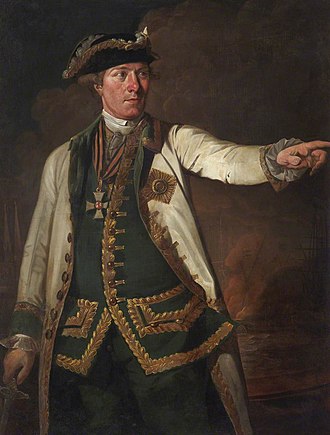
Portrait of Samuel Greig
The Scotsman Who Built Russia's Navy
In the summer of 1770, the Ottoman fleet burned. The Battle of Chesma was one of the most complete naval annihilations in history — a Russian force, nominally commanded by Count Alexei Orlov but directed by Scotsman Samuel Greig, destroyed nearly the entire Ottoman navy in a single night. Fifteen thousand Ottoman sailors lost; Russian casualties fewer than 700.
Greig had arrived in Russia twelve years earlier, one of the British officers recruited by Catherine II to professionalize the Baltic Fleet. What he found was an institution with the resources to be formidable and the organizational culture to prevent it. He rose to Admiral and Governor of Kronstadt, and died in 1788, still on active service during the Russo-Swedish War.
That's the ENTJ signature: arriving in a broken institution with a vision of what it could become, and building that vision into reality by the force of sustained will.
He left behind a wife, Sarah Cook, who raised their children in St. Petersburg, and a son, Aleksey, who rose to Admiral in his own right. And he left behind a fleet measurably better than the one he had found.
Building What Wasn't There
The Baltic Fleet had ships but not an effective naval culture: training inadequate, maintenance inconsistent, tactical doctrine decades behind. Greig introduced British naval standards — gunnery drills, seamanship protocols, maintenance regimens — rebuilt from the ground up, documented, and enforced. He was not gentle about it. Te-dominant impatience makes the distinction between "we haven't done it that way" and "this is inferior" obvious, even when the institution being reformed does not see it. Greig made enemies in the process of making a fleet.
His appointment as Governor of Kronstadt gave him administrative authority to match his operational vision. He reorganized the dockyard, improved the fortifications, and created the institutional infrastructure that sustained Russian naval power for decades after his death — Te at its highest expression: not just winning battles but making winning battles systematically possible.
The Mediterranean Vision
Ni is the ENTJ's auxiliary — the strategic vision that gives Te its direction. Greig's Ni expressed itself in his understanding of what Russian naval power could mean: not a defensive instrument in the Baltic but a projection of influence into the Mediterranean and the broader European contest for supremacy.
Chesma was the culmination. Sending a Baltic fleet into the eastern Aegean to engage the Ottomans in their home waters seemed reckless to contemporaries — the Russian navy had never operated at that range. The strategic payoff was the Ni calculation that justified the risk: demonstrate Russian naval reach to every European power at once. The final night action used fire ships — an ancient tactic, precise in its simplicity — to convert Ottoman concentration in harbor into catastrophe. The Ni insight and Te execution were one: see the pattern, implement the solution, do not complicate what is simple.
Decisive in the Chaos of Battle
Se is the ENTJ's tertiary — available, but not the primary driver. For Greig it manifested as battlefield decisiveness. Chesma required it in the final hours: fire ships needed precise timing, the window was narrow. Ni had already seen what was possible; Se confirmed the moment was right; Te organized the execution.
ENTJ Se characteristically serves the larger plan. Greig fought because combat was necessary to achieve the objective already mapped — Se served Te, which served Ni. Tertiary Se also gave him situational awareness to manage the campaign's political dimensions. Technically subordinate to Count Orlov — a court figure, not a naval professional — Greig had to manage egos, credit, and decision-making authority in real time. Te's organizing drive, read through Se's social attunement, allowed him to command while appearing to advise.
The Life He Chose Over the Life He Came From
Fi is the ENTJ's inferior. In Greig's case it expresses itself in the choice that defined his adult life: leaving Scotland permanently for Russian service. He did not return. He raised his family in St. Petersburg and died in the service of an empress who was herself a German.
Fi inferior suppresses conventional emotional attachments in service of the mission. Greig's mission was building something Scotland could not offer — nothing was left for a man of his ambition in the British navy, while in Russia the entire edifice of naval power waited to be constructed. The inferior Fi judged the cost acceptable: not without feeling, but without being controlled by it.
His wife Sarah Cook made the same choice. The family built in Russia — son Aleksey among them, who followed him into the naval command — was the Fi expression of the commitment: investment in a lineage that would continue the work.
Why ENTJ Over INTJ or ESTJ
Why not INTJ?
An INTJ builds systems from internal models and prefers architecture over direct command presence. Greig was constitutionally an organizer of people. His governance of Kronstadt, management of the Chesma campaign's political dimensions, cultivation of the officer corps — all required Te-dominant extroverted leadership. INTJs delegate institutional management; Greig did it himself.
Why not ESTJ?
ESTJs maintain and improve established systems. Greig arrived in Russia to a system that barely existed and built it. The visionary dimension of his work — understanding what a Russian navy could be strategically — required Ni driving Te, not Si supporting Te. The ESTJ version of Greig would have administered a fleet that already existed. The actual Greig created one.
What distinguishes ENTJ from the other T-dominant types is extroverted presence combined with long-range strategic vision. The fleet he built was organized by his Te, aimed by his Ni, held together by the authority of his personal presence — a combination the alternatives cannot replicate.
Connected Figures
Further Reading
- By the Banks of the Neva: Chapters from the Lives and Careers of the British in Eighteenth-Century Russia — Anthony CrossThe essential account of Scotsmen like Greig who built Russia's imperial navy from the ground up.
- Russia in the Age of Catherine the Great — Isabel de MadariagaThe standard scholarly account of the naval expansion Greig led under Catherine's patronage.
- Catherine the Great: Portrait of a Woman — Robert K. MassieCovers the empress's reliance on foreign talent like Greig to build a fleet capable of victory at Chesma.
- The Romanovs: Autocrats of All the Russias — W. Bruce LincolnPlaces Greig's naval buildup within the wider Romanov drive toward a warm-water fleet and southern power.
