 Historical Figure MBTI
#793 · 6-12-26 · The American Civil War
Mary Todd Lincoln
The First Lady Who Grieved in Public
1818–1882
6 min read
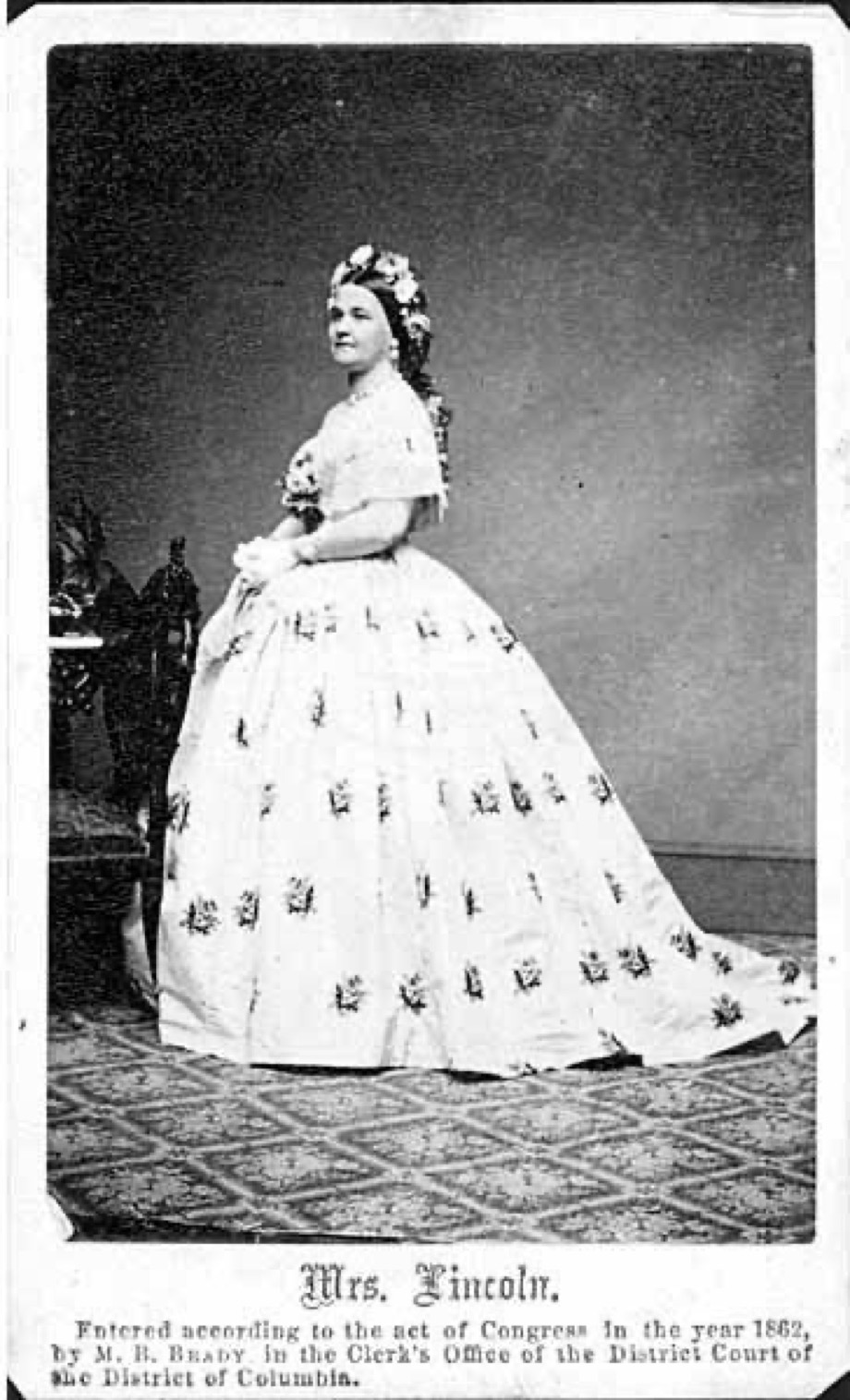
Portrait of Mary Todd Lincoln
The Woman Who Wanted to Feel Everything Together
Mary Todd arrived in Springfield already fluent in the social machinery that mattered — the calling cards, the seating charts, the careful choreography of who spoke to whom at which party. She was the best-educated woman in a house full of ambitious men, and she read Abraham Lincoln's prospects the way she read a ballroom: correctly, and early. She married him in 1842 believing he would be president, said so out loud when almost no one else believed it, and spent the next two decades running the domestic and social apparatus that made that belief plausible — the dinners, the connections, the reputation of the household as a place worth taking seriously.
What drove her was never abstract political theory. It was an ESFJ engine, tuned from childhood to read a room, manage its feelings, and hold a family together against the world's judgment. That engine served her husband's career brilliantly for twenty years. It also meant that when the world's judgment turned on her — the Kentucky belle with Confederate brothers, the First Lady who overspent on wallpaper while men died at Bull Run — she had no private register to retreat into. And when grief arrived, first with Eddie in 1850 and then, unbearably, with Willie in the White House in 1862, she processed it exactly as she processed everything: outward, loud, and in front of other people.
Mary Todd Lincoln was an ESFJ to the marrow — a dominant Fe that needed every room, and eventually every national newspaper, to feel what she felt.
Fe — The Household as a Public Instrument
Fe, in Mary, was never a soft skill. It was the instrument by which she built and defended her husband's standing. In Springfield she hosted relentlessly, cultivated the wives of men whose votes and money Lincoln would need, and read the shifting temperature of Illinois Whig and then Republican politics through its social surface — who was inviting whom, who had stopped calling. She pushed Lincoln, gently and not so gently, toward the ambition he sometimes doubted in himself, because she felt his potential as a shared emotional project, not merely his private business.
In the White House the same instinct scaled up and turned dangerous. She refurbished the Executive Mansion at a cost that scandalized Congress, not out of vanity alone but because to her an unkept house was a wound to the Union's self-image at the exact moment it needed to look strong. She fought publicly and often with cabinet officers and journalists who she felt were undermining her husband, because Fe experiences an attack on the people it loves as a direct assault on itself. She could not simply ignore an insult the way a more internally-anchored type might; she needed it addressed, and she needed everyone in the room to agree it mattered.
And when Willie died in 1862, Fe did what Fe does under catastrophic strain — it went outward. She could not process grief silently in a diary; she needed the household draped in black, needed mourning ritual observed to the letter, needed other people to enter the feeling with her. Contemporaries who found this excessive were, in effect, watching a dominant feeling function with nowhere private to put an unbearable loss.
Si — The Discipline of Doing It Properly
Underneath the Fe was a rigid attachment to how things were supposed to be done, learned young in a well-appointed Lexington household and never abandoned. Mary knew the rules of Southern gentility — mourning periods, table settings, what a lady of standing wore and did not wear — and she enforced them on herself and on Washington with the same certainty a judge applies precedent. When Willie died, she observed the etiquette of grief to an almost punishing degree: full mourning dress for years, blinds drawn, a strict calendar of what could and could not be resumed and when. Others read this as instability. It was, more precisely, Si clinging to remembered form as the one thing that could still be gotten right when everything else had failed.
The same instinct explains her infamous spending. The wallpaper, the china, the gowns were not impulse — they were Mary re-creating, item by remembered item, the standard of household propriety she had been raised to believe a woman of her position owed the world, regardless of what a war-strained Treasury could bear. It was precedent applied without regard for a changed present, which is Si's characteristic failure mode as much as its strength.
Ti — Reasons She Could Never Quite Give
Ti sat furthest from Mary's reach, and it shows in exactly the way inferior functions tend to: not as absence but as pressure applied badly, under stress, without her own consent. When journalists and political rivals accused her of disloyalty or extravagance, she rarely answered with the cool, structured argument that might have disarmed them. She answered with feeling — louder, more personal, sometimes self-defeating — because the internal, dispassionate logic that could have organized a defense simply was not the tool she reached for first.
It is this gap, more than any illness, that produced the "insanity" narrative that would eventually attach to her. A woman without a private analytical register for sorting a catastrophic loss into manageable pieces, grieving in an Fe-dominant register in full public view, reads to observers trained to expect Ti-style composure as unraveling. It was not unraveling. It was Fe doing, under unbearable strain and without its accustomed reinforcements, exactly what it had always done — only now with far less to work with, and far less patience from the world watching it.
Why ESFJ Over ISFJ
Why not ISFJ?
ISFJ would explain the loyalty and the devotion to propriety, but it gets the direction of Mary's energy backward. An ISFJ manages a household quietly and prefers to stay out of the public eye; Mary sought the public eye constantly, hosted relentlessly, and needed her feelings — political, social, and later maternal grief — witnessed and validated by a room, not processed alone within it. That is extraverted, not introverted, feeling: Fe reaching outward for its household to run through, not Fi holding it close.
The distinction matters because it changes the whole reading of her later years. An ISFJ who unraveled would be a story about private feeling finally overwhelmed. An ESFJ who unraveled in public, demanding the nation grieve alongside her, is a story about a function that had always operated in the open simply running out of a stage generous enough to hold it.
Connected Figures
Further Reading
- Mary Todd Lincoln: A Biography — Jean H. BakerThe standard modern biography, and the strongest corrective to the 'madwoman' narrative.
- Team of Rivals — Doris Kearns GoodwinPlaces Mary's social and political labor inside the wider Lincoln cabinet story.
- Mary Lincoln: Biography of a Marriage — Ruth Painter RandallAn earlier, more sympathetic study of the marriage's daily texture.
