 Historical Figure MBTI
#893 · 6-29-26 · The American Civil War
Mathew Brady
Photographer · Documentarian of the War
1822 — 1896
5 min read
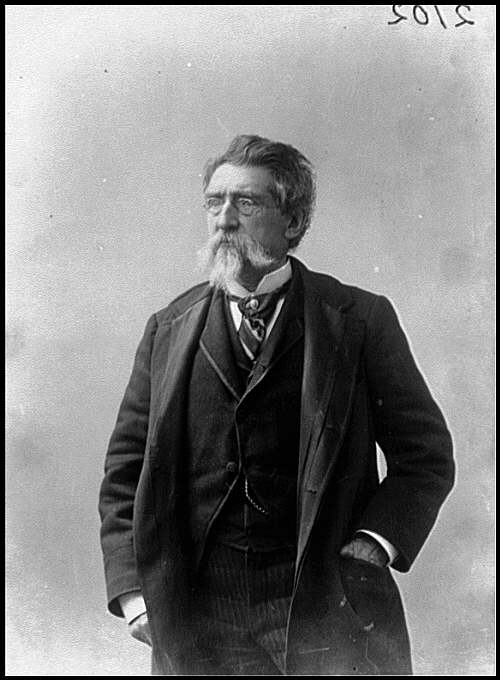
Portrait of Mathew Brady
The Idea of the Archive
By 1861 Mathew Brady did not need the war. He had already photographed nearly every president since John Quincy Adams, run the most fashionable studios in New York and Washington, and built a name that opened any door in American public life. What he did with that standing — pouring his fortune and his staff into an unfunded, unauthorized project to photograph the entire conflict, front to back, in a medium that could not yet even print halftones in a newspaper — is the clearest evidence of a mind that answered to an idea before it answered to a ledger.
Brady did not go to the front himself, not for long; his eyesight was already failing him. Instead he assembled a corps — Alexander Gardner, Timothy O'Sullivan, and a dozen others — equipped them with mobile darkrooms, and sent them out with the armies at his own expense, on the theory that someone had to build a complete visual record of the thing while it was happening, whether or not anyone had asked for one or would pay for it. That is an INTP impulse in its purest form: the war, for Brady, was less a national catastrophe to be endured than a structure to be documented, and the documenting mattered more than the documenter.
Brady built the war's memory the way an INTP builds anything — as a system worth completing, regardless of what completing it would cost him.
A Record, Not a Reputation
Dominant Ti shows up in Brady less as technical virtuosity — he was, by the war years, more organizer than operator — than as an almost monomaniacal loyalty to a private logical structure: the war had to be captured whole, in its actual condition, or the record was worthless. That structure is why the images his teams brought back were so unlike the engravings Americans were used to. There was no heroism imposed on the wreckage at Antietam, no narrative arc supplied after the fact — just bodies, terrain, and light, arranged by the internal logic of what a complete visual account of a battlefield would have to include.
When Brady exhibited those Antietam photographs in his New York gallery in the autumn of 1862 under the blunt title "The Dead of Antietam," he offered no softening caption, no patriotic frame — he simply let the pictures stand as evidence, trusting that the coherence of the project itself would carry its own argument. Civilians who had known the war only through romanticized battle paintings found the images unbearable precisely because they refused interpretation. That refusal is Ti: the conviction that an accurate internal model of the thing, presented cleanly, does more work than any appeal to feeling ever could.
Everywhere at Once
Auxiliary Ne is what let Brady scale a private obsession into a war-spanning enterprise — and what kept him from ever fully controlling it. He did not confine himself to one army or one campaign; he wanted teams in Virginia and teams in the West, portraits of officers and studies of camp life and the aftermath of every major battle he could reach, all pursued simultaneously because each new front suggested another gap the archive would otherwise leave unfilled. It was an expansive, generative vision, and it produced the closest thing the war has to a complete photographic record.
It was also, financially and logistically, close to unmanageable. Brady never secured a firm government contract for reimbursement, largely because he never paused the expansion long enough to nail one down; he kept assuming the next development, the next army, the next opportunity, would resolve what the last one hadn't. The same restless possibility-chasing that let him see the whole war as a single project he could actually finish is what left the financing of that project permanently improvised.
The Ledger He Never Kept
Weak tertiary Si is the quiet villain of Brady's biography. An archive of that size needed exactly what he was worst at supplying: methodical bookkeeping, contracts renewed and enforced, negatives inventoried and protected, promises from government officials converted into paper before they could evaporate. Brady kept none of that in order. When the war ended and Congress did not reimburse him as he had assumed it eventually would, he had no institutional record strong enough to force the issue — only an enormous, unsorted trove of glass negatives and a collapsing studio business.
He was forced to sell plates to pay debts, lost control of his own life's work piece by piece, and died in 1896 in a charity ward, largely forgotten by the public whose visual memory of the war he had, more than anyone, actually built. It is a strikingly literal version of the INTP failure mode: a mind built to model the system perfectly and almost incapable of administering it.
Why INTP Over ISTP
Why not ISTP?
An ISTP's mastery of photography would have stayed hands-on and technically self-contained — a craftsman perfecting the wet-plate process alone in the field. Brady, whose eyesight was already failing when the war began, rarely worked the camera himself by that point; he conceived the project, recruited and dispatched Gardner and O'Sullivan to execute it, and stood behind an idea large enough to require other people's hands. That is a conceptual, archival ambition realized through delegation, not a solitary technician's command of his tools.
What separates Brady from an ISTP reading isn't skill with the equipment — his early studio years show plenty of that — but where his ambition ultimately pointed. An ISTP wants to master the process; Brady wanted to complete the record, and was willing to become an organizer, a fundraiser, and eventually a debtor in service of a structure he could see clearly but never quite hold onto.
Connected Figures
Further Reading
- Mathew Brady: Portraits of a Nation — Robert Wilson2013
- Mr. Lincoln's Camera Man: Mathew B. Brady — Roy Meredith1946
- Mathew Brady and the Image of History — Mary Panzer1997
