 Historical Figure MBTI
#891 · 6-29-26 · The American Civil War
Clara Barton
Battlefield Nurse · Founder of the American Red Cross
1821 — 1912
7 min read
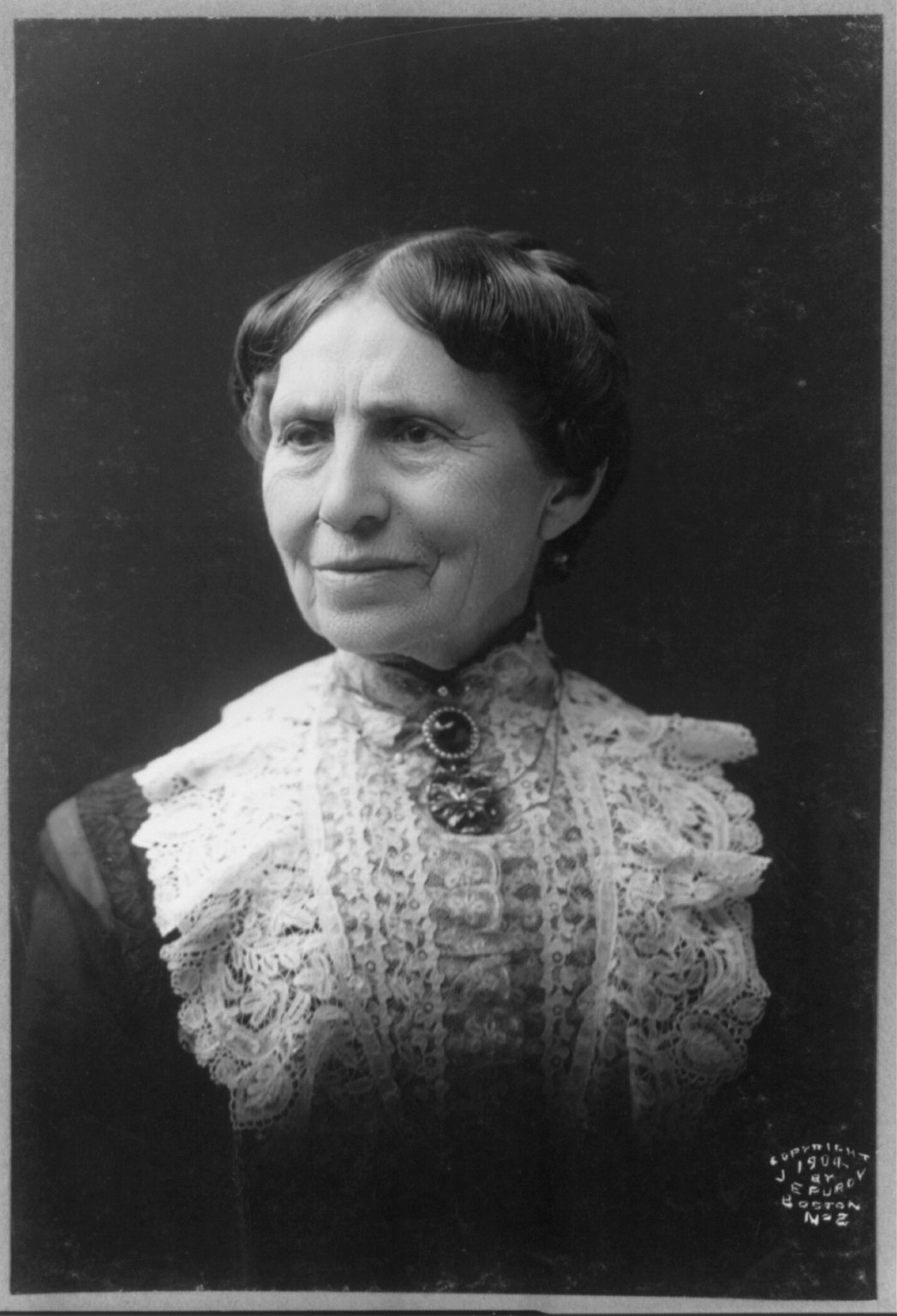
Portrait of Clara Barton
The Woman Who Would Not Wait for Orders
In the summer of 1862, a forty-year-old former clerk in the U.S. Patent Office loaded a borrowed army wagon with bandages, lanterns, and preserved meat, and drove it toward the sound of artillery. No commission sent her. No society appointed her. Clara Barton had spent months petitioning quartermasters and surgeons for a pass to the front, and when the passes finally came, she used them the way she used everything else in her life — alone, deliberately, and without much interest in whether anyone approved. At Antietam she arrived so close behind the lines that a bullet passed through her sleeve and killed the man she was bandaging. She stayed anyway.
It is tempting to read that story as warmth under fire, the nurse-as-nurturer archetype the twentieth century later built around her. But the record does not support a woman driven by sociability. Barton worked in small, self-organized parties or entirely by herself, distrusted the layered chains of command that governed army medicine, and kept her own counsel about almost everything — her health, her grief, her finances, her plans. What moved her was not a wish to comfort a community but an internalized, almost stubborn conviction that certain things needed doing and that she, specifically, was the one who had to do them. That is the signature of ISTJ, and nowhere in the historical record does it show up more starkly than on the roads to Fredericksburg, Andersonville, and, decades later, the founding charter of the American Red Cross.
Barton's compassion never announced itself as warmth. It announced itself as an inventory — of bandages counted, roads memorized, names recorded — carried out by a dominant ISTJ temperament for whom Si made the need concrete and Te made the response unstoppable.
The Ledger of What Must Be Done
Barton's Si showed up first as memory made physical: an exact, retained sense of what a wounded man needed and where it could be found, built out of her own accumulated experience rather than any manual. She had learned as a girl nursing an injured brother for two years that suffering had a concrete shape and a concrete remedy, and she carried that lesson, unmodified, into the Civil War. When she petitioned Massachusetts Congressman Henry Wilson and the Quartermaster General for passage to the front in 1862, she was not improvising a new role. She was re-applying a precedent she already trusted — that she, personally, with her own hands and her own wagon, could close the gap between what soldiers needed and what the army's supply lines actually delivered.
That same internal ledger drove the Missing Soldiers Office she ran out of a rented room in Washington after Appomattox, answering some 63,000 letters from families searching for husbands and sons and helping identify more than 13,000 graves at Andersonville. It was exhausting, unglamorous, clerical work — matching names, dates, and regiments against fragments of testimony — and Barton did the bulk of it herself, by hand, for four years. No one asked her to keep going after the first few hundred letters. She kept going because the obligation, once recognized, did not release her. That is Si operating exactly as it is supposed to: not nostalgia, but a rigorously kept internal record of duty owed.
An Institution Built by One Pair of Hands
If Si told Barton what needed doing, Te was the engine that made sure it got done, on her schedule, with results she could point to. Recuperating in Europe in the 1870s, she encountered the International Red Cross and its Geneva Convention and immediately treated the discovery as a project with a deadline: the United States had refused to sign the Convention for over a decade, and Barton spent the next several years lobbying presidents, cabinet officials, and newspaper editors until Chester Arthur signed it in 1882, a year after she had already opened the American Red Cross's doors in 1881. She did not wait for consensus to form. She built the organization first and dared Washington to catch up.
For twenty-three years she ran it essentially as an extension of her own will, expanding its mandate from wartime relief to peacetime disaster response — the Johnstown Flood, the Sea Islands hurricane, the Galveston flood — often traveling to disaster sites herself well into her seventies to direct relief in person rather than by memo. That same Te drive, unmoderated by any real willingness to share control, is also what ended her tenure: by 1904, board members and government auditors, frustrated by informal bookkeeping and her refusal to delegate authority, forced her resignation. It was the same trait in both directions — an organizer who could conjure an institution from nothing, and who could not loosen her grip on it once it existed.
A Private Room Behind the Public Mission
Barton gave away nearly everything about herself to strangers on battlefields and told almost no one about herself in return. She suffered recurring bouts of what she called nervous exhaustion and depression throughout her adult life, sometimes retreating for months to recover, and she managed those episodes privately, rarely discussing them even with close friends, let alone in the public record she otherwise kept so meticulously. She never remarried after a brief engagement in her twenties and lived largely alone, by choice, in a house in Glen Echo, Maryland, that doubled as Red Cross headquarters — her private life and her mission occupying the same rooms but never quite the same conversation.
This is Fi working quietly beneath the Si-Te surface: a moral conviction so deeply held that it did not require validation, discussion, or even much disclosure. She did not need anyone to agree that battlefield relief was righteous; she simply acted as though the question had already been settled inside her, years earlier, and got on with it. The reserve that made her a difficult board chair also made her, in her own eyes, answerable to no one but the standard she had already set for herself.
The System She Never Quite Built
What is most conspicuously absent from Barton's record is exactly what a strong Ne would have supplied: a durable, delegable system that could run without her. She did not train a deep bench of successors, did not build redundant leadership at the Red Cross, and did not experiment much with alternative structures for the organization once her initial model was in place. Where a more improvisational leader might have spun off new branches, tried looser affiliate structures, or entertained competing approaches to disaster relief, Barton returned again and again to the same method — go herself, direct personally, keep the essential decisions in her own hands.
The cost of that inferior Ne showed clearly at the end. When the American Red Cross outgrew what one woman could administer, Barton had no adaptable framework ready to absorb the growth, and the organization's professionalization happened only after her removal, at the hands of the board she had never learned to trust with real authority. Her genius was in recognizing an unmet need and refusing to look away from it — not in imagining the many different forms the response to it might someday take.
Why ISTJ Over ESFJ
Why not ESFJ?
An ESFJ's caregiving is socially expressive and relationship-centered, oriented toward group harmony and built to be visible — coordinating others, cultivating consensus, drawing warmth from the people it serves. Barton did almost the opposite. She worked alone or in small, self-directed parties, frequently sidestepped official channels rather than working through them, kept her own emotional life private even from close associates, and treated her mission as a personal obligation rather than a communal project. What looked like devotion to others was, structurally, devotion to a standard she had set for herself and refused to compromise.
The clearest evidence is what Barton did not do. A leader wired for extraverted feeling delegates, builds consensus, and shares credit as a matter of course; Barton resisted all three until the Red Cross's own board forced the issue. Her compassion was real and enormous, but it moved through the channel of duty recognized and executed, not warmth extended and reciprocated — the difference between an ESFJ's open hand and an ISTJ's closed fist around a task it has already decided is hers to finish.
Connected Figures
Further Reading
- Clara Barton: Professional Angel — Elizabeth Brown PryorThe definitive modern biography, drawing on Barton's own journals to trace her drive and its costs.
- A Woman of Valor: Clara Barton and the Civil War — Stephen B. OatesFocuses on Barton's wartime years, from Antietam to the Missing Soldiers Office.
- The Story of My Childhood — Clara BartonBarton's own memoir, revealing the early sense of duty that shaped her later life.
- American Red Cross: A History — American Red Cross Museum archivesInstitutional record of Barton's founding and eventual removal from the organization she built.
