 Historical Figure MBTI
#892 · 6-29-26 · The American Civil War
Dorothea Dix
Superintendent of Army Nurses · Asylum Reformer
1802 — 1887
6 min read
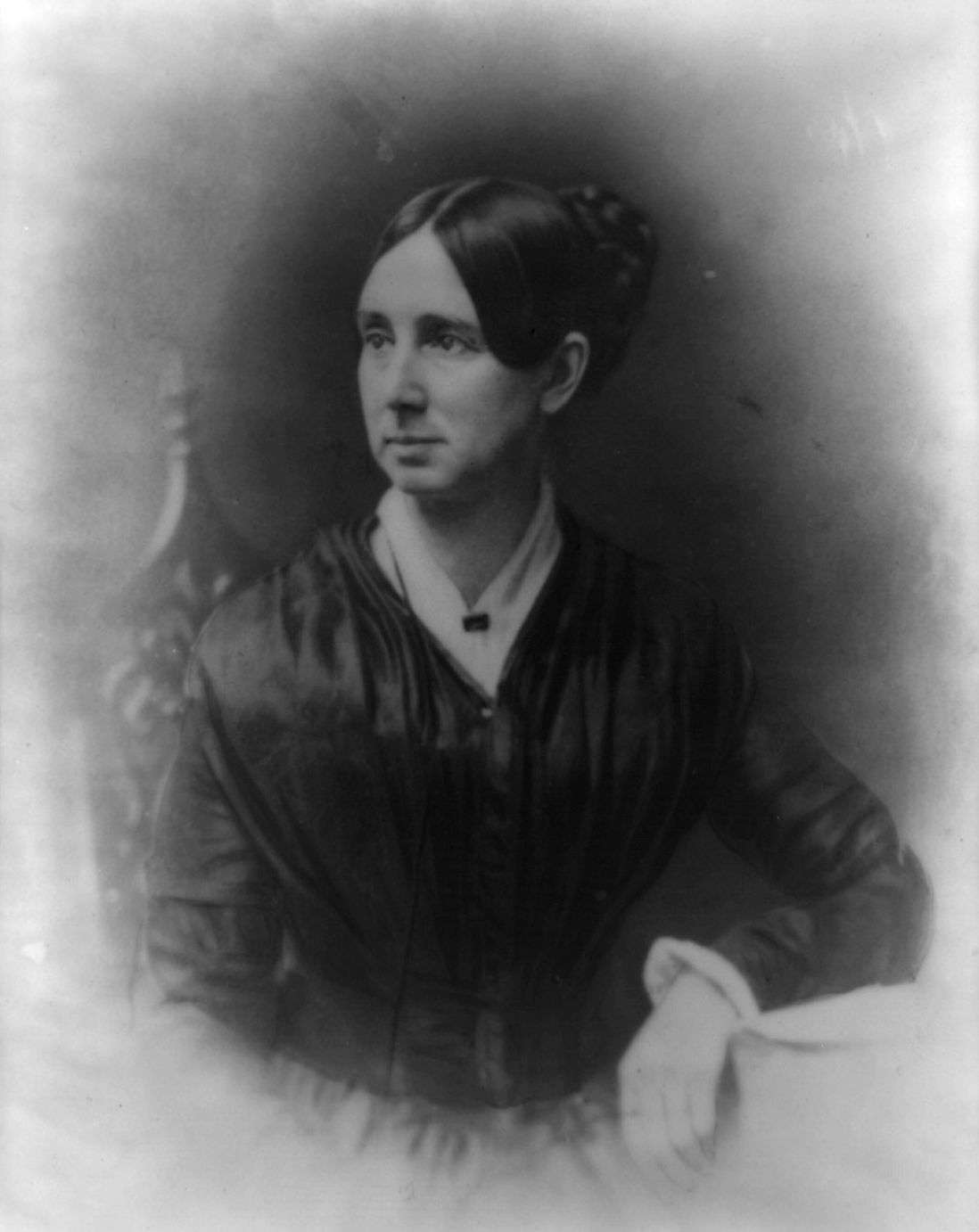
Portrait of Dorothea Dix
The Architect of Institutions
Long before the war, Dorothea Dix had already rebuilt the American landscape once. In the early 1840s she began touring almshouses, jails, and prisons across New England, documenting — in a memorial to the Massachusetts legislature that would become the template for a career — the mentally ill chained in unheated cells, caged, whipped into obedience. She did not write a plea. She wrote a system: a survey of what existed, a vision of what should replace it, and a campaign, state by state, to build it. Over three decades she carried that same memorial, revised for local facts and local legislators, into more than fifteen states, and asylum after asylum rose because of it.
That was a decade of work driven almost entirely by a single, unshakable internal picture of how care for the insane ought to be organized — not incremental sympathy, but architecture. So when the Civil War broke out and the Union suddenly needed thousands of women to nurse the wounded, Dix did not improvise a role. She built one, insisting on rank, on standards, on a chain of command running through her alone, and enforced it with a rigidity that alienated almost everyone she worked with. It is the signature of an INTJ: a mind that sees the finished structure before the first brick is laid, and that will not be talked out of the blueprint.
Dix did not nurse the wounded. She engineered who was allowed to.
A System, Not a Sentiment
What set Dix apart from other nineteenth-century reformers was not compassion — plenty of her contemporaries felt that. It was the totalizing, long-range shape her compassion took. Dominant Ni does not respond to a single suffering patient; it abstracts the pattern behind ten thousand of them and asks what structural change would make the individual case obsolete. Dix's memorials read less like appeals than like state papers: statistics gathered county by county, precedents cited from other states' asylum laws, a fully worked argument for public responsibility that anticipated the objections of the legislature before it could raise them.
The same faculty resurfaced in 1861. Appointed Superintendent of Army Nurses, she did not simply recruit women as the need arose; she designed, unbidden, a comprehensive filter for who could serve — age, plainness of dress, absence of jewelry, character references — a whole apparatus meant to preempt scandal before a single ward existed. Critics called it excessive. It was, more precisely, Ni doing what it always does: building the finished institution in the mind first, then imposing it on a world that had not yet caught up.
Legislatures, Not Sympathy
Vision alone does not move a state legislature to appropriate funds for an asylum it has never wanted to pay for. That took auxiliary Te — the capacity to turn a private conviction into an external, evidence-driven case that other people's institutions could not refuse. Dix's method was almost bureaucratic in its discipline: inspect the facility, log the conditions, tabulate the costs of continued neglect against the costs of reform, then present the numbers to exactly the men with the authority to act on them. She did not organize marches or write for the popular press. She wrote for committees.
During the war, that same executive bluntness made her one of the most efficient — and most resented — administrators in the Union bureaucracy. She clashed constantly with army surgeons who wanted nurses they could direct at will, and with volunteers like Clara Barton, whose looser, on-the-ground improvisation Dix regarded as a standing invitation to disorder. Where Barton worked the battlefield itself, Dix worked the org chart above it, certain that a properly built system would outperform any amount of individual heroism — and largely unwilling to compromise the standards she had set to make peace with anyone who disagreed.
The Conviction Beneath the Ice
Contemporaries who found her cold missed what was underneath: a tertiary Fi that ran less as warmth than as an unyielding private code, held for its own sake rather than for anyone's approval. Dix never married, kept her own counsel, and pursued asylum reform for decades with no institutional backing and often no encouragement — a mission that had to be sustained entirely from an internal sense of what was right, because almost nothing external was rewarding it. That same immovable personal standard is what made her insist, against considerable pressure, that army nurses be selected by her exacting criteria rather than anyone else's convenience.
It is also what made her so hard to work alongside. Fi this deep in the stack does not negotiate its values fluently; it holds them, quietly and completely, and expects the world to arrive at them eventually. Dix rarely explained herself to the doctors and rival reformers who found her intransigent. She simply continued, certain that the rightness of the standard would eventually be self-evident — which is precisely the kind of certainty a merely dutiful administrator, working from inherited norms rather than a private moral architecture, does not carry.
Why INTJ Over ISTJ
Why not ISTJ?
An ISTJ reformer works to make an existing institution function properly — enforcing rules, restoring order to a system already in place. Dix's career never had that system to restore. Before her memorials, most states had no public asylum network at all; before the war, no formal corps of female army nurses existed. She was not maintaining a structure but originating one, from a long-range internal vision rather than from precedent, and she held onto that vision for thirty years across dozens of legislatures with no established playbook to lean on. That is Ni-driven architecture, not Si-anchored upkeep.
The confusion is understandable: Dix's insistence on rules, standards, and rigid procedure looks, from a distance, like the fastidiousness of a detail-oriented traditionalist. But the rules were hers — invented for institutions that did not yet exist, not inherited from ones that already did. An ISTJ safeguards what came before. Dix built what had never been tried, then defended it with a stubbornness that only looked backward-facing because the system, once built, needed exactly that kind of unbending enforcement to survive contact with a skeptical world.
Connected Figures
Further Reading
- Voice for the Mad: The Life of Dorothea Dix — David Gollaher1995 — the standard modern biography, tracing the asylum campaign through the war years.
- Dorothea Dix: New England Reformer — Thomas J. Brown1998 — situates Dix within the broader tradition of antebellum reform movements.
- Women at the Front: Hospital Workers in Civil War America — Jane E. Schultz2004 — the definitive account of Dix's wartime nursing corps and its rivalries.
