 Historical Figure MBTI
#1323 · 10-3-26 · The Heian–Kamakura Transition
Minamoto no Yoshitsune
Commander · Campaigner in the Genpei War
1159–1189
10 min read
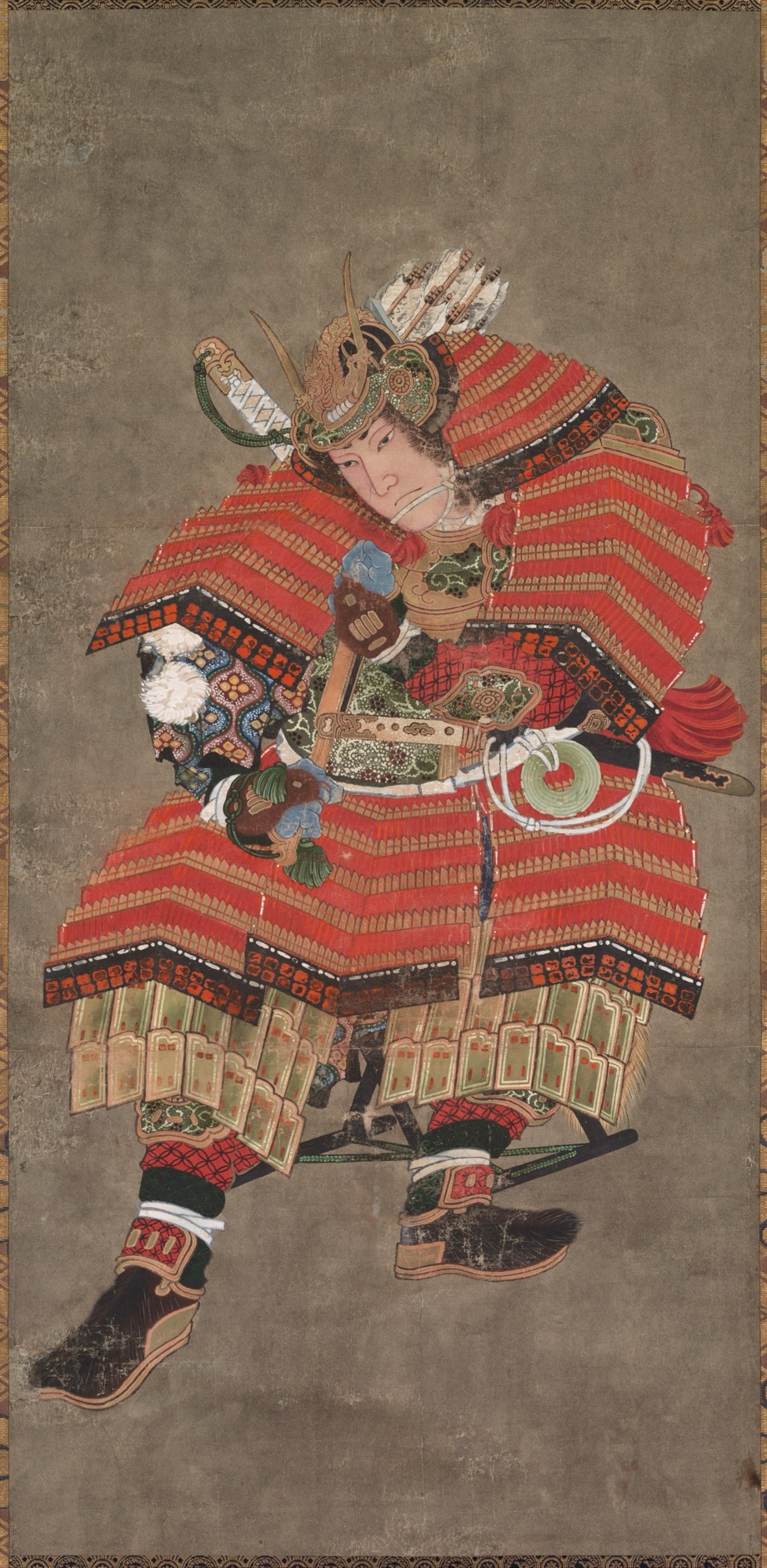
Portrait of Minamoto no Yoshitsune — 1800–1868 (later depiction)
The commander and the hero
Minamoto no Yoshitsune is easier to recognize than to recover. Across centuries of tales, plays, paintings, and performance, he appears as the young commander whose brilliance cannot save him. That figure has extraordinary staying power. The historical man lived from 1159 to 1189, won a consequential place in the Genpei campaigns, and died after a political rupture with his older half-brother Yoritomo. Between that outline and the beloved hero lies a great accumulation of storytelling.
His career asks a difficult question: what happens when the ability to win a battle is no longer enough to secure a place in the order that victory creates? Yoshitsune fought within the Minamoto cause, including against his cousin Yoshinaka. Yet the authority of a commander in the field and the authority of the leader at Kamakura were not the same. Their difference became fatal when military success, court connections, and control of recognition pulled in competing directions.
The tentative ISTP reading rests narrowly on operational adaptability, with low confidence. It does not rest on a supernatural teacher, an acrobatic duel with Benkei, or a modern image of a quiet lone swordsman. Nor does defeat in politics demonstrate a weak social function. The evidence supports a capable commander more readily than it supports a complete reconstruction of how that commander thought.
The low-confidence ISTP reading links dominant Ti to a tentative pattern of tactical problem-solving, while keeping the legendary Yoshitsune outside the personality evidence.
A practical problem before a glorious image
The historical sequence establishes an important distinction before any personality interpretation begins. Yoshitsune participated in the defeat of Yoshinaka in 1184 and in the campaigns against the Taira that culminated in 1185. His military significance is substantial without accepting every celebrated detail attached to those operations. The fact of effective campaigning deserves attention; the precise reasoning behind it is harder to recover.
Introverted thinking is proposed as a lens for a practical orientation toward how a difficult operation might work. A commander must connect routes, timing, an opponent’s disposition, and the capacities of his own force. The tentative reading gives weight to adapting action to such immediate problems. It remains an interpretation because the record does not provide a personal notebook or a consistent series of unmediated explanations.
There is a danger in allowing a successful result to supply the missing mental process. A victory can arise from coordination, intelligence supplied by others, mistakes by an opponent, or circumstances a commander did not control. Leadership deserves credit without becoming solitary genius. The relevant pattern is participation in effective, flexible operations, not a claim that Yoshitsune personally calculated every factor.
This is why the proposed type should not be extracted from a dramatic speech in a war tale. A storyteller can give a hero exactly the words that make a scene persuasive. Such language reveals the narrative’s conception of intelligence. It does not automatically disclose the historical commander’s own way of analyzing a problem. The difference is essential even when the literary portrait feels psychologically convincing.
The route that changes the encounter
The Heike’s famous Ichi-no-tani episode makes terrain the decisive medium of action. Its Yoshitsune approaches an apparently formidable position by an unexpected route. The Asian Art Museum explains how later painted battle screens represent this narrative of military ingenuity. Those images preserve the reception of a tactical hero, not an independent visual report of the battle itself.
Extraverted sensing provides a tentative vocabulary for the operational responsiveness associated with Yoshitsune’s campaigning. An opportunity has to be grasped under present conditions: what can be crossed, how quickly a force can move, and where an opponent expects an attack. This is more specific than calling every brave warrior action-oriented. It concerns adaptation to a situation rather than courage as a moral quality.
The account of a sudden approach at Yashima offers a related pattern in the military tradition. Yet the strongest dramatic versions should remain attributed accounts. Descriptions of storms, extraordinary speed, or an enemy’s moment of realization can be sharpened by retelling. Their narrative economy makes them memorable precisely because a complicated operation becomes the expression of one decisive will.
What survives the caution is a reasonable distinction between a commander remembered for operational flexibility and a founder concerned with enduring political organization. That contrast does not require Yoshitsune to be thoughtless about the future. It gives each kind of work its proper scale. Acting effectively within an encounter and controlling the institutional consequences of an entire war are different accomplishments.
Victory did not settle the hierarchy
The Minamoto victory was not a family reconciliation. It left questions about whose authority determined service and reward. Yoshitsune’s connections with the imperial court mattered because the court remained a source of recognition. Yoritomo’s developing eastern government sought to bring military allegiance under its own direction. A commander could therefore appear valuable in one relationship and threatening in another.
The famous Koshigoe letter belongs to this strained setting. The text preserved in the later chronicle presents Yoshitsune seeking vindication after being prevented from entering Kamakura in 1185. It is powerful evidence of how his predicament was remembered. Its pleading voice should not be treated without qualification as a transparent, authenticated window into every feeling of the historical man.
The political conflict grew beyond an unsuccessful appeal. Yoshitsune’s position deteriorated, and he eventually sought refuge in the northeast. He died at Koromogawa in 1189 amid the pressures exerted by Yoritomo’s authority. The ending supplied later literature with an almost perfect tragic structure: achievements that ought to secure loyalty instead become incapable of protecting their author.
Jealousy is an attractive explanation because it joins the story’s emotional pieces. It is less secure than the conflict over independent recognition and control. We can describe Yoritomo’s reasons for regarding a separately supported military leader as a danger without pretending to know that envy was his decisive motive. Likewise, Yoshitsune’s choices cannot all be reduced to innocent incomprehension.
A personality reading must stop short of turning the rupture into a lesson about an inferior function. Political vulnerability is not a diagnostic sign. The hierarchy was contested, the sources are interested, and circumstances constrained what either brother could do. Yoshitsune’s defeat tells us that military effectiveness and political security could diverge. It does not establish that he lacked emotion, foresight, or social understanding.
What the tales give their audience
The Tale of the Heike places combat inside a world of impermanence. Victories do not remove the prospect of loss, and powerful households can fall. Yoshitsune’s brilliance belongs to that larger literary design. He is compelling partly because skill does not cancel vulnerability. The emotional force of the narrative should be understood as an achievement of the work rather than used as a substitute for evidence.
The later Gikeiki, translated by Helen Craig McCullough as Yoshitsune, expands the remembered life into a different kind of chronicle. Its distance from the events matters. A fifteenth-century account can preserve older traditions while reshaping them for another audience. It cannot be assumed to confirm childhood scenes simply because those scenes eventually became familiar everywhere.
Benkei’s presence is especially revealing. Stories of the towering loyal companion make Yoshitsune’s vulnerability and authority visible together. A scene in which disguise requires an apparent humiliation can become a test of perfect mutual understanding. That is a rich literary relationship. The historian must ask how and when the scene was formed before treating it as an observed exchange between two men.
Fay Beauchamp’s discussion follows the changing hero through later performance and modern media. The changes are part of Yoshitsune’s importance. An audience can encounter daring, wounded loyalty, cleverness, or doomed youth in the same name. These qualities belong to a history of interpretation extending far beyond his lifetime. They explain his cultural reach without making every version biographical.
The collective work hidden by a single name
A heroic image concentrates attention. A military campaign disperses it across many people. Other commanders, local guides, followers, and opponents all shape what can happen. Even an account centered on Yoshitsune necessarily contains a world of cooperation and rivalry. Recognizing that world does not diminish his achievement. It prevents the celebrated leader from becoming the only active person in the story.
The naval conclusion at Dan-no-ura illustrates the problem of compression. A complicated encounter involving fleets and changing conditions becomes, in popular memory, the final victory of a single brilliant commander. Its place in the defeat of the Taira is secure; a precise reconstruction of every maneuver requires more caution. Dramatic explanations of tides or individual tricks should not carry psychological conclusions on their own.
The narratives also differ from one another. A change in emphasis can make a warrior appear more attached to glory, more generous toward a companion, or more isolated in suffering. Those variations belong to the interpretation of the works themselves. A stable personality should not be assembled by choosing whichever scene best fits a proposed label while ignoring the conditions in which that scene was written.
The same caution applies to the relationship between a remembered character and a historical type. A hero who always discovers the unexpected solution will naturally resemble certain modern categories. That resemblance may be a property of the story’s design. The proposed ISTP reading is useful only if it remains attached to the narrower historical pattern of operational capability and acknowledges everything the record leaves open.
Why this tentative reading?
Why not ESTP?
Accounts of daring movement and immediate opportunity could support an ESTP interpretation as readily as an ISTP one. The tentative preference for ISTP emphasizes practical problem-solving within operations rather than a securely documented pattern of outward social improvisation. The distinction is weakly evidenced, which is why confidence remains low rather than being raised by his fame.
An ISTJ interpretation could also point to service, discipline, and the responsibilities of command. Those are genuine features of military life but do not by themselves identify a dominant habit of mind. The proposed reading gives more weight to flexible adaptation than to adherence to established procedure. We lack enough private evidence to make that preference conclusive.
Most importantly, none of these labels should be selected from the personality of a theatrical Yoshitsune. A play can create the exact temperament its action requires. Historical typing must accept a less complete figure, with fewer quotable feelings and fewer perfectly illustrative moments, than the one audiences have loved for centuries.
Connected Figures
Further Reading
- The Kamakura Bakufu, in Warrior Rule in Japan — Jeffrey P. Mass; edited by Marius B. JansenAn institutional history that complicates the familiar story of a sudden military replacement of the imperial court.
- The Tale of the Heike — Translated by Helen Craig McCulloughA major literary account of the wars, to be read as a shaped narrative rather than a transcript of the participants’ minds.
- Yoshitsune: A Fifteenth-Century Japanese Chronicle — Translated by Helen Craig McCulloughA translation of the Gikeiki, essential for the later legend and carefully distinguished from contemporary biography.
- The Tale of the Heike and Japan’s Cultural Pivot to the Art of War — Fay BeauchampExamines the tactical hero in the Heike and the changes in Yoshitsune’s image across later performance.
- Battles at Ichi-no-tani and Yashima — Asian Art MuseumExplains how later screens visualize the war narrative and its famous military episodes.
