 Historical Figure MBTI
#1324 · 10-3-26 · The Heian–Kamakura Transition
Minamoto no Yoshinaka
Commander · Rival Claimant to Military Authority
1154–1184
6 min read
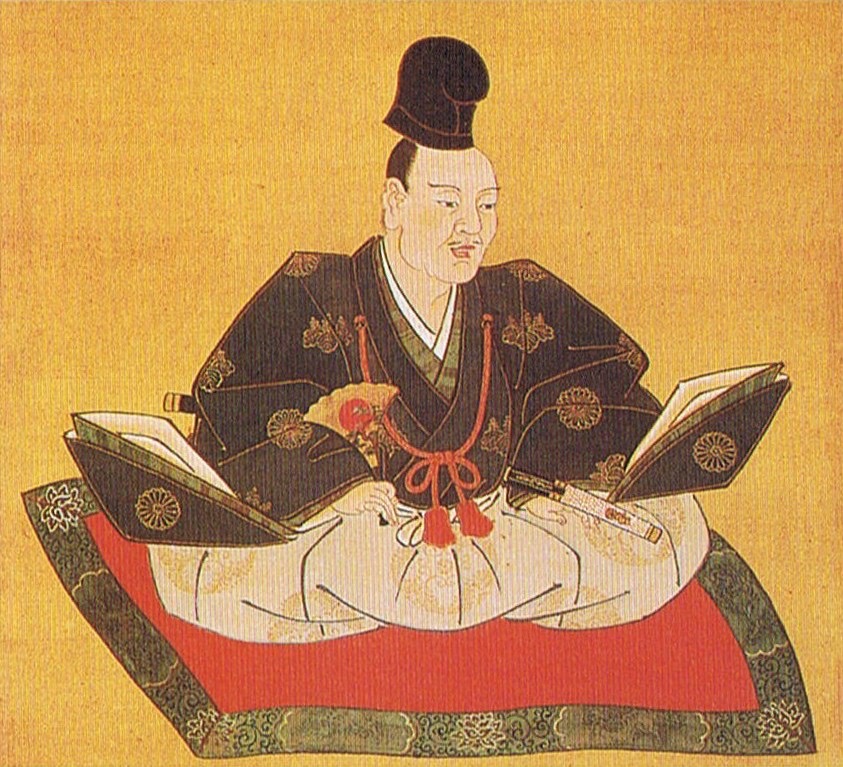
Portrait of Minamoto no Yoshinaka — undated historical depiction
The capital within reach
For a brief interval, Minamoto no Yoshinaka seemed to have accomplished what other leaders were still preparing to attempt. He defeated Taira forces and entered Kyoto in 1183. The capital was a prize, but possession of it did not settle who would command the war, control the imperial household, or speak for the Minamoto. His achievement brought those questions closer rather than removing them.
Born in 1154, Yoshinaka developed a military following associated with the Kiso region. Local support mattered to his rise: the Japanese tourism agency’s account of Shiratori Shrine identifies the Unno family’s contribution to his force. A coalition rooted in such relationships carried him into a political world whose institutions, supplies, and competing interests could not be managed by victory alone. He died in 1184, before he could stabilize his position.
The tentative ESTP interpretation emphasizes rapid movement toward present opportunities, with low confidence. It does not adopt the caricature of a provincial warrior incapable of understanding court life. Much of his reputation comes through the people and traditions that survived his defeat. A short, contested career offers evidence of action but leaves many questions about the person behind it.
The low-confidence ESTP reading places dominant Se in Yoshinaka’s rapid exploitation of military opportunities, without treating defeat as evidence of a reckless personality.
A victory that opened a road
The defeat of Taira forces at Kurikara in 1183 helped open the route toward the capital. Yoshinaka then became a central actor in a war that had involved several regional concentrations of power. The Minamoto name did not guarantee a single coordinated interest. His rise was significant partly because it created a competing center of military initiative.
Extraverted sensing is a tentative lens for his movement toward opportunities made available by changing conditions. A weakening opponent and access to Kyoto could be converted into an immediate gain. The interpretation concerns responsiveness to circumstances, rather than a generalized love of danger. Leading a force into a new theater required purpose, support, and an assessment of what the moment allowed.
The limit is equally important. The famous accounts of Kurikara contain dramatic details that became part of the war’s legendary repertory. A memorable stratagem is not enough to establish a personality. The firmer evidence is the successful campaign and subsequent advance; the precise inner process remains beyond direct recovery.
What victory appeared to make possible
Once the Taira withdrew, Yoshinaka had to decide what his military position entitled him to demand. The capital placed the court within reach, but it also placed him among rival sources of authority. Yoritomo remained powerful in the east. Go-Shirakawa retained political interests of his own. A common enemy had concealed differences that its retreat made harder to ignore.
Introverted thinking is suggested as a secondary lens for attempts to use the logic of the immediate balance of power: control of armed force could support claims to direction. This is a modest inference from public action, not an assertion that Yoshinaka reduced every relationship to a private calculation. The record does not provide sufficiently independent testimony to establish that.
The problem was that military leverage did not make all other interests disappear. Holding Kyoto was different from securing reliable recognition, provisioning a force, or making its presence acceptable to the city. These were not decorative refinements of court culture. They were conditions of sustained rule. The gap between a powerful position and a durable settlement became the defining difficulty of his brief ascendancy.
A Minamoto war within the war
Yoshinaka’s relations with Go-Shirakawa deteriorated into armed confrontation. Conflict with the retired emperor intensified the struggle over the capital and offered Yoritomo another reason to intervene. The clash was not simply between a unified Minamoto clan and the Taira. Minamoto commanders were now fighting over which leadership would govern the consequences of the wider war.
In 1184, Yoshitsune and Noriyori took part in the campaign that defeated Yoshinaka. His death ended the possibility that his regional coalition would determine the political settlement. The sequence explains why his story cannot be written only as a preliminary chapter in Yoritomo’s inevitable rise. At the time, his successful advance had made an alternative concentration of power possible.
Calling this a family quarrel would also make the stakes too small. A shared lineage offered a language of connection, but each leader depended on a following whose interests were not identical. The question was which coalition could make its claims effective. Kinship did not erase geography, competition, or the unequal resources available to the competing camps.
The duration of that possibility was short, and its collapse should not be explained entirely by temperament. Material conditions, the conduct of troops, opposition within Kyoto, and the strength of rival armies all mattered. A leader can misjudge a situation without that error proving a lifelong inability to plan. A personality category is particularly unhelpful when it turns a complex defeat into a moral verdict.
The loser in other people’s accounts
Later narratives could represent Yoshinaka as the commander who won entry to a world he could not properly inhabit. The contrast between provincial manners and court sophistication made good storytelling. It also helped justify the transfer of sympathy or legitimacy to other figures. Details of awkwardness, excess, or ignorance deserve scrutiny before they are treated as stable traits.
This does not mean every criticism was fabricated. An army’s presence could bring real disruption and coercion. But a historian must distinguish the behavior being reported from the narrative purpose of the report. The same event can be evidence of a political breakdown and material for a story about an inherently unsuitable man. Only the first conclusion follows automatically.
The Tale of the Heike preserves a powerful memory of Yoshinaka within its wider account of impermanence. Its narrative achievement helps explain why his failure remains vivid. That vividness should encourage careful reading rather than confidence that an audience has met the historical person directly. Literary characterization and contemporary political circumstances must be kept in conversation without being confused.
Why this tentative reading?
Why not ESTJ?
Yoshinaka’s military leadership and attempts to command the capital could support an ESTJ interpretation. The tentative ESTP preference places greater weight on the rapid conversion of changing circumstances into immediate gains than on a documented pattern of maintaining an enduring administrative order. His short career makes that comparison insecure, and the absence of a surviving institution is not itself evidence against ESTJ.
Nor does the proposed reading require inferior foresight or a taste for impulsive destruction. Such claims would merely translate hostile characterization into modern terminology. The limited evidence supports a dynamic military actor caught in a difficult contest for authority. It leaves his private habits and many of his calculations uncertain.
Connected Figures
Further Reading
- The Kamakura Bakufu, in Warrior Rule in Japan — Jeffrey P. Mass; edited by Marius B. JansenAn institutional history that complicates the familiar story of a sudden military replacement of the imperial court.
- The Tale of the Heike — Translated by Helen Craig McCulloughA major literary account of the wars, to be read as a shaped narrative rather than a transcript of the participants’ minds.
- Shiratori Shrine: Kiso Yoshinaka — Japan Tourism AgencyA local historical account identifying the Unno support behind Yoshinaka’s rise; its broad claims about later government require qualification.
- The Tale of the Heike and Japan’s Cultural Pivot to the Art of War — Fay BeauchampA useful guide to the war tale’s literary purposes and the later reshaping of warrior memory.
